

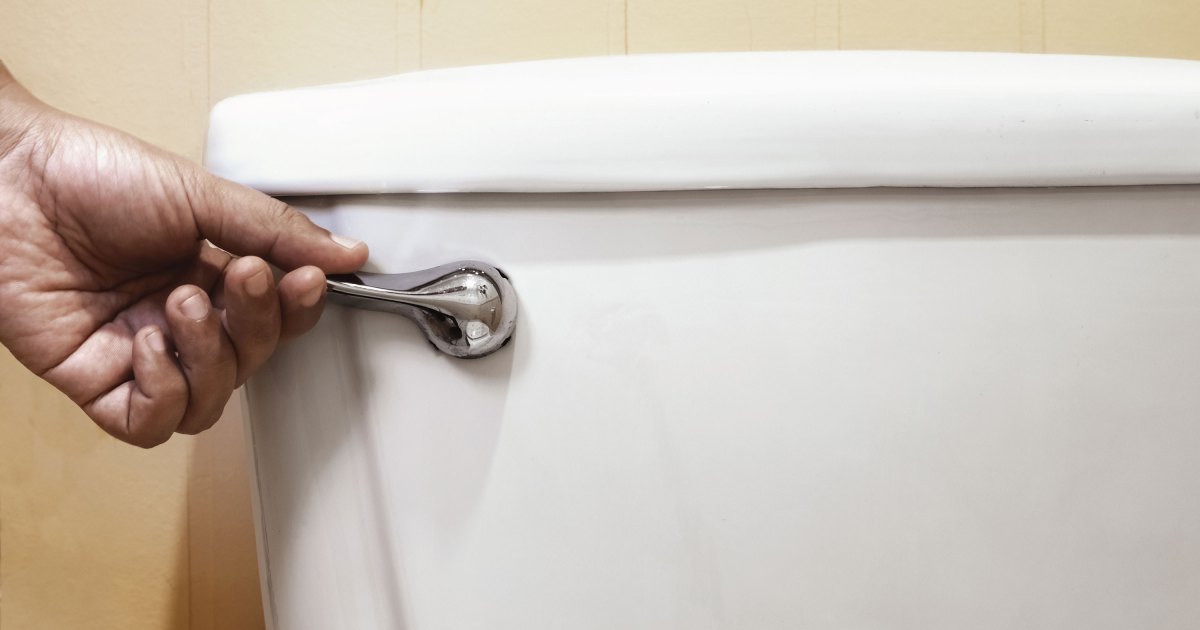
Researchers at Flinders University in Australia have found that flushing a toilet with an open lid spreads fine particles throughout the bathroom. These airborne aerosols can remain suspended in the air and reach the height where adults breathe, creating a potential route of exposure to disease-causing microorganisms.
The study was published in the peer-reviewed scientific journal Science of the Total Environment and released on the university website on Monday. The research team reviewed 22 separate scientific studies on toilet-generated aerosols to evaluate how microscopic droplets spread across indoor spaces.
Lead author Lira Adiyani, a doctoral student at Flinders University, stated that the findings highlight the potential for human exposure to disease-causing microorganisms. She noted that toilet flushing creates turbulence that can release aerosols into the surrounding air.
Adiyani added that several studies detected these aerosols at adult breathing height, indicating a possible route of exposure through inhalation. According to the research, aerosols released by flushing can remain suspended in the air for at least 20 seconds.
The analysis demonstrated that higher concentrations of bacteria and viruses in toilet bowl water correspond to a greater presence of those microorganisms in aerosols dispersed into the room.
Particle dispersion and toilet turbulence
The highest particle concentrations were identified near the toilet bowl itself, primarily at seat height. The study noted that while room ventilation and lid positioning do not change the total volume of particles in the air, both factors influence how the vapor disperses through the space.
Researchers observed that particle concentrations varied across the reviewed papers due to differences in experimental conditions, toilet design features, and sampling methods used for sample collection.
Flinders University is a public research institution located in Adelaide, South Australia. Science of the Total Environment is an international scientific journal that publishes peer-reviewed research on environmental contamination, hygiene, and public health risks.
Precautionary recommendations and hygiene
Based on the available evidence, Adiyani recommended closing the toilet lid before flushing whenever a lid is available. She described the habit as a precautionary measure to minimize potential exposure by inhalation, while acknowledging that closing the lid does not completely prevent aerosol dispersion.
Aerosols are small solid particles or liquid droplets suspended in air or another gas. In environmental health research, bioaerosols generated by domestic and commercial plumbing systems are studied to understand how microscopic pathogens travel through indoor air.
Together, the results suggest that maintaining good bathroom hygiene can help reduce microbial contamination in the environment. Researchers stressed that proper sanitation routines play a role in managing indoor environmental quality.


