

Colombian architect Fernando Llanos created a modular construction system using recycled plastic Lego-style bricks that allows four people to build a house in five days.
Developed through the enterprise Conceptos Plásticos, the initiative converts industrial and post-consumer plastic waste into interlocking building blocks that require no cement, mortar, or water during assembly.
Llanos originally conceived the system after encountering difficulties transporting conventional building supplies to his own property in rural Colombia. In many remote or mountainous areas of Colombia, transporting heavy traditional materials like concrete, steel, and fired bricks over unpaved roads or waterways poses major logistical hurdles and inflates construction expenses. Seeking to overcome these obstacles on his own land, Llanos sought an alternative method that could bypass standard masonry constraints.
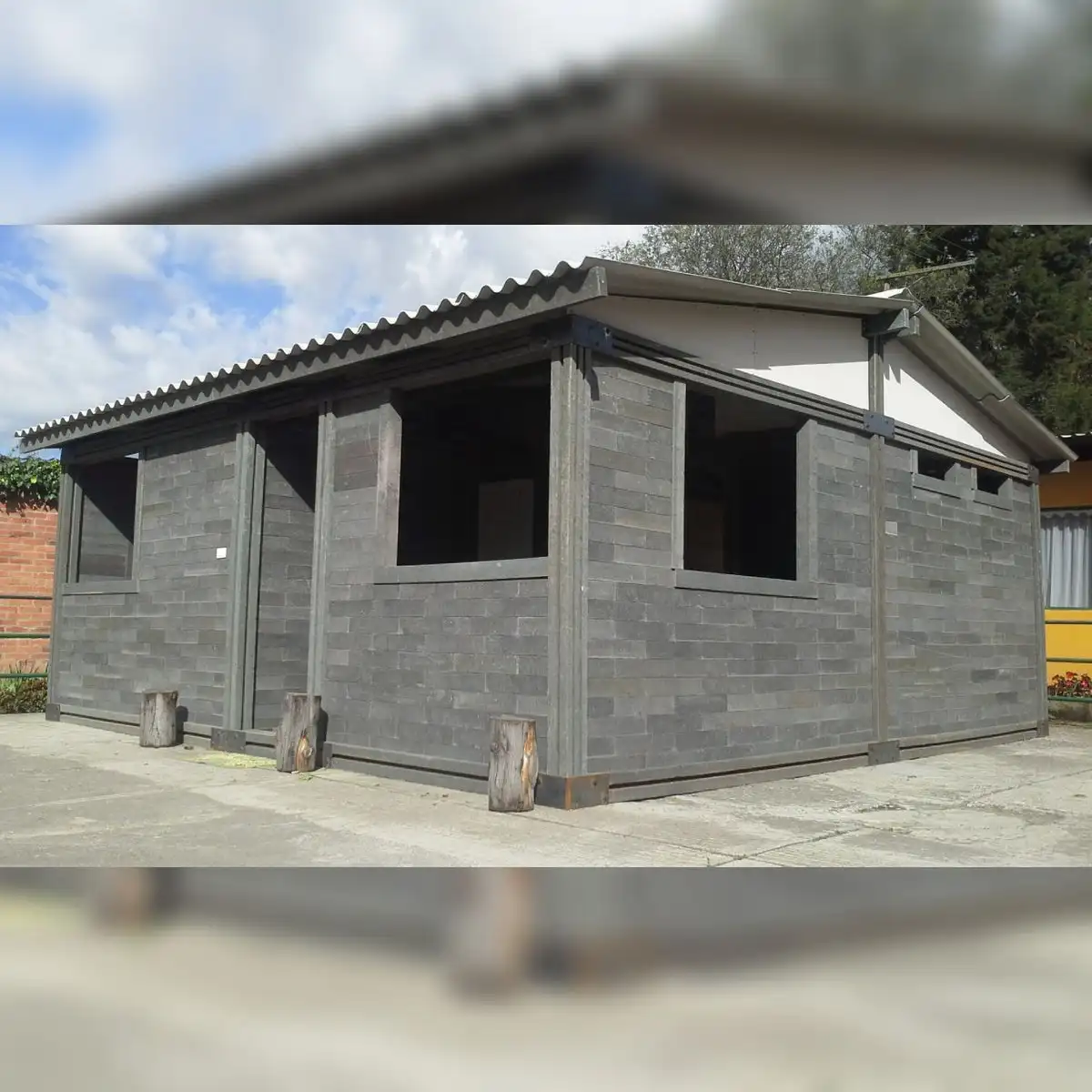
Architect Óscar Andrés Méndez explained that a small team of four people can erect a 40-square-meter home in five days using only a hammer and a wrench. Méndez noted that the structures can also be dismantled in three days and relocated to any destination, providing fully transportable housing units. Modular construction eliminates the need for specialized construction equipment or heavy machinery on site.
The interlocking block design draws inspiration from modular construction toys such as Lego, the plastic building brick system developed in Denmark during the mid-20th century. By engineering complementary male and female connectors directly into the molded recycled plastic, the system achieves structural stability through mechanical engagement without reliance on chemical glues or liquid binding agents.
Displacement relief and temporary housing shelters
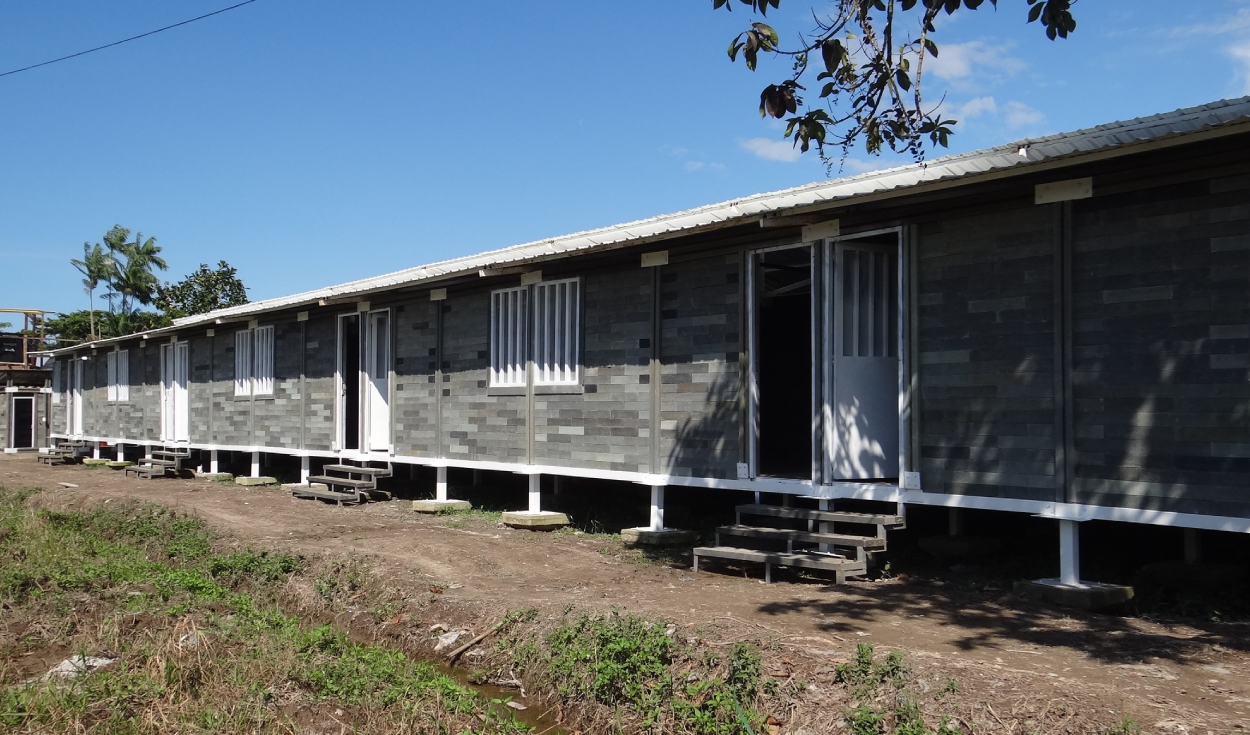
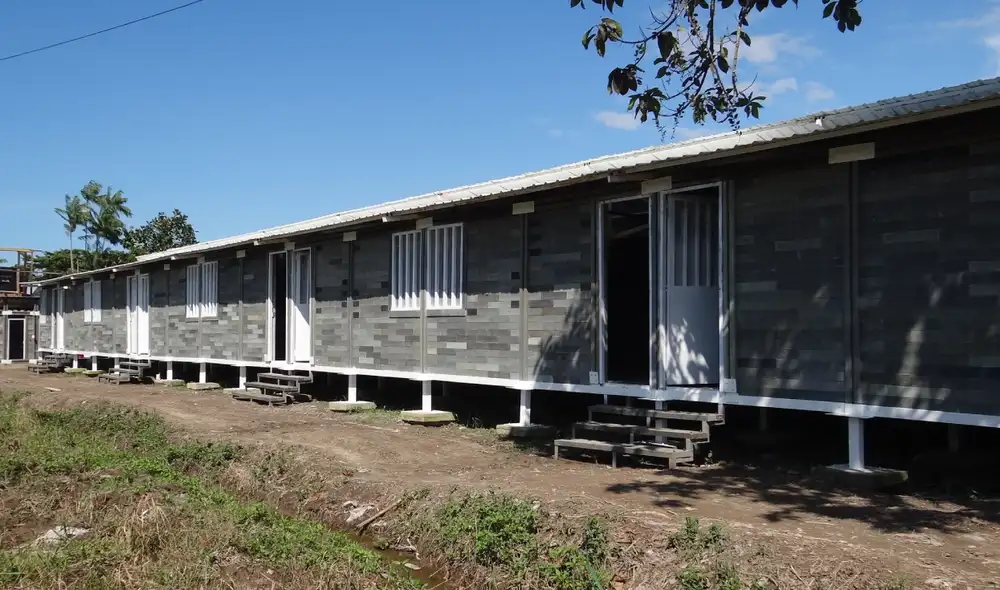
The relocatable nature of the modular structures enabled Conceptos Plásticos to adapt the system for humanitarian emergency relief, providing temporary housing for families displaced by armed conflict. In 2015, the firm constructed a temporary shelter complex for 42 displaced families in the municipality of Guapi, located in the department of Cauca.
Guapi is a riverine municipality situated along the Pacific Ocean in southwestern Colombia, accessible primarily by water or air due to dense tropical rainforests and a lack of direct overland highways. Cauca has historically experienced high levels of civilian displacement stemming from long-running internal conflict, leaving thousands of displaced residents in urgent need of rapid shelter solutions adapted to high humidity and heavy rainfall.
Conceptos Plásticos expanded its humanitarian operations in Guapi by assembling three larger shelter structures, each covering an area of 400 square meters. Operating together, these three facilities provided temporary accommodation for 242 displaced individuals, with structural designs adapted specifically to withstand the humid climatic conditions of the Pacific coast and the option to relocate them within the municipality.
Beyond humanitarian contracts, private individuals in the neighboring department of Valle del Cauca purchased residential homes built using the recycled plastic blocks. Conceptos Plásticos has also expanded its commercial operations internationally by exporting its prefabricated plastic construction products to Costa Rica.
Valle del Cauca is a major economic and agricultural department in western Colombia that houses the principal Pacific port of Buenaventura and the city of Cali. Costa Rica, situated in Central America, is internationally recognized for its green architecture policies and environmental conservation initiatives, making it a key regional destination for sustainable building materials.
Manufacturing process and material properties
The structural blocks are not produced from a single uniform plastic, but rather from a formulated blend of distinct discarded synthetic polymers. The manufacturing process involves gathering plastic waste, sorting and processing the raw material, melting it through an extrusion process, and pouring the molten plastic into molds of various structural shapes.
Plastic extrusion is an industrial manufacturing technique where raw plastic materials are heated until liquid and forced through shaping dies or injected into solid molds. The enterprise utilizes both post-industrial plastic waste from factory offcuts and post-consumer plastic waste discarded by households, such as consumer packaging and containers.
Méndez explained that different plastic types impart unique mechanical characteristics to the finished product, with certain polymers offering flexibility while others provide rigid structural strength. Polymers such as polyethylene offer impact resistance, whereas polypropylene contributes high stiffness. Establishing the correct formulation required extensive technical trial and error, as processed waste plastic exhibits far greater chemical variability than newly manufactured virgin plastic resin.
Méndez noted that working with virgin plastic is straightforward because standard industrial parameters are well established, whereas reprocessed plastic demands continuous testing to achieve uniform quality. To guarantee structural safety, the finished blocks undergo specialized treatments to make them fire-resistant, while the flexible polymer structure provides natural resistance against earthquake shocks.
Structural flexibility is a central principle in seismic engineering, particularly in earthquake-prone regions like Colombia along the Pacific Ring of Fire. Flexible plastic structures can absorb and dissipate seismic energy during ground tremors without cracking like rigid concrete. Chemical flame retardants are applied to synthetic polymers to inhibit ignition and slow down flame spread.
Economic and environmental impact in rural regions
Conceptos Plásticos designed the modular system to simultaneously target two major global challenges: plastic waste management and severe housing deficits. According to project estimates, building homes with recycled plastic blocks can be 30 percent cheaper than using traditional building methods in rural areas.
Utilizing recycled plastic reduces the volume of solid waste diverted to municipal landfills while lowering the water consumption, energy usage, and carbon dioxide emissions associated with standard cement and brick manufacturing.
Conventional cement production accounts for a substantial portion of global industrial greenhouse gas emissions due to high-temperature limestone kilns, while plastic discarded in landfills can take centuries to degrade into microplastics. Converting waste polymers into permanent building blocks sequesters plastic while lowering the carbon footprint of rural housing development.
Méndez emphasized that the broader vision of the company is to connect community recycling habits directly with basic social housing needs. He said the project aims to help citizens realize that separating household waste and delivering it to local recycling collection points can directly support the construction of dignified housing for vulnerable families.
Conceptos Plásticos summarizes its core mission as closing the plastic cycle by converting discarded waste into a high-value construction resource while addressing urgent humanitarian needs across rural communities.


