

The European Central Bank is expected to raise benchmark interest rates next week after German Bundesbank President Joachim Nagel confirmed a rate hike is likely.
Speaking in an interview with French newspaper Le Monde published on Wednesday, Nagel said financial markets are pricing in a probability of more than 95 percent that policymakers will increase borrowing costs at their upcoming meeting on September 10. He added that market participants have a clear understanding of how the central bank will respond to economic conditions.
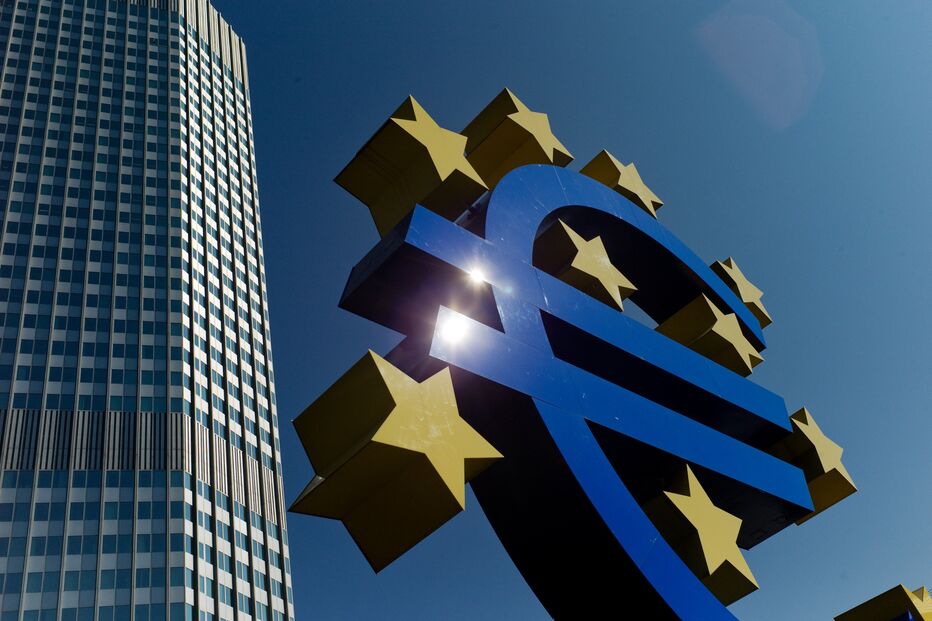
The European Central Bank, headquartered in Frankfurt, sets monetary policy for the 20 European Union member states that use the euro currency. Nagel sits on the central bank Governing Council, the primary decision-making body responsible for setting interest rate policy across the eurozone.
If implemented, the decision will mark a return to monetary tightening following a 25 basis point increase in June that set the ECB deposit rate at 2.25 percent. The June rate increase was executed in response to persistent inflationary pressures across the single currency area.
Eurozone inflation and policy pressure
Nagel comments align with statements made last week by Isabel Schnabel, a member of the ECB Executive Board. Speaking to Bloomberg, Schnabel stated that inflation was unlikely to return to the ECB target rate of 2 percent over the medium term under current borrowing costs, making further monetary policy tightening necessary.
The pressure on central bankers was underlined by official statistics released this week by Eurostat, the statistical office of the European Union based in Luxembourg. Eurostat reported that annual inflation in the eurozone rose to 3.3 percent in August, up from 2 percent recorded during the same month a year earlier.
According to Eurostat, energy prices provided the main upward pressure on consumer prices across the currency union. Energy inflation in the eurozone accelerated to 14.3 percent in August, rising from 10.3 percent recorded in July.
The European Central Bank maintains a formal mandate to keep annual inflation at 2 percent over the medium term. The sharp increase in energy costs has pushed consumer price growth significantly above that target.
Mortgage costs and Portuguese housing market
Expectations of higher central bank rates have already affected financial markets and mortgage borrowers in Portugal. Euribor interest rates, the interbank benchmark rates widely used in Portugal to determine variable rate mortgage payments, have risen in anticipation of the September decision, increasing monthly installments for homeowners.
Data published by the Banco de Portugal, the Portuguese central bank, showed that the average interest rate on new housing credit operations climbed to 2.96 percent in July. The figure includes both new loan contracts and renegotiated mortgage agreements.
According to the Banco de Portugal, the July rate represents an increase of 0.02 percentage points from the 2.94 percent recorded in June. It is the highest average mortgage interest rate recorded in Portugal since May 2025, when the rate reached 2.97 percent, although rates previously reached 4.31 percent in September and October 2023.
In response to rising borrowing costs for young families, the Portuguese Government reinforced its public guarantee scheme for youth housing loans by an additional 100 million euros. The decision was published in the official government gazette, Diário da República.
Banking deposits and public debt yields
Rising interest rates have also influenced commercial bank balances across Portugal. New bank deposit balances reached a historic high in July as interest rates on deposits rose alongside broader borrowing costs.
The changing monetary environment has affected Portuguese government debt as well. Yields on Portuguese public debt across 2-year, 5-year and 10-year maturities have increased again in secondary financial markets.
Higher bond yields are projected to increase state borrowing expenses in the coming years. Public debt interest payments are set to cost the Portuguese government an additional 2 million euros per day in 2027.