
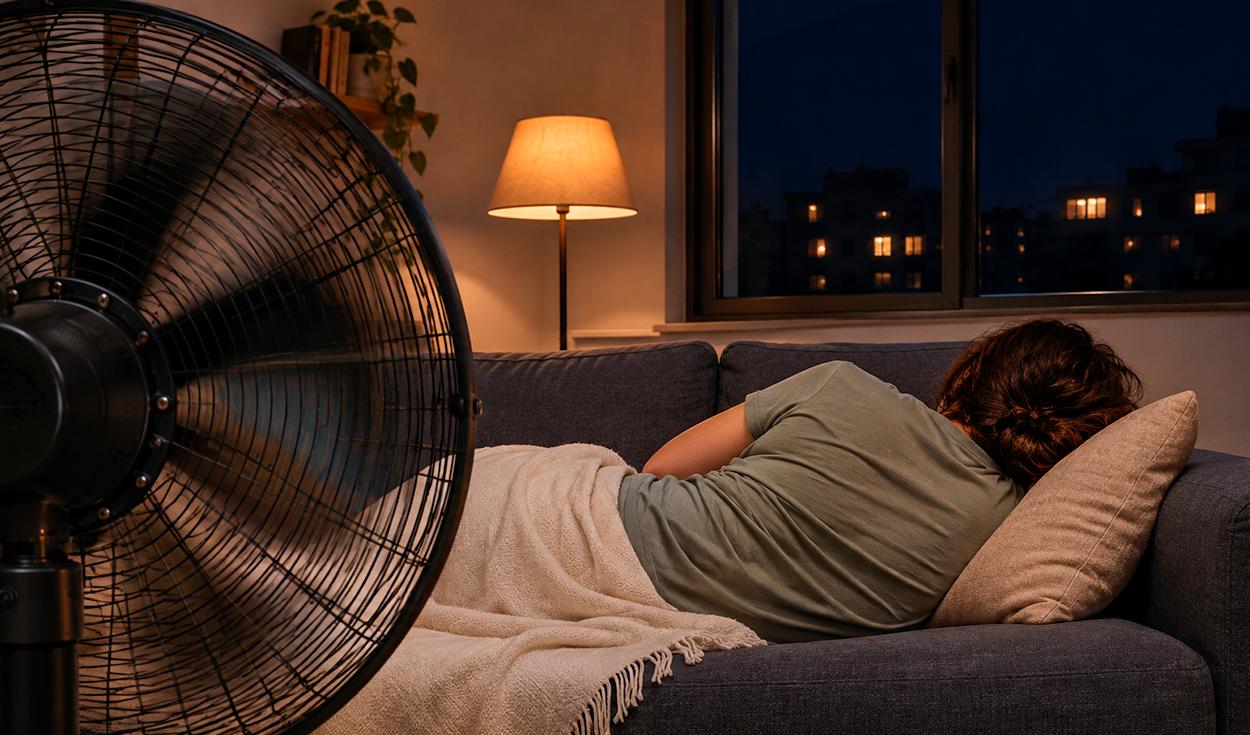
Sleeping with a fan running overnight can bring fast relief from the heat, but doctors warn it can also trigger four health problems, ranging from worsened allergies and asthma to dry skin, nasal congestion and muscle stiffness.
William Lu, medical director at the Dreem Health sleep clinic, told Tom's Guide that although fans improve the circulation of air in a room, they do not filter it. That means dust, pollen or pet dander already floating in a bedroom simply gets stirred up and moved around rather than removed.

The cooling sensation a fan produces comes from moving air passing over the skin, which speeds up the evaporation of sweat and helps the body shed heat. That breeze is what makes a hot night feel more bearable, but the same airflow can carry irritants directly toward a sleeper's face for hours at a time.
The Four Effects Doctors Warn About
How much discomfort a person feels depends on how long they are exposed to the airflow, how many allergens are in the bedroom and their own sensitivity, doctors say. People with asthma, allergic rhinitis or dry eye may notice their symptoms intensify overnight or just after waking.
The first effect is a worsening of allergies or asthma. A running fan can disperse dust, pollen or pet dander that has built up in the room, and in sensitive people this exposure can bring on sneezing, itching or watery eyes, and can aggravate coughing or wheezing in those with asthma.
The second is muscle stiffness. A guide from Healthline, reviewed by physician Raj Dasgupta, points to muscle tension as a possible issue when the airflow concentrates on the same part of the body for hours. Neck pain on waking can also be linked to an uncomfortable sleeping position, according to MedlinePlus.
The third is nasal congestion. Continuous exposure to moving air can dry out the mucous membranes of the nose and throat. Praveen Bhatia, a respiratory medicine specialist, told Tom's Guide that this can cause nasal congestion, a sore throat or a dry mouth upon waking.
The fourth is dryness of the skin and eyes. A direct, prolonged current of air can dry out the skin, particularly for people who already have eczema, according to the Mayo Clinic. In the eyes, the airflow can speed up the evaporation of tears and increase irritation.
How to Reduce the Risks
To limit the impact on respiratory health, the fan should be placed away from the bed, with the airflow directed toward another part of the room rather than straight at the face. Using the oscillating mode, where available, helps spread the breeze rather than concentrating it on one spot. Healthline also recommends setting the fan's timer so it switches off once a person has fallen asleep, cutting down on hours of continuous exposure overnight.
Keeping the room clean is also important. Frequent cleaning of the fan blades and nearby surfaces removes accumulated allergens. For asthma linked to dust mite sensitivity, the United States Centers for Disease Control and Prevention suggests washing bedsheets weekly and vacuuming with a HEPA filter.
If the air in the bedroom is too dry, the United States Environmental Protection Agency advises keeping indoor relative humidity between 30% and 50%. It recommends using a humidifier only when necessary and disinfecting its water tank regularly to stop it becoming a source of mold or bacteria.
Test yourself
According to William Lu, what do fans fail to do while circulating air?
Which agency recommends keeping indoor humidity between 30% and 50%?
What did Praveen Bhatia say continuous airflow from a fan can cause?
Have your say
Do you sleep with a fan on at night?