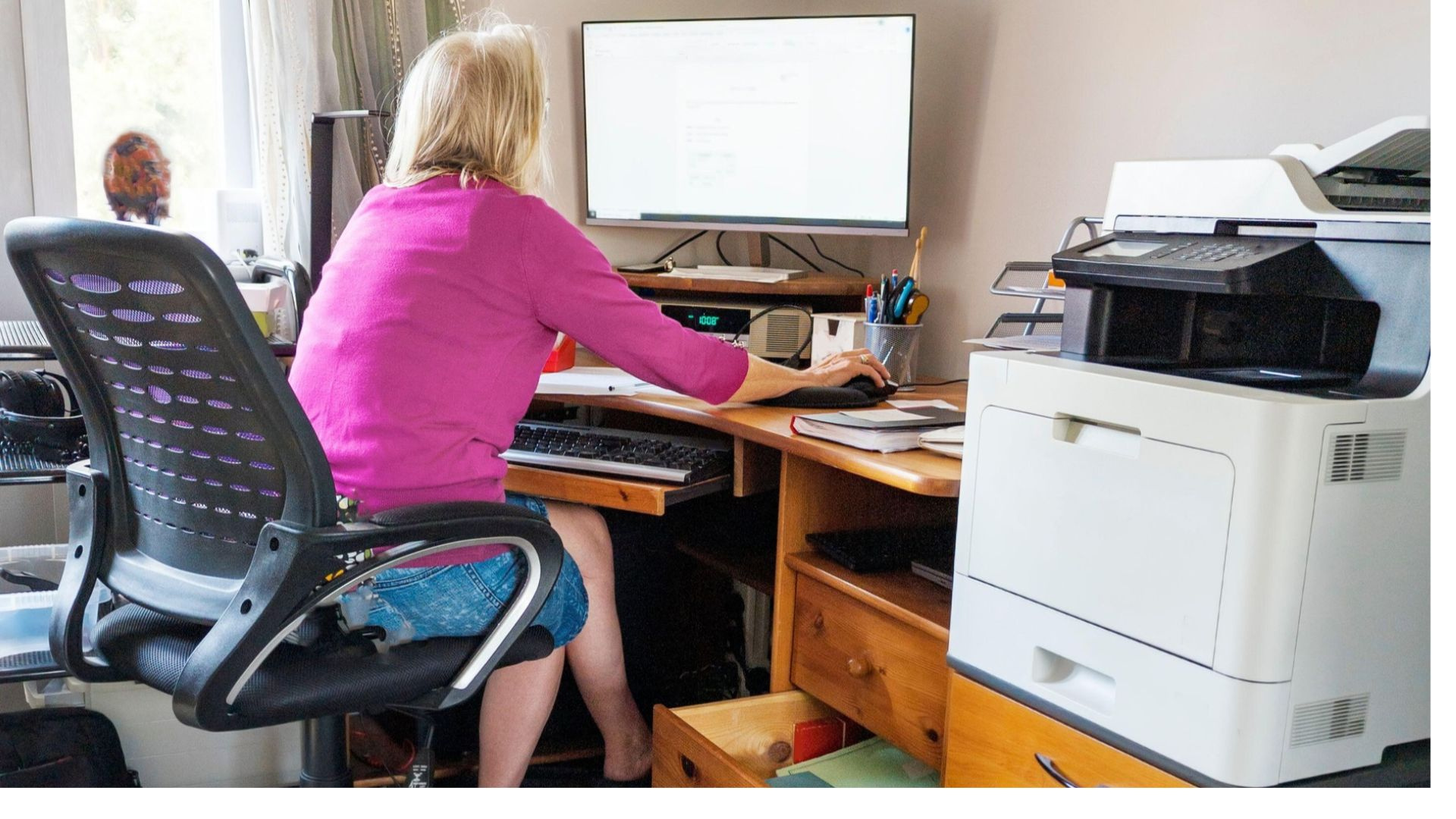
The High Court of Justice of Catalonia has ruled that a company unfairly dismissed an employee who refused to return to the office after working remotely for nearly nine years, ordering the firm to either reinstate him or pay him 24,863.01 euros in compensation.

The court found that remote work had effectively become one of the worker's employment conditions, even though it had never been set out in a specific written agreement, according to the ruling.
Nine years working from home before the order to return
The employee began working for the company in January 2015, initially on a part-time basis. He worked mainly from home from the start, going into the office on Mondays for a few hours to attend meetings or whenever the company asked him to be present.
In January 2023 he moved to a full-time, 40-hour week, continuing under the same remote arrangement. On March 8, 2024, however, he received a letter of disciplinary dismissal.
The company said it based its decision on repeated disobedience and a breach of good faith in the contract. Among the reasons it gave were his refusal to attend the office in person and a suspected collaboration with another company.
Court says remote work had become an established condition
The case reached the Catalan High Court after a lower court initially upheld the company's decision. The employee appealed, asking that the dismissal be declared unfair.
In its ruling dated September 30, 2026, the Catalan court concluded that remote working had become incorporated into the terms of the employment relationship, despite the absence of a specific written agreement.
The judges found that the company could not unilaterally change a working arrangement that had been maintained for years. They also noted that it had not been shown that the employee's refusal to return had caused any harm to the company.
The ruling also rejected the idea that the employee could be sanctioned for failing to attend a trade fair that had not yet begun at the time of his dismissal. It further found that it had not been proven that he was working for competing companies.
Company must reinstate him or pay 24,863 euros
The ruling declares the dismissal unfair and leaves the company with two options: bring the employee back under his previous conditions, paying any wages owed for the period of the dispute, or pay him compensation of 24,863.01 euros.
The decision cites Spain's Law 10/2021 on remote work, whose Article 8 states that any changes to a remote work agreement, including the proportion of time spent in the office, must be agreed by both parties and put in writing. The law also requires that remote work agreements themselves be set down in writing.
In this case, the court said, its decision took into account the specific circumstances and the practice maintained over several years.
Not a blanket right to refuse the office
The court was careful to note that the ruling does not mean any employee can refuse to return to the office without consequences. The key issue, it said, is whether remote work forms part of that employee's established working conditions, and how the employer goes about trying to change them.
Test yourself
How many years had the employee worked remotely before being dismissed?
How much compensation must the company pay if it does not reinstate the worker?
What did the Catalan court say the company could not do?
Have your say
Should companies be able to end long-standing remote work arrangements without a written agreement in place?
Where it happened
Barcelona, Spain