


Australia's Royal Australian Air Force deployed its new MC-55A Peregrine spy plane on its first overseas mission, monitoring disputed South China Sea islands.
Flight tracking records reveal that the intelligence aircraft, carrying tail number A51-004, departed RAAF Base Edinburgh in South Australia on July 28 and landed at Clark Air Base in the Philippines. RAAF Base Edinburgh, located 25 kilometers north of Adelaide, serves as the primary operational hub for Australia's military surveillance, reconnaissance, and electronic warfare forces.
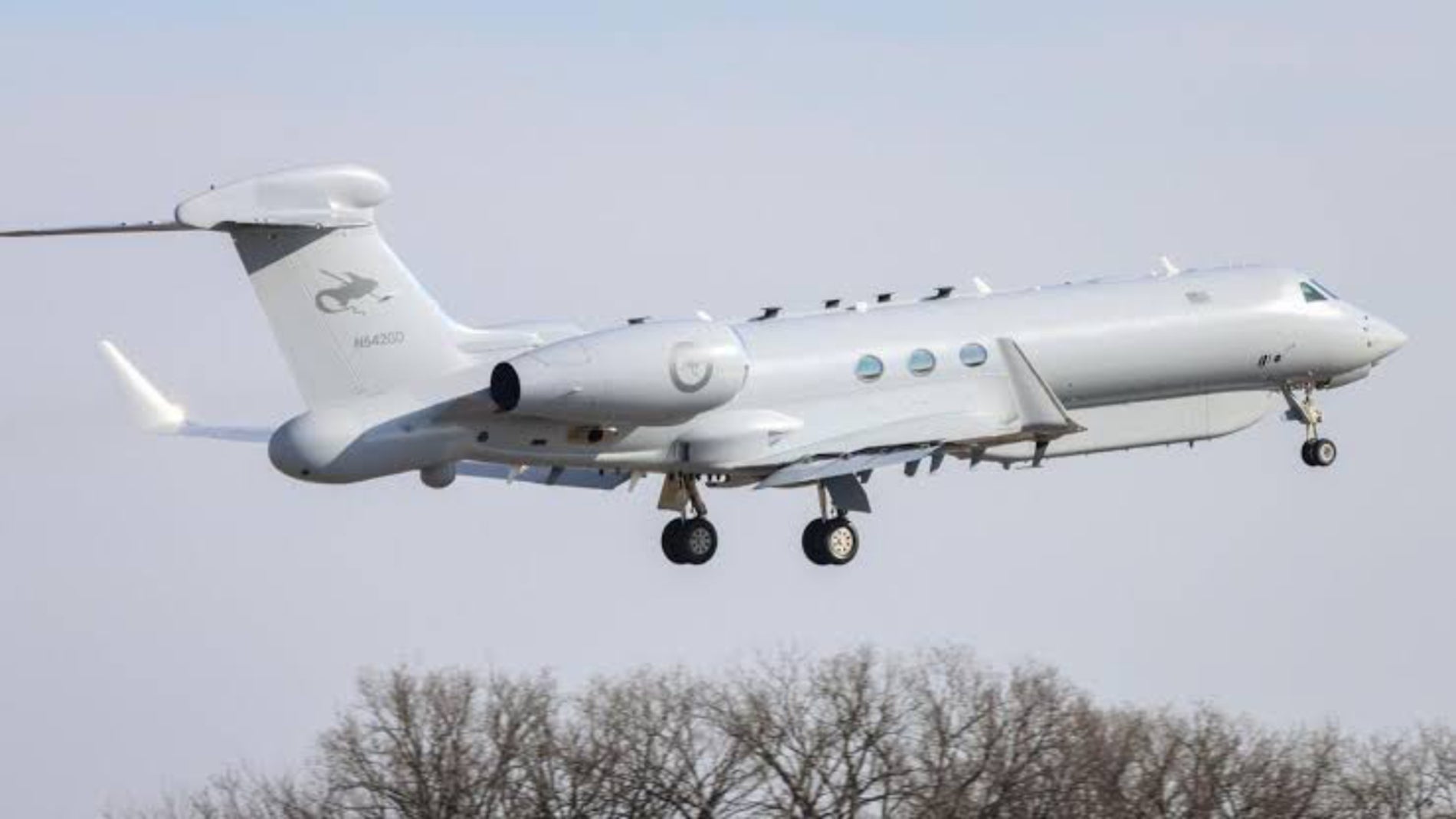
The deployment represents the first operational deployment outside Australian territory for the newly acquired electronic warfare aircraft. The mission lasted seven days in the strategic waters of the South China Sea, featuring multiple operational sorties originating from the Philippine military facility.
Individual flight missions lasted between four and nine hours. The majority of these operations were conducted within or very close to Philippine sovereign airspace, executing repeated patterns around the islands of Mindoro and Palawan, which border the eastern margin of the South China Sea.
However, on four separate sorties, the MC-55A altered its flight path and headed directly west over the open waters of the South China Sea. During those specific flight legs, the crew turned off the aircraft's tracking transponder to prevent detection by civilian air traffic radar, keeping the transponder deactivated for continuous blocks of three to four hours.
The Australian Defence Force declined to elaborate on the specific activities conducted during the un-tracked flight windows. Official representatives restricted their remarks to confirming that the overseas deployment was part of Australia's routine military activities across the broader Indo-Pacific region.
Un-tracked Flights Over Disputed Maritime Reefs
The periods during which the aircraft went electronically dark coincide with flights directed toward key contested maritime features in the region, including the Spratly Islands and Scarborough Shoal. Defense analyst Mike Yeo highlighted the operations in an August 13 report, noting that the Australian MC-55A had been conducting four- to eight-hour missions out of Clark Air Base since late July, occasionally pushing deeper into the South China Sea.
The flight paths brought the surveillance aircraft over one of the most heavily militarized and geopolitically sensitive maritime corridors in the world. The South China Sea serves as a critical global trade route connecting East Asia with Europe and the Middle East, carrying trillions of dollars in annual shipborne commerce.
The Spratly Islands archipelago is claimed in whole or in part by China, the Philippines, Malaysia, Taiwan, and Vietnam, all drawn by its strategic location and potential oil and natural gas reserves. Over the past decade, Beijing has transformed several disputed reefs into fortified military outposts featuring long concrete runways, hardened aircraft hangars, surface-to-air missile batteries, and advanced radar installations.
Scarborough Shoal, a high-tide elevation located roughly 160 kilometers off the western coast of the Philippine island of Luzon, remains another persistent flashpoint between Manila and Beijing. China maintains continuous coast guard and maritime militia patrols around the shoal to enforce its sovereignty claims, prompting counter-surveillance and freedom of navigation operations by allied nations, including Australia and the United States.
Upgrading Electronic Warfare Capabilities
The operational debut of the MC-55A Peregrine marks a major upgrade in Canberra's maritime intelligence capabilities. Historically, the Royal Australian Air Force relied primarily on its fleet of Boeing P-8A Poseidon maritime patrol aircraft and legacy AP-3C Orion electronic warfare planes to monitor maritime activity across its northern approaches.
The MC-55A is operated by No. 10 Squadron, the historic RAAF unit that previously flew the AP-3C Orion from RAAF Base Edinburgh. The Australian government ordered four Peregrine aircraft, three of which were delivered to the air force between January and June of 2026.
Built upon the high-altitude, long-range Gulfstream G550 business jet platform, the MC-55A has been heavily modified into a specialized airborne intelligence, surveillance, reconnaissance, and electronic warfare system. The aircraft integrates advanced signals intelligence equipment designed to intercept, analyze, and locate hostile radar transmissions and radio communications.
In addition to collecting passive electronic intelligence, the Peregrine functions as a real-time data link node. The aircraft can relay tactical information instantaneously across military networks, interconnecting friendly aircraft, surface warships, and ground troops to provide a unified operational picture.
Advanced Radar and Allied Cooperation
The Peregrine carries sensor technology inherited directly from the United States Air Force's Boeing RC-135 Rivet Joint electronic reconnaissance aircraft. The platform is understood to feature Active Electronically Scanned Array radar systems capable of conducting stand-off electronic attacks, jamming adversary systems from safe distances while mapping electronic emissions.
Staging the MC-55A out of Clark Air Base signals an important shift in Australian military tactics, demonstrating a willingness to project advanced surveillance assets closer to potential conflict zones. RAAF plans contemplate operating the aircraft from forward facilities in the Philippines, Malaysia, and Singapore, as well as projecting missions from the Cocos (Keeling) Islands in the eastern Indian Ocean.
By combining the specialized signals intelligence and electronic attack capabilities of the MC-55A Peregrine with the maritime surveillance of the P-8A Poseidon, the Royal Australian Air Force and its international allies gain a far clearer picture of Chinese naval movements, communications networks, and radar coverage throughout the Indo-Pacific.


