

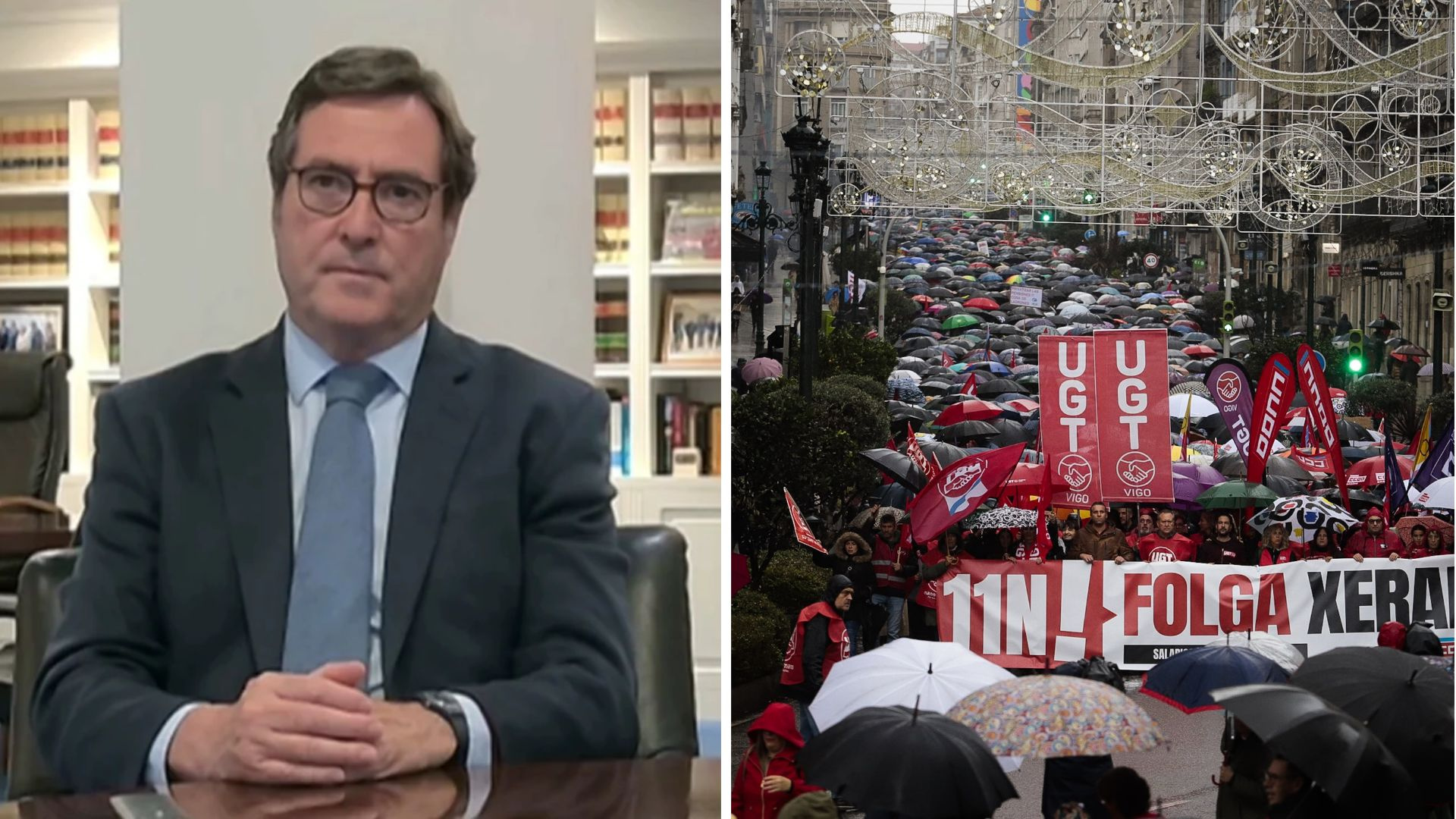
Antonio Garamendi, the head of Spain's main business federation, has declared the latest national strike a failure, saying worker participation remained below five per cent.
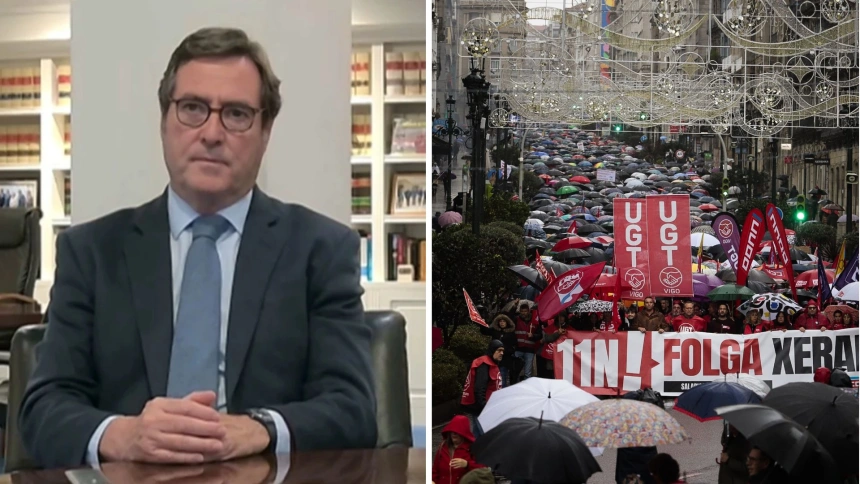
The business leader calculated the financial damage of the stoppage at 250 million euros and accused the Spanish government of encouraging political street protests ahead of national elections.
Garamendi delivered his assessment during an interview on the television programme El Cascabel on the Spanish network TRECE, hosted by José Luis Pérez. He described the mobilization as an absurd, official, political, and preventive strike that failed to convince the country's workforce.
The Spanish Confederation of Business Organisations, known as the CEOE, serves as the primary representative body for Spanish businesses in national negotiations. As its president, Garamendi represents hundreds of thousands of companies across industry, commerce, and services in discussions with trade unions and the state.
Energy Consumption and Strike Turnout
To support his low turnout figures, Garamendi pointed to national electricity consumption as the most reliable indicator of actual economic activity during a general strike. Power demand across the country serves as an objective gauge because factory machinery and commercial facilities register usage immediately on the national power grid.
According to Garamendi, electricity usage dropped by only 2.5 per cent during overnight shifts and averaged a decrease of 4.5 per cent over the entire day. He noted that the drop never reached five per cent, whereas previous Spanish general strikes caused nationwide power demand to plunge by roughly 15 per cent.
Those calculations directly contradicted reports released by trade union confederations, which claimed worker participation reached as high as 90 per cent in specific sectors. Major unions typically organise nationwide walkouts across manufacturing, transport, and public services to demand workplace reforms and higher wages.
Government Support and Election Warnings
Garamendi strongly condemned the Spanish government for its conduct, accusing the executive of actively promoting the walkout rather than maintaining institutional neutrality. He noted that on the day before the strike, two government ministers at the Moncloa palace in Madrid spoke publicly in favour of the protest.
The business chief expressed dismay that the deputy prime minister and labour minister announced that she almost wanted to join a picket line herself. He argued that cabinet ministers crossed an unacceptable boundary by cheering on a strike directed against economic conditions.
Garamendi highlighted what he called a sharp paradox within the administration's messaging. He observed that ministers described the general strike as logical while at the exact same time boasting to the public that the Spanish economy is rocketing ahead.
He linked the timing of the industrial action directly to political maneuvering ahead of the upcoming election, calling the walkout a warning shot to voters and institutions. With citizens preparing to vote within days, Garamendi warned that taking to the streets because someone dislikes an electoral outcome is fundamentally anti-democratic.
Economic Cost and Business Impact
The CEOE calculated the direct economic cost of the work stoppage at around 250 million euros across the Spanish economy. Garamendi stressed, however, that the monetary losses were secondary to the damage inflicted upon Spain's international reputation.
He asked what image of Spain the disruption presented to international observers, questioning whether strikes and civil disorder would harm foreign investment. He placed particular emphasis on tourism, which represents one of Spain's largest economic pillars and employs millions of people in hospitality and transport.
Garamendi also rejected government claims that private employers bear the blame for high inflation and the rising cost of housing across the country. He questioned whether public administrations bore no responsibility at all, pointing out that taxes make up 40 per cent of the total price of a newly built home.
In addition, he criticised the central government for keeping 19 billion euros in extra tax revenue instead of adjusting personal income tax brackets for inflation. By failing to deflate the IRPF rates, Garamendi said, the state prevented those funds from reaching the pockets of workers.
Social Peace and Condemnation of Picket Violence
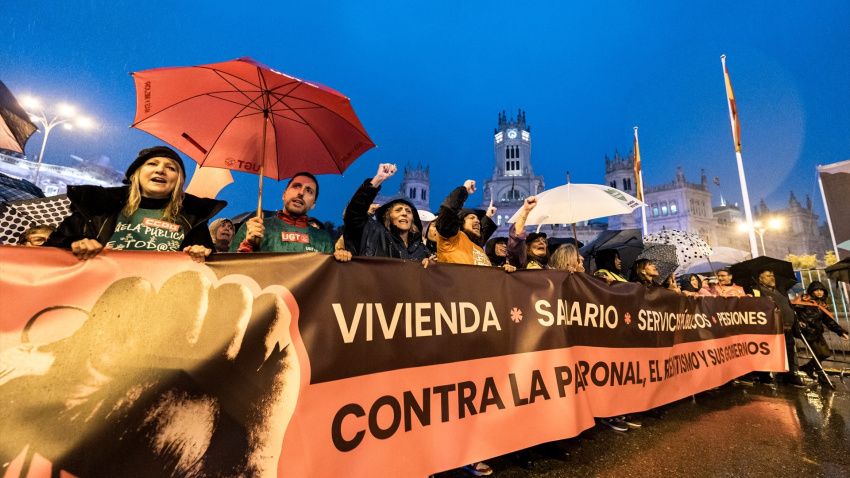
Despite the low participation in the strike, Garamendi stated that trade unions had not lost their negotiating strength and insisted that labour unions remain necessary partners in Spain. He stressed that collective bargaining requires representative organisations on both sides of the table.
The employers' leader called on all parties to return to calm and sit down to negotiate lasting agreements. He stated that social peace is the finest infrastructure a country can possess, far more valuable than physical installations.
Garamendi forcefully condemned violent incidents carried out by strike pickets during the day, specifically pointing to an attack on an elderly man in a bar. He stated that people who wear hoods or balaclavas cannot claim to be informative pickets, calling that masked behaviour something entirely different.
He concluded his television appearance by calling on political and union leaders to abandon ideological posturing in economic policy. He remarked that in economics two and two always make four, urging a pragmatic approach to Spain's industrial challenges.


