
The Alhambra and Generalife Board has cordoned off areas of the Alcazaba fortress in Granada to inspect and secure battlements damaged in recent earthquakes.
Technical inspections carried out across the monumental complex following tremors last week identified specific anomalies in battlements at the Torre del Homenaje and the Torre Quebrada. Officials from the regional government of Andalusia stated that warning signs and barriers have been installed to eliminate any risk of falling debris to the exterior.
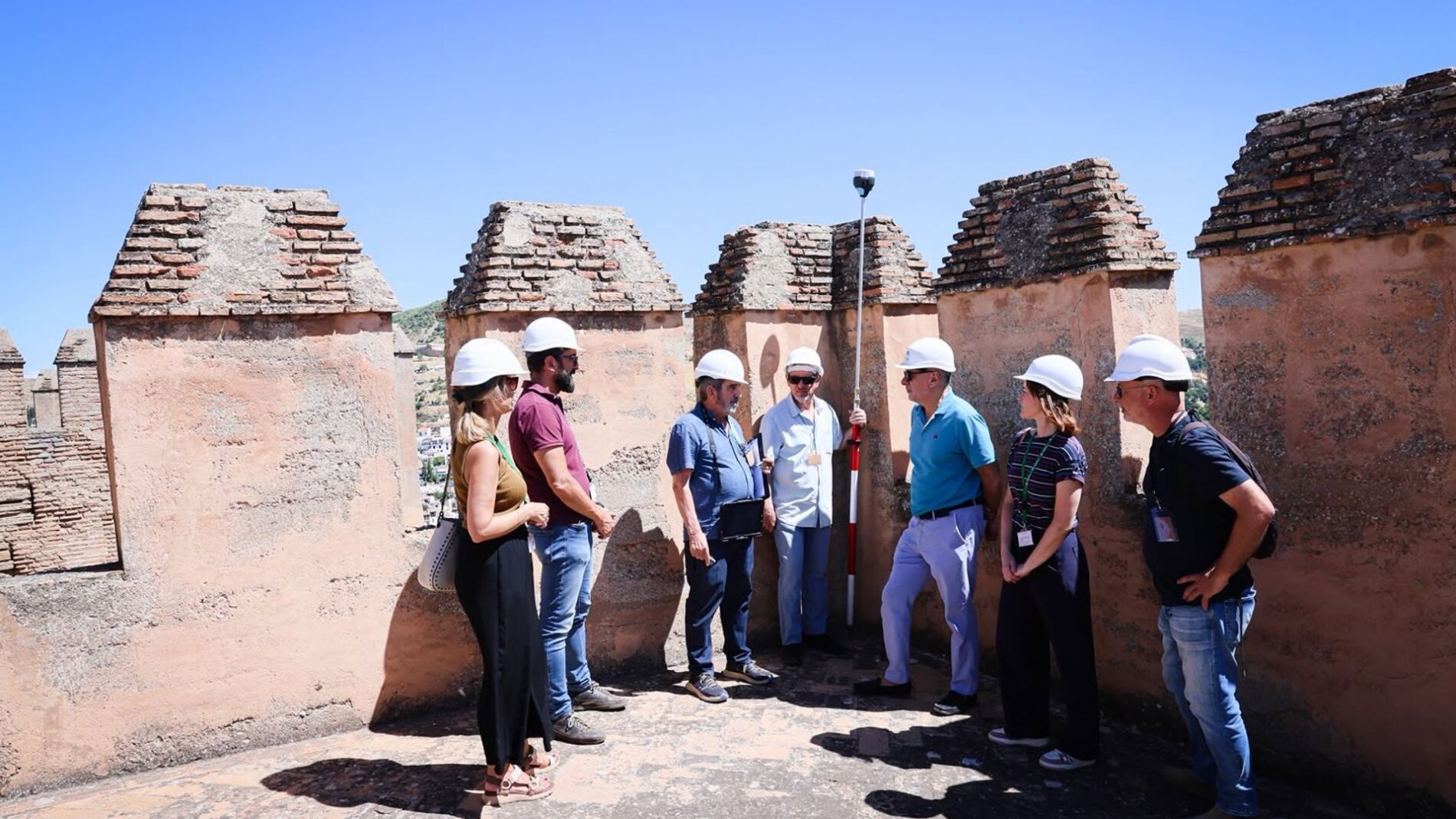
The affected battlements, which date to restoration work carried out during the early decades of the 20th century, have been stabilized as a precaution against future seismic events. Technicians confirmed that the main structures of the towers suffered no significant structural damage.
Public access to the Alcazaba section remains temporarily suspended while technical teams complete detailed surveys of the structures. Fieldwork began this week to gather precise measurement data and analyze the conservation state of the historic walls.
Digital modeling and earthquake research
The ongoing site inspections form part of a broader monitoring campaign established by the governing board following recent seismic activity in the region. Technical teams are scanning the monument to detect fine cracks, surface fissures, and structural shifts across all heritage assets within the complex.
Data gathered during the structural surveys will be integrated into digital building models to study how the medieval structures react to ground tremors. The information will support the launch of the Alhambra Living Lab, a research project built around a digital twin of the complex that is scheduled to launch within a few months.
The Alhambra is a medieval palace and fortress complex in Granada, southern Spain, recognized as a UNESCO World Heritage site. Originally constructed as a military stronghold, the complex later served as a royal residence for the Nasrid dynasty before coming under Christian control during the Reconquista.
History of the affected towers
The Torre del Homenaje, or Keep, stands on the eastern flank of the Alcazaba as one of the tallest structures in the entire complex, commanding views over the surrounding landscape. Believed to have been constructed during the reign of Muhammad I between 1232 and 1273, the tower features an upper-floor courtyard house that may have served as the earliest royal residence within the Alhambra.
Located between the Keep and the Torre Hueca, the Torre Quebrada was built in the 14th century during the reign of Yusuf I over the foundations of an earlier Zirid fortification. The tower was later used to house squires assigned to the military garrison following the Christian conquest of Granada, and earned its name, meaning Broken Tower, after a partial collapse in the 19th century left a prominent vertical crack in its masonry.
The Alhambra and Generalife Board confirmed that detailed monitoring and technical reviews will continue under active safety protocols. Officials said regular safety assessments will remain in place to protect the historic site alongside its visitors and workforce while public access to the Alcazaba remains on hold.