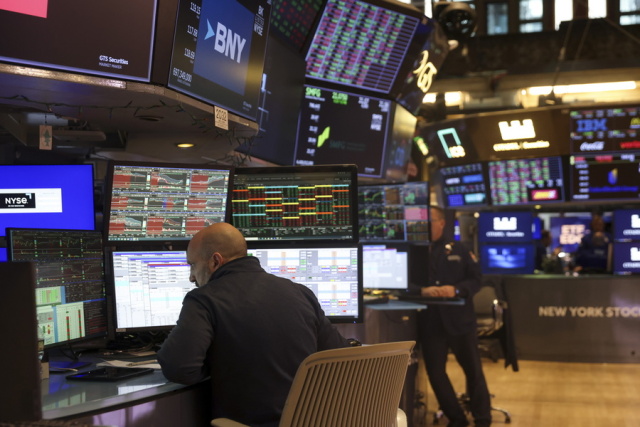
Wall Street stocks rebounded on Wednesday after the U.S. Department of the Treasury announced plans to expand bond buybacks to curb soaring borrowing costs.
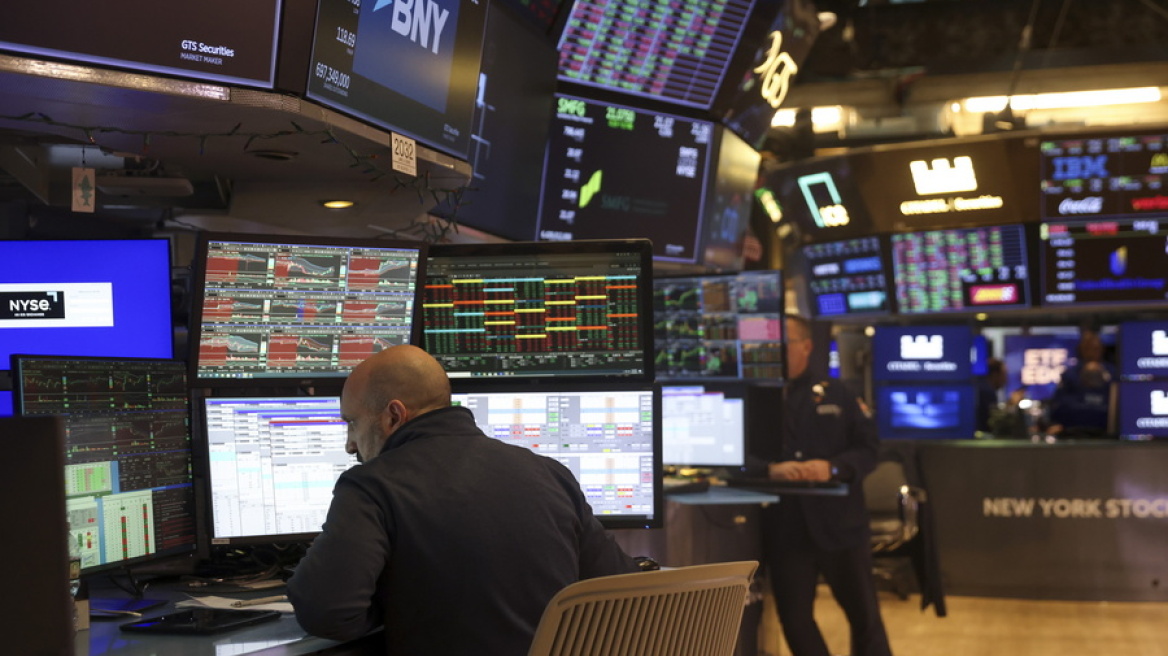
The Dow Jones Industrial Average rose 0.22 percent to close at 53,463 points. The S&P 500 index gained 0.21 percent to reach 7,707 points, while the tech-heavy Nasdaq Composite added 0.16 percent to finish at 26,331 points.
The positive close snapped a three-day losing streak across major U.S. equity benchmarks. However, overall gains remained modest as ongoing geopolitical conflict in the Middle East drove crude oil prices higher and investors digested hawkish minutes from the Federal Reserve.
US Treasury Bond Buyback Plan
The rally in financial markets was sparked by an official announcement from the U.S. Department of the Treasury regarding its debt management operations. Just two weeks after releasing its standard buyback schedule for the current quarter, the department declared that it would at least double the size of its liquidity support buyback operations for government bonds with maturities ranging from 10 to 30 years.
Beginning September 9, 2026, liquidity buyback operations for nominal coupon securities in the 10-to-20-year and 20-to-30-year maturity brackets will double from 2 billion dollars to 4 billion dollars per operation.
Following the announcement, yields on U.S. government debt moved significantly lower. The yield on the 30-year U.S. Treasury bond fell by approximately nine basis points to 5.195 percent. The benchmark 10-year Treasury yield dropped to 4.653 percent. Bond markets maintained these gains even after the Treasury conducted a 16 billion dollar auction of 20-year securities.
The Treasury buyback program is designed to enhance market liquidity by purchasing older, less liquid government securities from primary dealers and replacing them with current issues. Government bond markets had experienced severe turbulence in recent sessions as investors demanded higher returns to offset persistent inflation concerns and expanding federal fiscal deficits. Prior to the Treasury intervention, the 30-year bond yield had surged to its highest level in 19 years. Yield pressures were further intensified by heavy corporate borrowing to finance investments in artificial intelligence infrastructure, alongside softer demand from traditional institutional debt purchasers.
Analyst Reactions to Treasury Action
Market analysts offered cautious responses to the intervention. Peter Tuz, president of Chase Investment Counsel, stated that equity markets had grown anxious over rising long-term interest rates. He noted that the decision by the Treasury helps ease market pressure and provides support for stocks, though he warned that it remains uncertain whether the decline in yields will persist. Tuz added that long-term interest rates could resume their upward trajectory within one or two weeks.
Lawrence Gillum of LPL Financial echoed that cautious outlook, describing the Treasury move as more of a temporary band-aid than a permanent solution for debt market pressure. Nevertheless, Gillum emphasized that the policy adjustment sends a clear signal that Treasury officials are closely monitoring fixed income conditions and intend to act to prevent borrowing costs from rising too rapidly.
Chase Investment Counsel and LPL Financial are major financial advisory and market research firms that monitor U.S. capital markets, providing portfolio strategy and economic analysis for retail and institutional investors.
Federal Reserve Meeting Minutes
Investor enthusiasm was tempered by details released from the latest Federal Reserve monetary policy meeting. The minutes revealed that several central bank officials favored raising interest rates at their July gathering. Furthermore, numerous participants assessed that additional monetary policy tightening would likely be required if inflation fails to show clear signs of cooling toward target levels.
According to the minutes, participants reiterated that assessing incoming economic data would remain central to their upcoming rate decisions. At the July meeting, three regional Federal Reserve bank presidents dissented from the majority decision and voted in favor of a 25-basis-point interest rate increase. The dissenting officials were Cleveland Fed President Beth Hammack, Dallas Fed President Lorie Logan, and Minneapolis Fed President Neel Kashkari.
Federal Reserve officials emphasized that inflation forecasts remain subject to a high degree of uncertainty, with risks leaning toward the upside. Policy makers noted that ongoing military conflict in the Middle East poses a key risk, warning that a prolonged confrontation could extend global supply chain disruptions and generate persistent upward pressure on consumer prices.
The Federal Reserve serves as the central bank of the United States, responsible for setting monetary policy, regulating commercial banks, and maintaining financial system stability. The Federal Open Market Committee holds regular policy meetings to determine short-term interest rate targets in effort to balance maximum employment with stable prices.
Middle East Conflict and Energy Markets
Geopolitical conditions in the Middle East showed no signs of easing as diplomatic positions between Washington and Tehran hardened. Donald Trump stated that no negotiations with Iranian officials were currently taking place or planned, confirming that the U.S. naval blockade remains fully enforced.
In response, authorities in Tehran reiterated that Washington must satisfy specific conditions before any discussions regarding the reopening of maritime passage can occur. Iranian demands include an immediate cessation of military hostilities on all fronts and the release of frozen Iranian assets. Commercial shipping through the Strait of Hormuz faced further restrictions, maintaining upward momentum in global energy markets.
Global crude prices reflected the elevated risk premium. Brent crude futures settled near 92 dollars per barrel, while West Texas Intermediate crude closed near 86 dollars per barrel.
The Strait of Hormuz is a narrow maritime passage between the Persian Gulf and the Gulf of Oman, serving as one of the world's most critical oil transit chokepoints. Millions of barrels of crude pass through the waterway daily, making global energy prices particularly sensitive to military disruptions in the region. Brent crude serves as the international benchmark for oil pricing, while West Texas Intermediate is the primary benchmark for U.S. crude.
Corporate Earnings and Stock Performance
Individual stock movements were highlighted by a dramatic surge in biotechnology equity. Moderna stock jumped more than 150 percent, recording the largest single-day percentage gain in the company's history. The historic rally followed an announcement that Moderna's investigational mRNA melanoma vaccine, developed in collaboration with pharmaceutical partner Merck, successfully met its primary endpoints in a late-stage clinical trial when administered alongside Merck's cancer drug Keytruda. The announcement also sparked a minor rally in Merck shares.
Semiconductor designer Marvell Technology achieved significant stock gains after announcing an expanded partnership with Alphabet's Google. Under the agreement, Marvell will develop customized silicon solutions for Google's artificial intelligence microchips. The transaction includes a financial warrant permitting Google to acquire up to nearly 59 million shares of Marvell common stock at an exercise price of 206.58 dollars per share.
Retail and consumer goods companies also registered positive stock performance. Home improvement chain Lowe's ended higher despite trimming its full-year sales outlook. Retail competitor Target gained after raising its annual sales forecast for a second consecutive quarter. Beauty products maker Estée Lauder experienced notable gains after quarterly financial results exceeded analyst projections, halting three consecutive years of annual revenue declines and demonstrating early progress in its corporate turnaround strategy.
Conversely, broad technology and semiconductor stocks faced downward pressure following a report by the Wall Street Journal regarding OpenAI. The report revealed that OpenAI presented second-quarter financial results that disappointed investors, showing that while revenues continued to grow, net financial losses expanded significantly. The news weighed heavily on chipmakers, sending shares of Broadcom, Advanced Micro Devices, and Micron Technology lower. Test equipment maker Keysight Technologies and semiconductor manufacturer Analog Devices also sustained stock losses despite posting strong earnings results.
mRNA technology utilizes synthetic genetic material to instruct cells to produce therapeutic proteins, a mechanism initially popularized during global vaccine development efforts. Custom silicon development has become a central focus for major technology conglomerates seeking specialized hardware to power large-scale artificial intelligence models and reduce reliance on off-the-shelf graphics processors.