

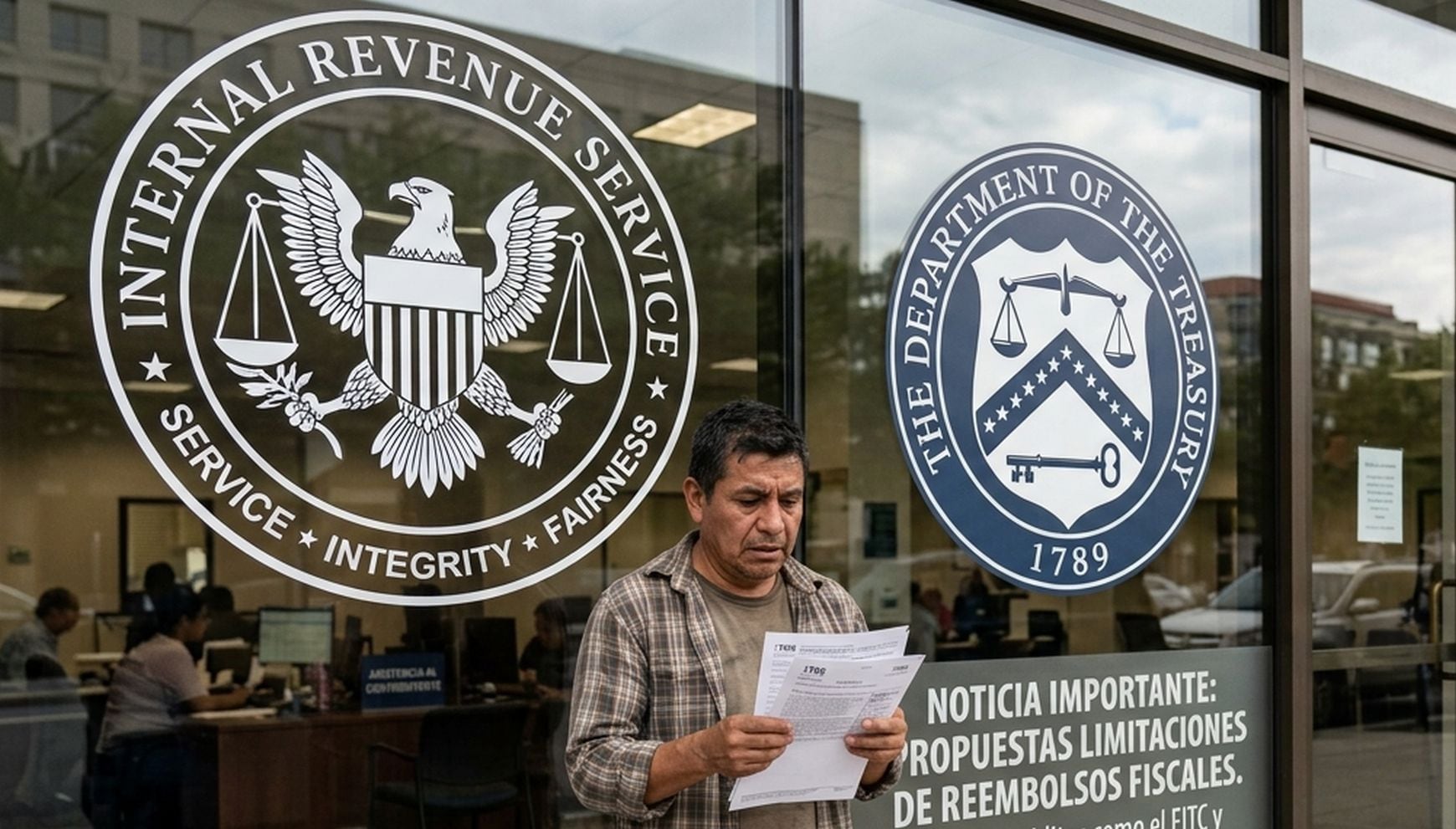
The US Department of the Treasury and the Internal Revenue Service proposed regulations on August 19, 2026, to restrict tax credit refunds for immigrants living in the United States.
Under the proposed rules, undocumented immigrants would no longer be eligible to receive cash refunds from four major individual tax credits. The measures apply standards established under the Personal Responsibility and Work Opportunity Reconciliation Act of 1996 to federal tax filings.
The joint proposal has raised widespread questions across immigrant communities regarding tax filing eligibility. Federal officials stated that the restrictions specifically target the refundable portion of credits that result in direct payments to taxpayers.
Four tax credits affected
The proposed regulations target the refundable portions of four specific individual income tax credits:
- The Earned Income Tax Credit, designed to assist low- and moderate-income workers and families.
- The Child Tax Credit, which provides financial support to qualifying families.
- The American Opportunity Tax Credit, which helps cover undergraduate college education expenses.
- The Adoption Tax Credit, which offsets eligible expenses associated with legal adoptions.
The proposal does not eliminate the credits entirely for all immigrant taxpayers. Individuals who do not qualify for cash refunds can still use the non-refundable portion of these credits to reduce their federal income tax liability to zero, provided they satisfy standard tax criteria.
Statements from tax officials
Internal Revenue Service Chief Executive Officer Frank J. Bisignano said refundable credits like the Earned Income Tax Credit were originally created to provide critical financial assistance to lower- and middle-income workers. He added that the proposed regulations ensure federally funded benefits go strictly to eligible taxpayers while safeguarding taxpayer dollars.
Treasury Secretary Scott Bessent said that under President Trump, the federal government is ending taxpayer-funded benefit payments to undocumented immigrants. Bessent said federal law prohibits these benefits and stated that the new regulations will prevent abuse, preserve the integrity of the tax system, and prioritize American taxpayers.
Eligibility requirements for refunds
The Treasury Department outlined three specific requirements that a taxpayer must meet to receive the refundable portion of any affected tax credit.
First, the taxpayer must be a US citizen, US national, or qualified alien on the date they file their initial federal income tax return requesting the credit. Qualified aliens under federal law include lawful permanent residents, asylum seekers, refugees, and specific categories defined by the 1996 reconciliation act.
Second, taxpayers must declare under penalty of perjury on their return that they are entitled to receive the refundable portion. Third, for married couples filing joint tax returns, only one spouse is required to meet the citizenship, nationality, or qualified alien status criteria.
Federal public benefits and application
Federal rules define only the refunded amount exceeding a taxpayer's income tax liability as a federal public benefit. Any credit amount used solely to reduce owed taxes does not count as a public benefit.
The Internal Revenue Service is the primary tax collection agency of the US federal government, operating under the Department of the Treasury. The Personal Responsibility and Work Opportunity Reconciliation Act of 1996 is a federal statute that restricts non-citizens from accessing certain federal public benefits unless they meet explicit statutory exemptions.
If finalized, the proposed rules will apply to tax years ending on or after the date the final regulations are published. The Treasury Department and the IRS announced that they will solicit public comments and requests for a public hearing on all aspects of the proposed rules before taking further action.


