

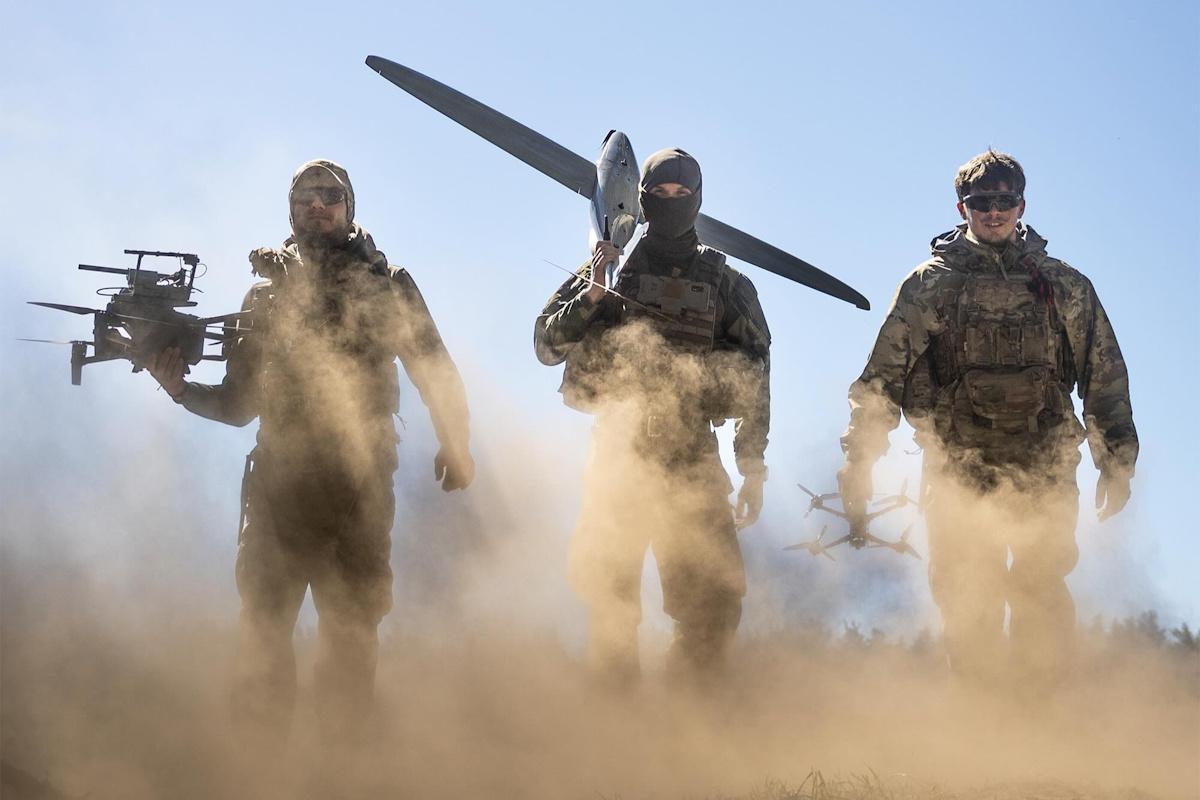
Ukrainian forces are using the domestically produced Delta management software to target enemy positions in three minutes on the battlefield. The digital system collects data to build a single battlefield picture, allowing command teams to coordinate strikes across multiple military units.
The United States military has described Delta as Ukraine's most powerful weapon, according to a report by The New York Times. The platform gathers multiple information streams, identifies targets, and distributes them to field units for rapid destruction.
Journalists noted that battlefield advantage relies heavily on speed, which Delta has significantly improved. A commander from Ukraine's Khartia unit said that artillery crews previously needed at least 20 minutes from receiving target coordinates to firing their first shot. That process now takes between three and five minutes.
Target tracking and software development
Military commanders highlighted target tracking over time as one of the platform's key capabilities. The software collects records on individual Russian howitzers spotted on the front line, showing troops when artillery pieces were first detected and when past attacks occurred. This historical data helps artillery teams avoid repeating previous operational mistakes.
Ukrainian engineers began developing the Delta system in 2014, when the military first deployed reconnaissance drones. Early unmanned aerial vehicles suffered from long delays when sending aerial data to frontline units. Engineers are now incorporating artificial intelligence tools and developing specialized chatbots for direct integration into Delta.
United States Army Secretary Daniel Driscoll noted that American defense systems currently lack the full range of capabilities built into the Ukrainian software. Washington, D.C., serves as the headquarters for the US Department of the Army, which oversees ground force technology.
Western lessons from battlefield innovation
Western defense experts warned that allied nations must adapt quickly to keep pace with digital warfare. Kateryna Bondar, a senior fellow at the Center for Strategic and International Studies in Washington, said Russia is developing a similar software system. However, she stated that Ukraine maintains the technological advantage, warning that Western militaries risk falling behind if they do not accelerate adoption.
Military leaders across Europe are analyzing Ukraine's technological adaptations. Heiko Hübner, deputy chief of the General Staff of the German army, said the primary lesson from Ukraine's defense against the Russian invasion is that rapid innovation can decide battlefield outcomes. He added that speed is vital not only for creating new technologies, but also for deploying and scaling them in active combat.


