

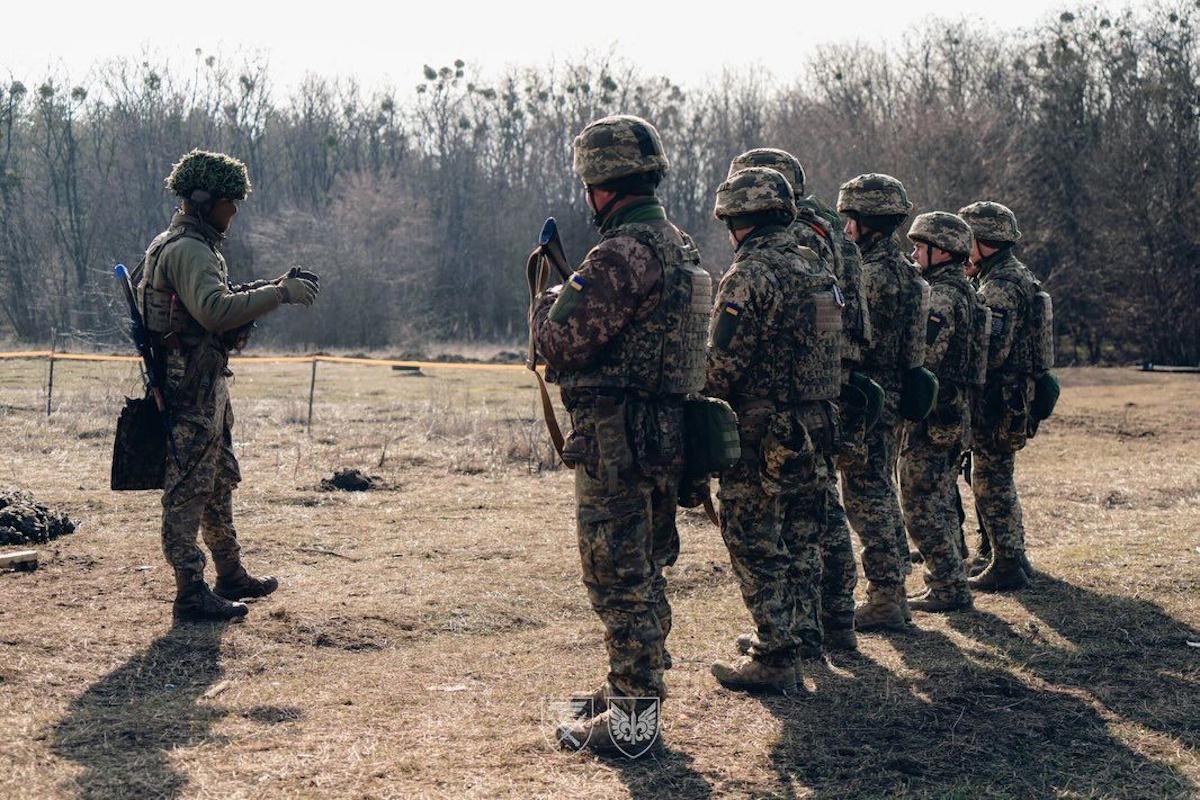
Ukraine has built an army that Russian President Vladimir Putin feared most after transforming from a weak structure, retired US Lieutenant General Mark Hertling wrote.
Writing in American opinion website The Bulwark, Hertling stated that Russian aggression accelerated the evolution of Ukrainian forces into one of the most adaptable militaries in modern warfare.
Recalling his first meeting with Ukrainian troops in Iraq in 2004, Hertling said the Ukrainian contingent suffered from severe issues with discipline, training, logistics, and combat readiness. He described the military of that era as retaining much of the institutional legacy of the Soviet Union, with incompetent officers, untrained sergeants, and widespread corruption.
Hertling remembered thinking at the time that the force still carried a significant portion of Soviet institutional DNA.
Military reforms and American cooperation
The situation later shifted when Hertling served as commander of US Army Europe, where he worked closely with Ukrainian military leaders. Ukrainian commanders sought to adopt modern training methods and sent non-commissioned officers to study at military institutions in the United States.
This partnership grew critical after 2014, when Russia occupied the Black Sea peninsula of Crimea and launched military aggression in the Donbas region of eastern Ukraine. Hertling observed that rather than breaking Ukraine, Russian aggression hastened the creation of the formidable national army that Putin sought to avoid.
The results of those changes became clear during Russia's full-scale invasion in February 2022. Russian forces met a vastly different military than the one they encountered in 2014, as junior commanders made independent decisions, small units adapted rapidly to changing conditions, and troops improvised when original plans failed, backed by experienced commanders.
Western learning and democratic identity
Hertling emphasized that Western assistance alone did not transform Ukraine's army, stating that Western forces did not turn the Ukrainian military into an American equivalent. Instead, Ukrainian troops adapted the training to build their own capable force, and Western militaries now study Ukrainian expertise in drone warfare, electronic countermeasures, combat reconnaissance, dispersed operations, and tactical flexibility.
While the military transformed, Hertling noted that political reform remains far more complex. Corruption has not been completely eliminated, and ongoing domestic debates continue over governance, public accountability, and the balance of power between parliament and the presidency.
However, Hertling argued that Ukraine is not built around corruption, highlighting the work of investigative journalists, law enforcement, anti-corruption bodies, opposition politicians, and protesting citizens. Marking 35 years of Ukrainian independence, he said the nation's greatest achievement is not Western weaponry or progress toward European Union membership, but a democratic identity that its citizens choose to defend.
Frontline changes since full-scale invasion
Separately, Ukrainian Armed Forces officer Andriy Onistrat reported to Ukrainian news agency UNIAN that over four years of full-scale war have radically altered both the army and the frontline. Onistrat stated that non-professional soldiers now make up 98 percent of the force, compared to two percent professional personnel.
Onistrat added that military culture, communication, initiative, horizontal connections, and individual charisma have grown significantly compared to the situation in 2022, becoming crucial factors on the battlefield.


