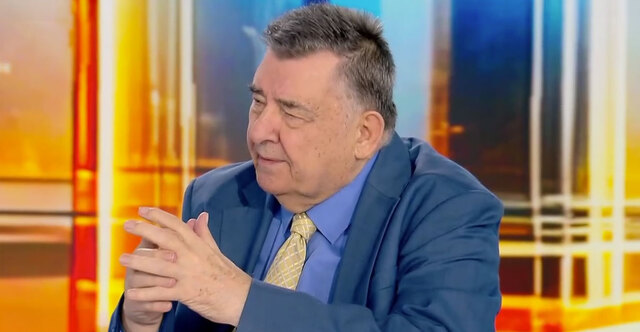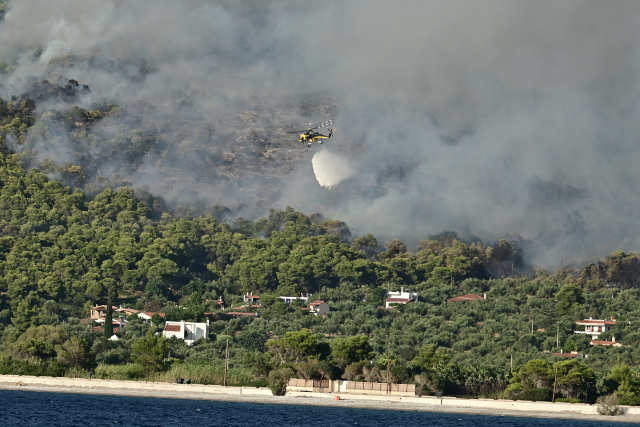
Greece's Civil Protection mechanism battled more than 400 fires in just ten days, Minister of Climate Crisis and Civil Protection Evangelos Tournas said, describing one of the most demanding stretches of this year's fire season.
Speaking to the Greek television channel SKAI, Tournas said the country went through a difficult ten-day period marked by gale-force winds and extremely harsh conditions, during which crews faced more than 400 fires. He said some of those fires were still keeping firefighting forces occupied.
Tournas pointed to the major fires that broke out one after another starting July 28 in Paros, southern Crete and Boeotia, saying the new bad weather was adding to an already strained operational situation. He said ground patrols were continuing with the participation of the Fire Service, the Armed Forces and security bodies, while aerial patrols were also beginning.
He stressed the need to avoid any new fire outbreaks, explaining that three aggravating factors were present at once: very strong winds, high temperatures reaching 40 degrees Celsius in western Greece and 38 to 39 degrees in the east, and a large amount of dry combustible material. Tournas said those three elements help fires start and spread quickly, and that new outbreaks were exactly what needed to be avoided, calling for greater care and responsibility from everyone.
Referring to the work of the Directorate for Combating Arson Crimes, the minister said authorities had already issued 680 fines and made more than 274 arrests through flagrante delicto proceedings. He said around 90 percent of those cases involved fires caused by negligence, with roughly 10 percent caused intentionally. Tournas said that whether caused intentionally or through negligence, the damage was the same, and he urged citizens to avoid any work or action that could start a fire, warning that a careless or inattentive act could destroy the environment, destroy property and threaten lives.
Extreme Weather Grounded Aircraft
Tournas described in detail the unprecedented conditions forces faced over the previous ten days, particularly the inability to use aerial firefighting resources because of gale-force winds and extreme turbulence.
On the fires in Rethymno, he said aircraft took off repeatedly and Canadair planes were deployed from Elefsina, but none managed to make a single water drop. He said the fires burned in Rethymno for three days without aircraft able to help.
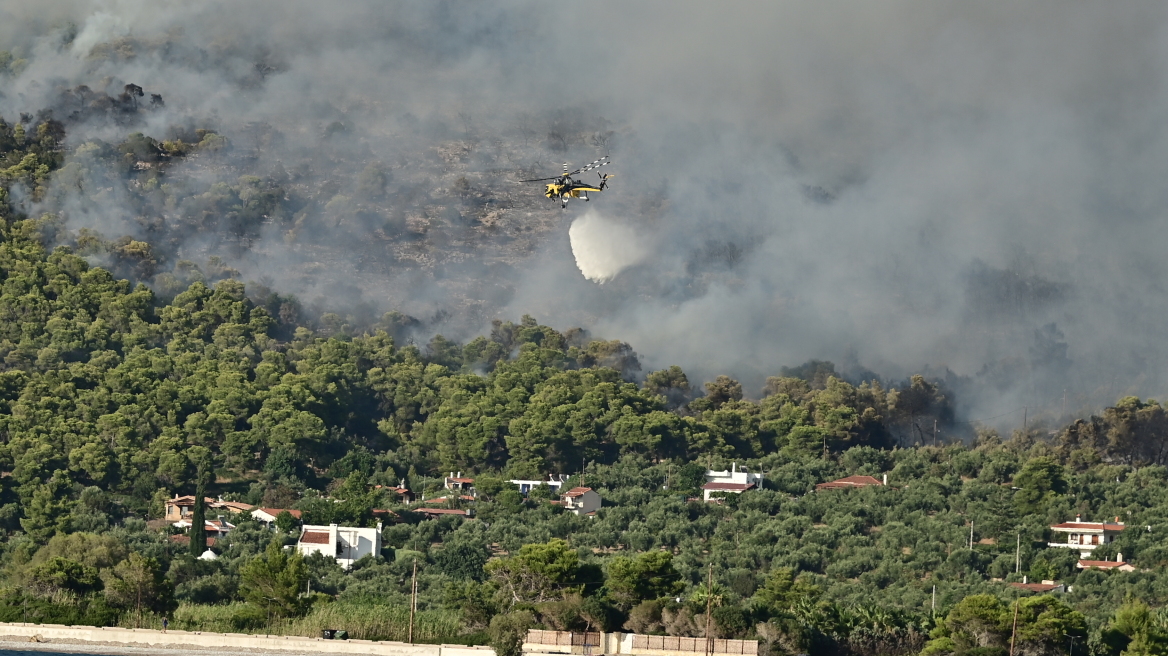
Similar conditions prevailed during the large fire in the Attica-Boeotia region. Tournas said that immediately after the fire broke out in Agios Vasileios, an order was given to divert two helicopters and two aircraft from Xironomi, but they were unable to make even one drop. He said 51 aircraft received orders from that point until noon the following day, and none of them managed to make a single drop or even take on water.
Tournas said this year brought a different kind of threat, with extremely strong northeasterly winds that acted as katabatic winds on the leeward sides of mountains, causing extreme turbulence. Citing data from the National Observatory of Athens/Meteo, he said wind speeds of up to 150 kilometers per hour were recorded, and in several cases aircraft could not descend below 3,000 feet.
Ground Crews and AntiNero Prevention Saved Psatha
Tournas described how operational planning was adjusted once it became clear aerial resources could not help effectively. He said ground forces, forest commandos and volunteers set up defense lines, while the fire's behavior and the formation of a pyrocloud created extremely difficult conditions in the area of Porto Germeno.
To stop the fire from advancing toward Vilia and the Megara plain, Tournas said 14 pieces of heavy machinery were used, and forest service employees and firefighters halted the fire through what he called a genuinely major effort.
He said preventive work carried out earlier through the AntiNero program proved especially important in the Psatha area, saying Psatha was saved precisely because that work had been done, allowing crews with heavy machinery to widen and open roads so fire trucks could reach higher ground and stop the fire.
Sea Evacuation at Agios Vasileios
The minister also described the large operation to safely evacuate civilians from Agios Vasileios, saying planning had begun early because of the area's geography and enclosed coastline.
He said about 254 vacationers and swimmers were in the area, and it was judged necessary to remove them by sea. The operation involved a Fire Service vessel, the ship Mouzakitis, and five private boats requisitioned by the Coast Guard. Tournas said all 254 people were picked up and transported in complete safety.
He stressed the importance of citizens promptly following instructions from authorities and 112 emergency alerts, saying people should listen to the authorities and follow the 112 system, which he called life-saving and designed to save lives. He added that timely evacuation also allows operational forces to stay focused on firefighting.
New Aircraft on the Way
Tournas said the Civil Protection mechanism would be reinforced with new aerial resources. He said that before new Canadair planes arrive, the country will begin receiving eight Super Puma firefighting helicopters, with the first two expected in the autumn.
He said Greece would begin receiving new Canadair CL-515 aircraft from 2028, with a total of seven new planes, two funded through the European Mechanism and five with European funds. Seven existing CL-415 aircraft are also being upgraded to CL-515 standard, which Tournas said would bring the total to 14 such aircraft, calling it a very powerful force. He said the new CL-515s will be able to carry seven tons of water and have greater operational capability in worse weather conditions.
Tournas said that even with reinforced resources, there will still be extreme conditions that cannot be overcome operationally, which is why alternative planning is always needed, with particular emphasis on prevention. He said the priority above all is to keep investing in prevention, adding that the AntiNero effort of the past five years has shown how much it has helped and must continue and be strengthened in the years ahead.