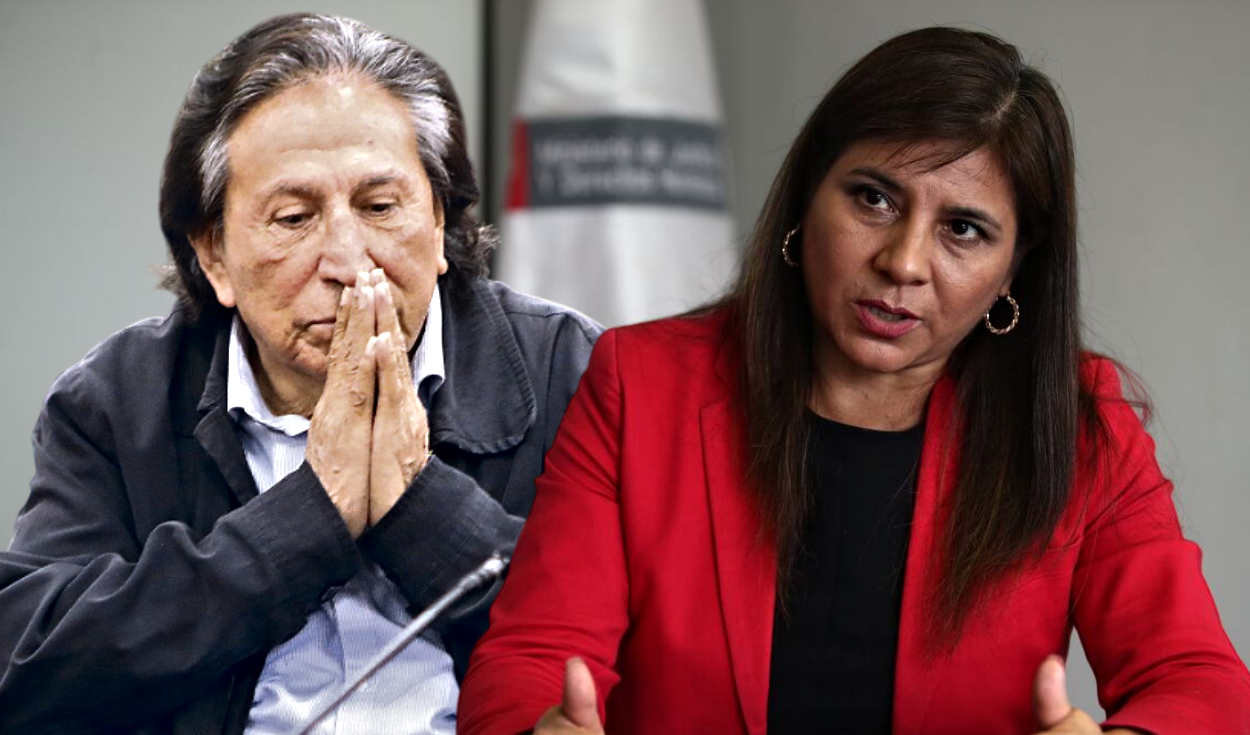
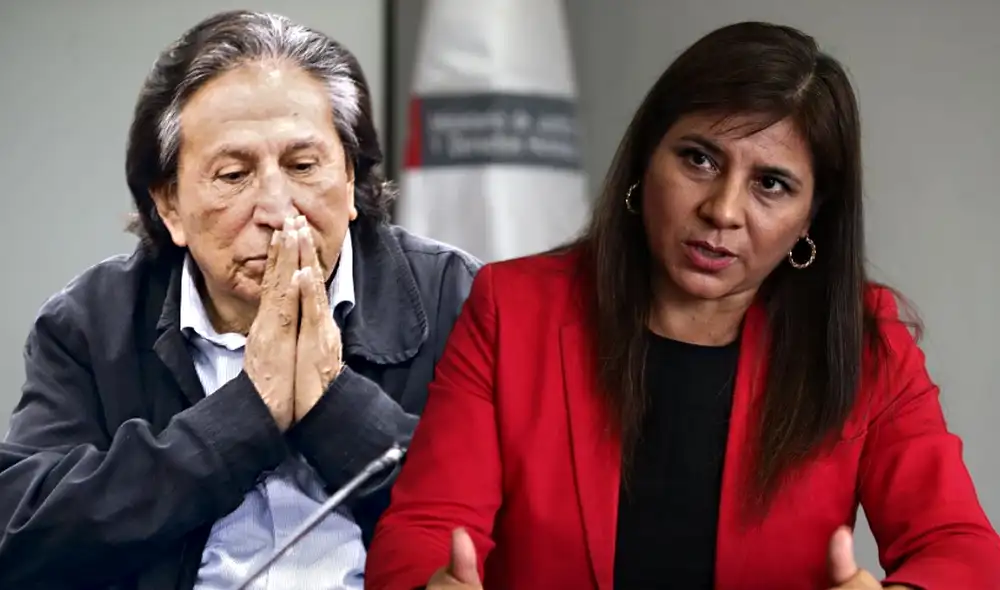
Former Lava Jato Ad Hoc prosecutor Silvana Carrión has stated that a ruling by Brazilian Supreme Federal Court Minister José Dias Toffoli to annul Odebrecht corruption evidence against former Peruvian President Alejandro Toledo has no automatic effect on Peru's judicial system.
Speaking in an interview with news channel RPP, Carrión explained that foreign judicial decisions must first navigate a formal legal procedure in Peru before criminal judges can evaluate whether any evidence should be excluded from ongoing proceedings.
Toledo, who served as president of Peru from 2001 to 2006, is currently serving a sentence of 20 years and six months in prison at the Barbadillo Prison in Lima following his conviction for the crimes of collusion and money laundering in the Southern Interoceanic Highway case.
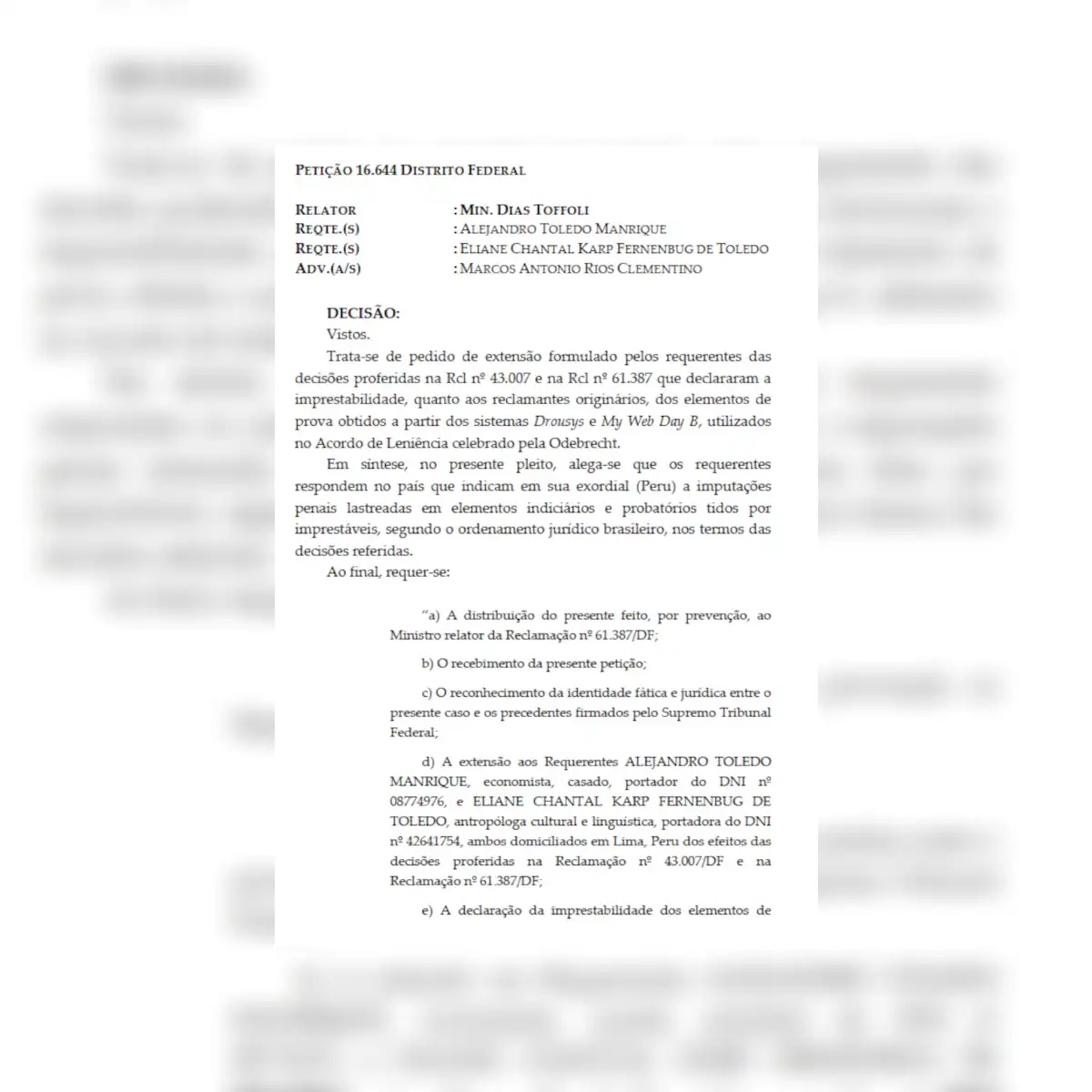
The ruling by magistrate Dias Toffoli, a minister on the Supreme Federal Court of Brazil, annulled digital files extracted from the Drousys and My Web Day B servers used as evidence against Toledo in the Interoceanic case. The Brazilian judge ordered the annulment due to alleged irregularities in the chain of custody during the handling of the evidence in Curitiba courts.
My Web Day B was the specialized software operated by Odebrecht's Structured Operations Department to manage bribe payments. Drousys was an encrypted email system used by company executives to coordinate corrupt financial operations with frontmen and financial operators.
Validation required through Exequatur process
Carrión detailed that any foreign court decision must go through a formal judicial procedure in Peru known as Exequatur. Through this process, Peruvian courts first formally validate who issued the decision and verify its legal origin.
Carrión told RPP that only after completing the Exequatur process can the matter be referred to the criminal judge in charge of the case. At that stage, the judge evaluates whether any specific evidence mentioned in the foreign decision should be excluded, noting that Peruvian authorities do not yet know the complete scope of Dias Toffoli's ruling or which exact documents were considered contaminated.
Carrión emphasized that Peru is not subordinate to Brazilian justice and that both nations maintain strict jurisdictional sovereignty. She explained that just as a Brazilian judge would not immediately obey an order issued by a Peruvian judge, Peruvian judges are not obligated to follow Brazilian rulings automatically.
Dias Toffoli had previously ruled in September 2023 that evidence obtained from those systems was legally compromised, declaring its uselessness under Brazil's legal system. The magistrate has now extended the reach of that resolution to Toledo's criminal trial, ordering the annulment of the files.
Peruvian judges hold authority to reject ruling
The former prosecutor affirmed that the Peruvian Judiciary can legally disregard the annulment ordered in Brazil and maintain as valid any evidence that entered Peruvian proceedings legitimately under national law.
Carrión stated to RPP that even if a foreign authority decrees evidence null, a Peruvian criminal judge can rule it valid and choose not to take the foreign decision into account. In statements to newspaper La República, she specified that this authority applies equally to the superior chamber currently hearing the case, which can decide not to apply the decision of the Brazilian magistrate.
As a precedent, Carrión cited the case of former Peruvian President Ollanta Humala, who governed from 2011 to 2016. In Humala's trial, Dias Toffoli issued a similar ruling on evidence annulment, but the Peruvian Judiciary did not take the Brazilian decision into consideration because it was never properly notified to Peruvian authorities, remaining merely an unheeded defense argument in court hearings.
Direct evidence and sentence appeal status
Carrión pointed out that most of the evidence against Toledo in the Interoceanic Highway case does not depend on international legal cooperation. Instead, Odebrecht as a company and its former executives delivered an extensive package of documents and testimony directly in Peru under a corporate plea bargain agreement.
Because Dias Toffoli's ruling applies strictly to materials obtained through international legal cooperation, Carrión emphasized that the impacted evidence represents a minor portion of the case against Toledo, leaving the primary evidence package undisputed.
Toledo's conviction is not yet final, as the First National Criminal Appeals Chamber continues to review appeals filed against the initial sentence. In comments to La República, Carrión explained that both Toledo's defense team and the prosecution submitted appeals, with second-instance hearings continuing throughout the year in hopes that the higher court confirms the first-instance verdict.
Opposition to deactivating Ad Hoc Prosecutor's Office
Addressing proposals to eliminate the Lava Jato Ad Hoc Prosecutor's Office, Carrión rejected the move as highly inconvenient for the state, highlighting the strong financial results achieved by the specialized office.
She stated that the office has secured over 1.5 billion Peruvian soles in civil reparations through final court sentences. To date, nearly 400 million soles has been collected, marking the highest financial recovery achieved by the Peruvian state in a corruption case. The office projects collecting 650 million soles by 2029, of which 70 million soles corresponds to the current year.
Warnings over case transfers and asset freezes
Carrión questioned the management of the State Attorney General's Office led by María Caruajulca and warned against plans to transfer Lava Jato cases to the general Anti-Corruption Prosecutor's Office.
She revealed that the Anti-Corruption Prosecutor's Office issued two public communiqués this year requesting an emergency declaration due to severe staff and resource shortages while managing over 50,000 cases. Carrión warned that transferring complex Lava Jato cases, which involve at least 50 suspects per case and numerous companies, to an overburdened department would put the investigations at risk.
According to Carrión, the underlying motive behind proposals to deactivate the specialized office is to halt active asset freezes and seizures totaling approximately 3 billion soles. She warned that dismantling the office would stop further civil reparation collections and place both complex prosecutions and financial recoveries at risk.
The former prosecutor's warnings follow recent institutional developments, including the placement of a new Justice Minister by official Santiváñez within the Procuraduría to remove Carrión, alongside her prior statements identifying herself as an inconvenient figure who does not suit the interests of political figures such as Lima Mayor Rafael López Aliaga.