

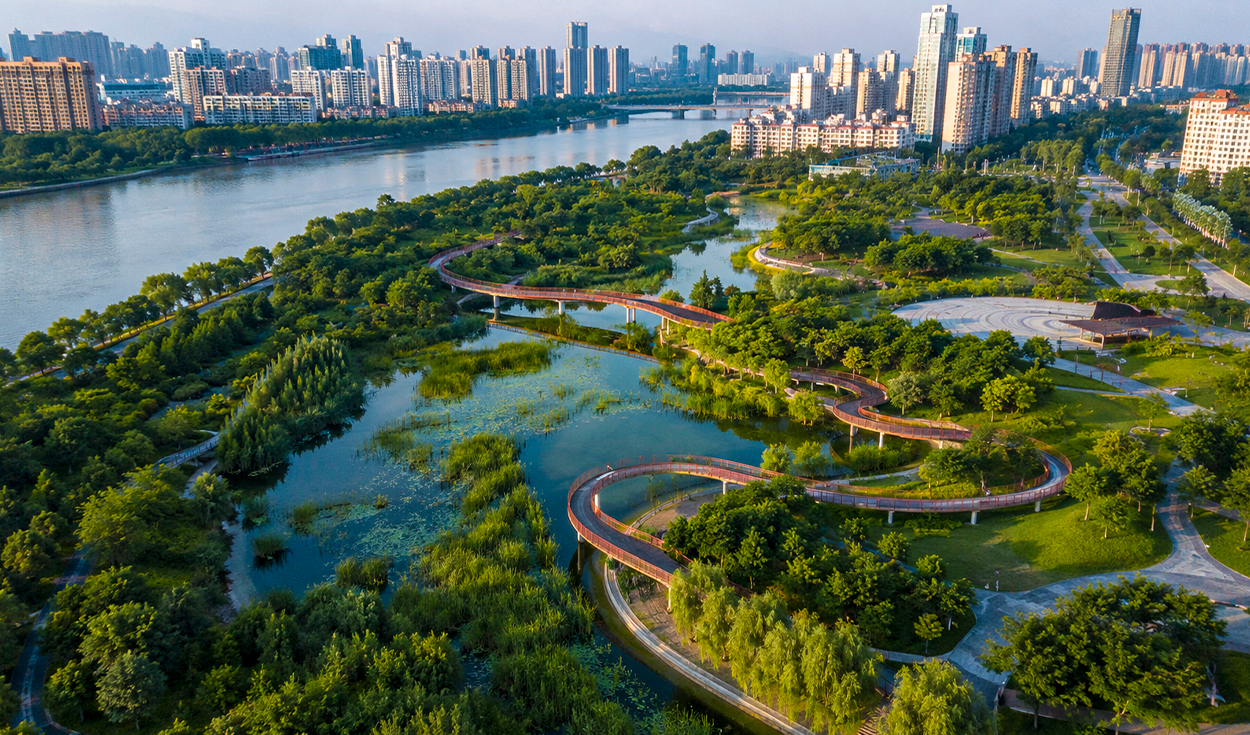
Metropolises across China, the United States and Latin America are adopting sponge city infrastructure to absorb heavy rainfall and prevent destructive urban flooding.
Driven by rapid urban growth, concrete saturation and extreme rainfall, cities are integrating parks, gardens, wetlands and permeable surfaces to reduce their sole reliance on traditional sewer networks, according to National Geographic.
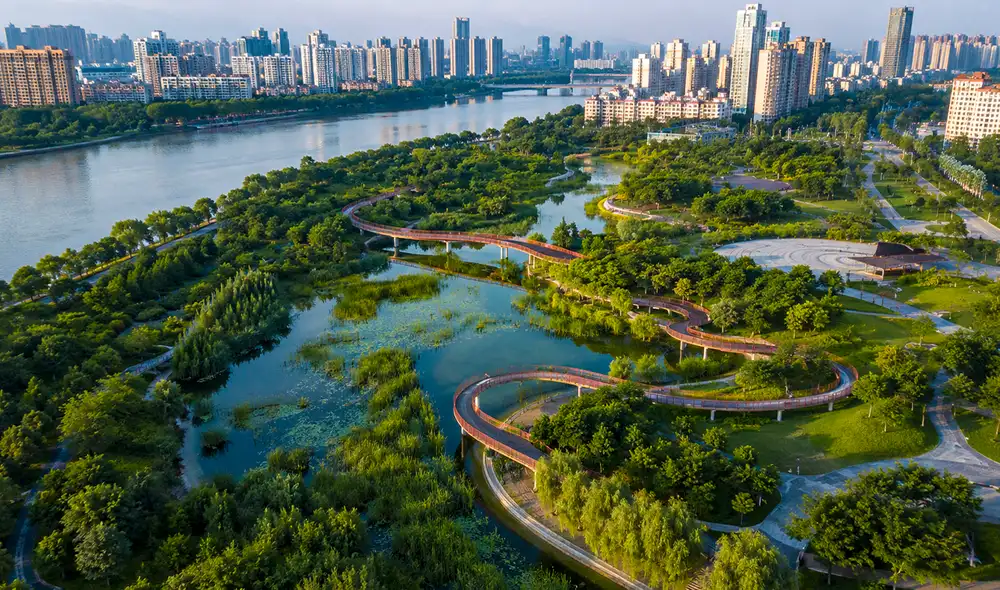
Urban flooding occurs when heavy precipitation overwhelms conventional storm drains, particularly in heavily built environments where concrete and asphalt prevent rainwater from naturally soaking into the ground. National Geographic reports that sponge city designs counter this by restoring natural soil absorption. The World Bank, an international financial institution that supports infrastructure projects worldwide, notes that these nature-based solutions complement traditional pipes while replicating the natural water cycle inside urban centers.
China leads urban sponge design rollout
China leads the global development of green architecture designed to manage water overflows. The strategy expanded into a nationwide public policy after government officials selected 30 pilot cities between 2015 and 2016. Official national planning projects that 80 percent of Chinese populated areas will incorporate the environmental technology by 2030.
Shanghai, China's financial hub on the eastern coast, leads the initiative by building hybrid networks. These systems integrate ecological infrastructure with advanced hydraulic engineering and digital weather monitoring systems.
In the southern technology hub of Shenzhen, the mechanism operates through porous concrete that allows rainwater to flow directly into underground gravel layers. Specialized vegetation then captures and purifies the water before it recharges deep aquifers below the city. When extreme storms exceed the retention capacity of the plants, conventional collectors take over to evacuate remaining water into designated discharge zones.
United States and Singapore projects
In the United States, Philadelphia launched its Green City, Clean Waters initiative in 2011. The 25-year program uses vegetation and absorbent soils to slow down and capture stormwater before it reaches city drains. By July 2026, Philadelphia recorded more than 1,100 public and private stormwater management works across areas served by its combined sewer network.
Singapore has implemented similar nature-based drainage strategies across its island territory. The city-state transformed Bishan-Ang Mo Kio Park into a 62-hectare urban space, creating a naturalized river channel designed to restore local ecosystems while handling heavy tropical rainfall.
Latin American water management advances
Latin American nations are also making significant progress with ecological drainage models. In Mexico, the La Quebradora Hydric Park in the Iztapalapa borough captures runoff flowing from the Sierra de Santa Catarina, directing the water into underground aquifers.
The National Autonomous University of Mexico described the La Quebradora project as a fundamental shift in resource management. The university stated that the design was created to resolve a persistent paradox in Mexico City, where residents suffer from severe water shortages while facing frequent urban flooding.
Colombia is promoting similar techniques through Sustainable Urban Drainage Systems. In Medellin, the city created the Primavera Norte project. Physical Infrastructure Secretary Jaime Andres Naranjo detailed that the project captures rainwater, reduces its speed, and releases it in a controlled manner into the environment.
Bogota has also incorporated sustainable drainage schemes into its master urban planning. The Colombian capital uses the technology to optimize its sewer system, reduce surface waterlogging, and recycle captured rainwater for irrigation in public parks and green spaces.
Adapting sponge concepts for Peru
The sponge city framework is also being evaluated for Peru, provided nature-based solutions are adapted to the distinct geographical realities of its different regions. The World Bank is currently collaborating with Sedapal, Lima's municipal water utility, to incorporate these tools into climate resilience projects ranging from green urban areas to river restoration.
However, financial experts emphasize that interventions must be tailored to regional weather patterns. The World Bank pointed out that Lima receives only around 13 millimeters of rain per year, making it impossible to directly copy models built for cities with heavy, constant rainfall.
For Peruvian regions that do experience intense rainfall, officials note the country must combine traditional drainage channels with floodable parks, urban wetlands, restored riverbanks and permeable pavements. Experts stress that adapting the Chinese model successfully will depend on technical river basin studies, local land availability, and long-term maintenance programs to create flexible solutions for each community.


