


Spanish housing prices have recorded year-on-year increases of up to 15.6 percent, economic expert Pilar García de la Granja reported on national radio network COPE. Average real estate values in high-demand regions, including the Balearic Islands and the Community of Madrid, have now comfortably surpassed 5,400 euros per square meter.
Speaking alongside presenter Ángel Expósito during the Clases de Economía segment on the evening news program La Linterna, García de la Granja explained that the continuous price escalation in both purchase and rental markets can only be halted by significantly expanding the country's available residential housing supply.
García de la Granja, who also serves as director of the daytime news broadcast Mediodía COPE, emphasized that 92 percent of Spanish territory currently contains no housing. She stated that although municipal authorities across Spain recognize the urgent necessity of creating buildable land, cities have proven unable to execute the necessary development steps.
According to the economic analyst, an average of 10 years elapses from the point land is designated as urbanizable until completed property keys are handed over to buyers. During this decade-long delay, real estate projects are repeatedly disrupted by escalating labor costs, regulatory instability, and structural market bottlenecks.

Severe Deficit in Residential Housing Supply
The Spanish housing sector is suffering from a chronic structural imbalance, accumulating a national deficit of 750,000 homes. Ongoing sociodemographic changes in Spain require the formation of more than 240,000 new households each year, yet construction firms finish only about 92,000 new residential properties annually.
This massive gap between supply and demand has generated severe hardship for young people seeking to move out of family homes and achieve financial independence. Many young residents in major metropolitan centers find themselves forced into expensive shared rental arrangements.
Mireya, a university student residing in a major city, described the current real estate market as very dark. She expressed strong doubt that prices would drop in the coming years and said she expects to remain in shared housing for several more years after securing a high-cost rental contract.
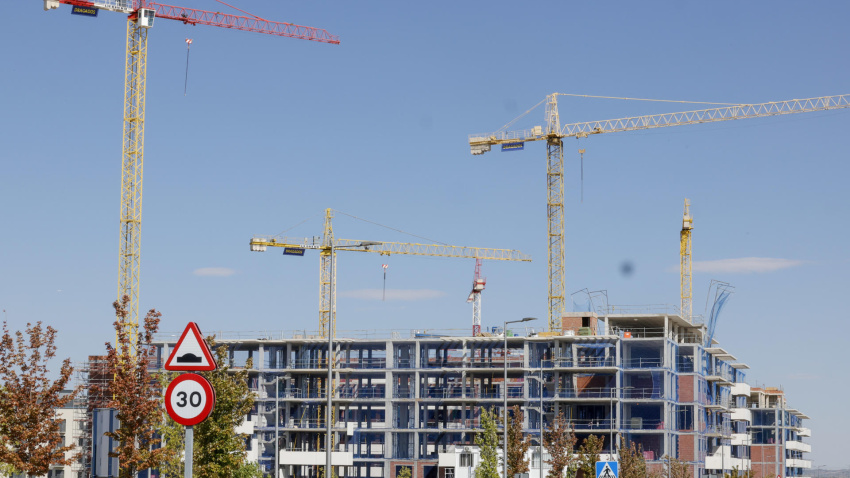
The production bottleneck in residential housing is further exacerbated by strong demand from the tourism sector, dynamic migration flows, and bureaucratic administrative procedures. Local municipal authorities often take up to three years just to process urban building licenses.
Because accessible long-term housing options remain scarce, a growing number of residents and students are driven into temporary or seasonal room rentals. In major university cities across Spain, renting an individual room in a shared apartment now routinely costs between 400 and 550 euros per month.
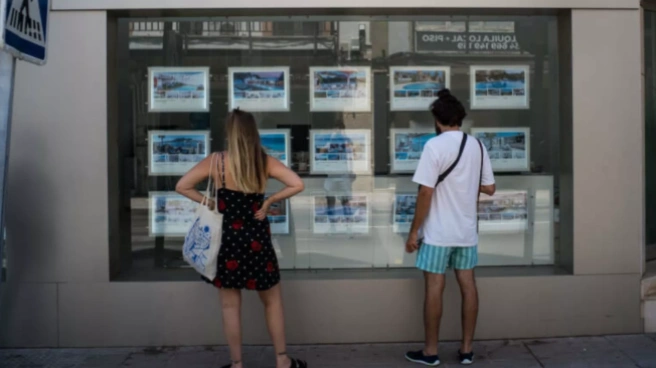
Regional Price Disparities and Purchase Obstacles
The national average price for second-hand housing in Spain has reached 2,924 euros per square meter. Price growth varies widely by autonomous community, led by the Region of Murcia with a dramatic year-on-year increase of 28.8 percent, followed by Cantabria with annual growth between 17.2 percent and 18.5 percent.
The Valencian Community recorded a year-on-year price increase of 17.1 percent, while Castilla-La Mancha experienced a 16.4 percent rise. In absolute terms, the most expensive autonomous communities are the Balearic Islands at 5,595 euros per square meter, the Community of Madrid at 5,059 euros, and the Basque Country at 3,784 euros.
Among provincial capitals, San Sebastián remains the most expensive city in Spain, recording an average price of 6,680 euros per square meter. It ranks ahead of Madrid capital at 6,471 euros per square meter and Barcelona at 5,440 euros. Conversely, Extremadura and Castilla-La Mancha report the lowest average prices in the nation at 1,049 euros and 1,157 euros per square meter, respectively.
Financial analysts pointed out that buying a home has become unaffordable for large portions of the Spanish population due to banking requirements. Accessing standard mortgage financing requires prospective buyers to have saved tens of thousands of euros in advance to meet down payments and associated transaction costs.

High urban housing prices have driven some residents to seek alternative living arrangements outside major cities. Alberto, a 27-year-old who relocated to the countryside with 8,000 euros in savings, purchased a plot of land for 5,000 euros. He explained that he eliminated regular living expenses by installing solar panels and relying on low-cost water supplies, noting that while comforts were reduced, his household easily adapted to the lifestyle.
Signs of Market Cooling and Postal Service Financing
Despite almost six consecutive years of price growth and ongoing annual increases between 12.5 percent and 15.6 percent, Spain's housing market recorded a slight monthly decline of 0.3 percent. This minor correction brought an end to a 43-month streak of uninterrupted price inflation.
In high-pressure real estate markets, prices dropped by 2.2 percent in Madrid and 0.2 percent in Barcelona compared to their peak levels in July. Official data tracked by the Colegio de Registradores property registry association and the INE National Statistics Institute indicate a contraction in total sales volume, a key indicator that typically precedes broader price stabilization.
During the economic review on Mediodía COPE, García de la Granja also highlighted the financial situation of Spain's national postal operator, Correos. Spanish commercial banks have extended a lifeline to the state-owned postal service, providing 502 million euros across approximately 30 loan agreements and credit lines to cover pending supplier bills and staff payrolls.


