
Spain's government has capped the electricity capacity available to data centers at 9,300 megawatts (MW) under its new national grid plan through 2030, less than half the up to 22,000 MW that the data center sector had been counting on, according to the planning document.
The 9,300 MW figure covers both data centers already under construction and future projects. It marks the latest setback for an industry that the government has viewed warily, having already imposed other restrictions, including a requirement for high renewable energy consumption.
Instead, the plan gives priority to other types of installations. Industrial projects can draw on 14,900 MW, while hydrogen projects are allotted 12,400 MW, as part of an overall plan to expand Spain's electricity grid capacity by 47,400 MW, a plan the government has described as historic.
Investment and political consensus
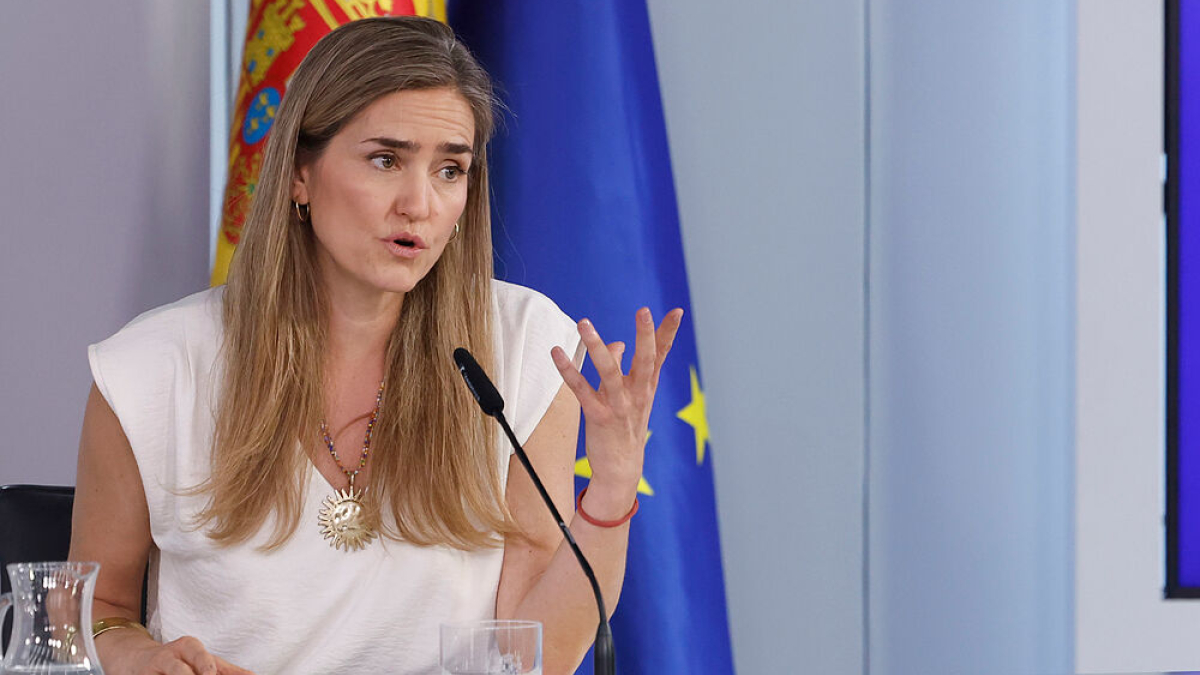
Sara Aagesen, Spain's third deputy prime minister and Minister for Ecological Transition and the Demographic Challenge, defended the plan a day earlier as the product of consensus. The plan calls for total investment of 17,142 million euros and is designed to meet new electricity demand.
Aagesen made her remarks during an appearance she herself requested before the Standing Committee of Spain's Congress of Deputies. She said the plan grew out of consensus, noting that the government had worked intensively with regional governments, the energy sector and civil society. Red Eléctrica de España (REE), Spain's sole electricity transmission system operator, will be responsible for carrying out the plan.
Investment rises sharply from earlier drafts
The 17,142 million euro figure represents a 30% increase over the 13,188 million euros included in the version of the plan that was put out for public consultation. It is also 146% higher than the 6,964 million euros allocated under the previous grid plan, approved in 2022 with a horizon to 2026.
Demand projections jump 2,000%
The planned 47,400 MW of new demand represents a 71% increase over the volume originally envisaged in the plan, and is 2,270% higher than the less than 2,000 MW of requests that existed in 2022.
Aagesen said that, as an engineer, she never imagined she would be talking about demand increases of 2,000% in her career. She pointed to what she called a paradigm shift in a roadmap that, for the first time, is built around meeting the demand of companies seeking to set up in Spain, drawn by the country's competitive energy prices.
Housing also included in the plan
Aagesen said the planning amounts to far more than an investment programme, describing it as a social, economic, territorial, energy and industrial policy that reaches every part of the country. She noted that 6,000 MW, or 12.6% of the total capacity in the plan, is earmarked for housing.