


Russian aerospace company Bureau 1440 is facing major orbital failures with its newest Rassvet broadband satellites, designed as a domestic alternative to SpaceX's Starlink network.
A second group of 16 commercial satellites launched in July has failed to climb past low Earth orbit. Several of the craft have begun losing altitude rapidly, raising fears of premature re-entry into the atmosphere and threatening Moscow's ambition to establish independent space-based communications for its armed forces.
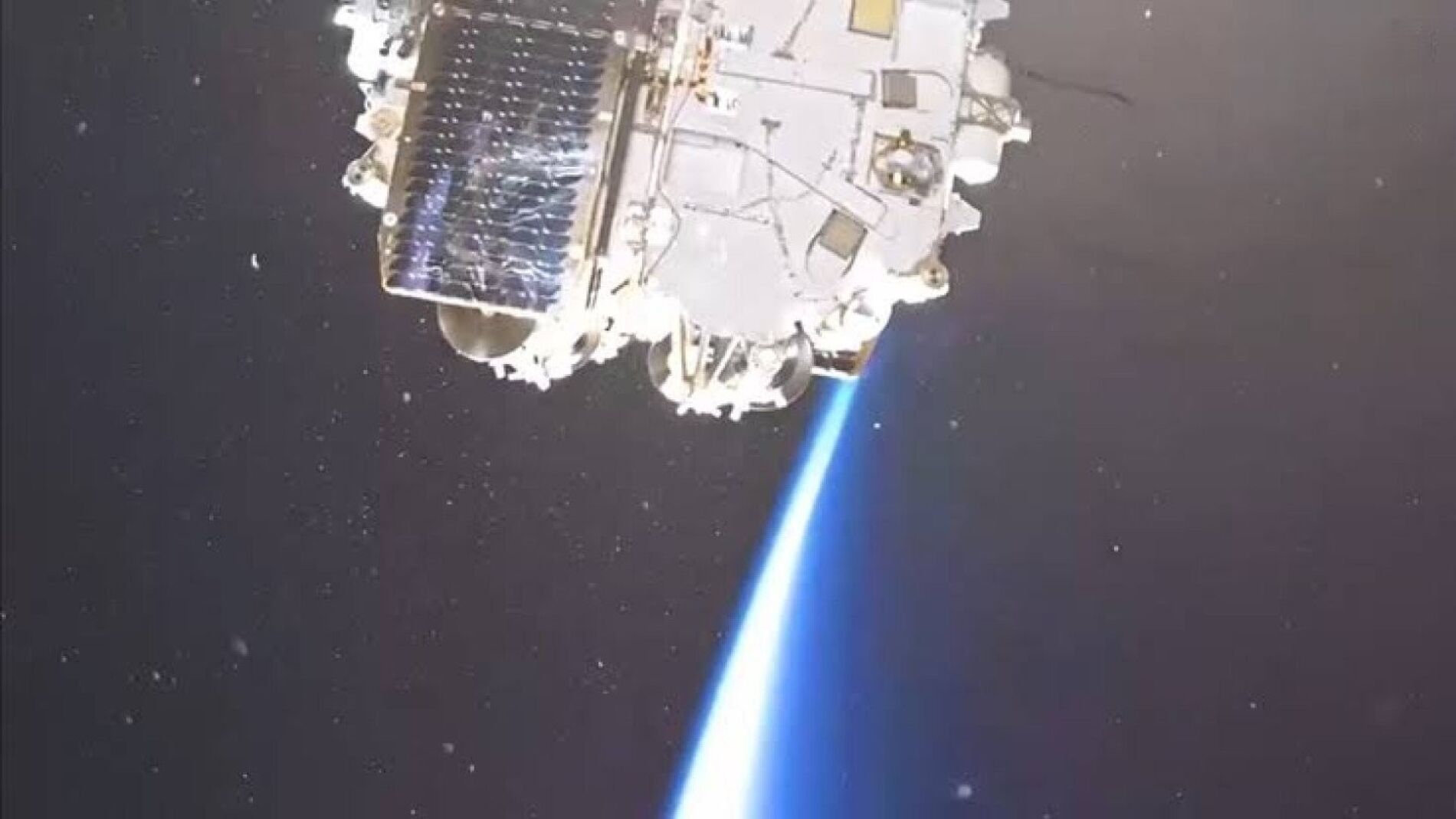
Bureau 1440, a private Russian aerospace company, has been developing the Rassvet program since 2020. The name Rassvet translates to dawn in Russian. The project was created to provide high-speed satellite broadband across Russia and reduce reliance on foreign satellite infrastructure. Deployment of the constellation was accelerated throughout 2026 as military demand for secure orbital communications escalated.
Experimental launches and initial commercial rollout
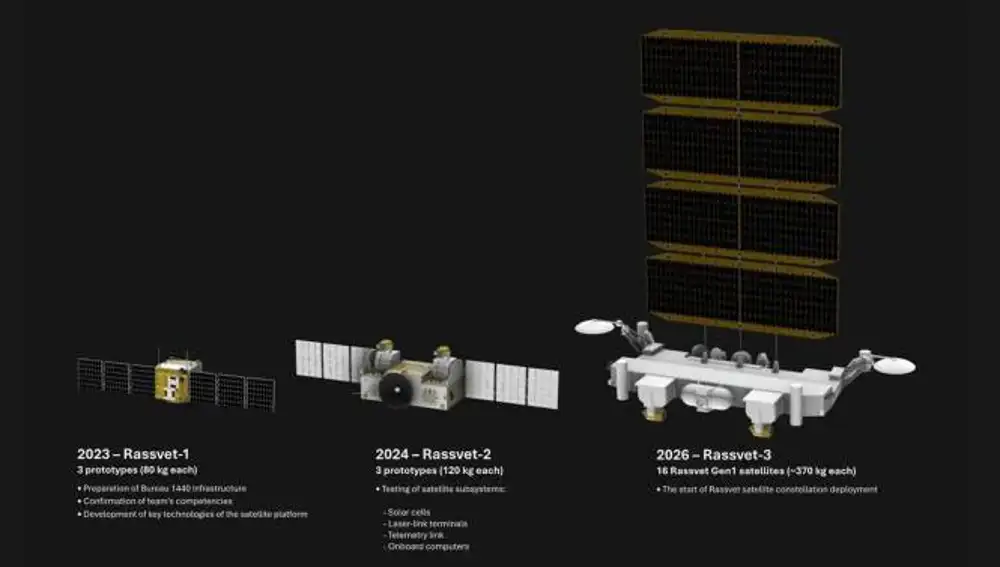
Testing for the Rassvet system began several years before the current commercial deployment. Bureau 1440 launched three experimental Rassvet 1 satellites in June 2023 to test basic space-based communications. A second experimental phase followed in May 2024 with the launch of three Rassvet 2 spacecraft. These early test missions focused on evaluating ground terminals, signal transmission, and direct inter-satellite communication links.
The transition to full commercial deployment began on March 23, 2026, when a rocket carried the first 16 production satellites into space. A second launch on July 19, 2026, delivered another 16 spacecraft into orbit. In total, Bureau 1440 has sent 38 satellites into space connected to the project, though only the 32 units launched during 2026 belong to the first phase of the commercial network.
The initial batch launched in March performed significantly better than the subsequent payload. Ukrainian military news outlet Militarnyi reported that by late July, 12 of the 16 satellites from the March launch had successfully positioned themselves in an operational configuration at an altitude of around 550 kilometres. Three other satellites from that launch were continuing orbit-raising maneuvers, while one unit failed to complete necessary corrections and re-entered the atmosphere in June.
The operational satellites from the March launch already provide limited coverage over the combat zones in Ukraine. When passing overhead, the spacecraft enable broadband communication windows lasting for more than an hour at least twice a day.
Orbital decay and low altitude struggles
The second commercial payload has encountered far more severe technical difficulties. French technology publication Numerama reported that none of the 16 satellites launched on July 19 had managed to climb above 360 kilometres altitude by the end of August.
While some of the July satellites were still attempting to raise their altitude using onboard thrusters, others had begun to lose height. Numerama reported that two of the spacecraft had dropped below 300 kilometres, following orbital decay trajectories that indicate imminent re-entry into Earth's atmosphere.
Operating at such low altitudes severely compromises satellite survival. Low Earth orbit technically begins around 100 kilometres above sea level, but Earth's atmospheric envelope extends hundreds of kilometres higher with trace gas particles. Satellites orbiting below 360 kilometres experience continuous atmospheric drag, a frictional force that gradually slows the spacecraft down and pulls it toward Earth.
To counteract drag, a satellite must burn onboard fuel in its propulsion system to maintain speed and altitude. When a spacecraft is stuck at low altitudes, it consumes its limited propellant reserves at a vastly accelerated rate, drastically shortening its intended operational lifespan.
Technical design and performance specifications
According to specifications published by Bureau 1440, Rassvet satellites are designed to operate at a nominal altitude of 800 kilometres. At that height, atmospheric drag is negligible, allowing spacecraft to remain operational for years without exhausting fuel reserves.
Bureau 1440 stated that each Rassvet satellite is engineered to function as a floating 5G mobile base station in space. The company designed the system to deliver internet connection speeds of up to 1 gigabit per second with latency under 70 milliseconds. Latency measures the time required for data to travel from a ground user to the satellite and back, with lower figures essential for real-time applications such as video transmission and military command links.
The satellites are equipped with advanced laser communication links, allowing individual units to transfer data directly to adjacent satellites in orbit without sending signals back down to ground stations. Bureau 1440 noted that the spacecraft launched in March also feature plasma propulsion systems and a new generation of laser terminal equipment.
Starlink cutoffs and military reliance in Ukraine
Russian military interest in the Rassvet project intensified dramatically following changes to Starlink access early in 2026. Starlink, a satellite constellation operated by American company SpaceX, provides high-speed internet via thousands of small satellites in low Earth orbit. Russia was never officially granted access to Starlink services within its national borders.
Despite the lack of official service, Russian military forces in Ukraine obtained thousands of Starlink terminals through third-party distributors in foreign countries. Russian units relied heavily on these commercial terminals to coordinate battlefield artillery, manage command networks, and control uncrewed aerial vehicles.
That access ended on February 4, 2026, when SpaceX and Ukrainian authorities instituted strict security controls. Starlink mandated that all terminals active within Ukrainian territory must be registered on an official whitelist authorized by the government in Kyiv. Unregistered terminals used by Russian forces were immediately disabled, creating an urgent operational shortfall for Moscow's troops.
Delays to Russia's long-term constellation plans
The loss of Starlink made the rapid deployment of Rassvet a top priority for Russian military commanders. An independent space-based communications network would allow Russian forces to maintain communications with frontline troops and pilot long-range strike drones far beyond the reach of terrestrial radio towers without relying on foreign tech providers.
Ukrainian media outlet United24 Media reported that Moscow plans to deploy several hundred Rassvet satellites to achieve continuous global coverage, with full commercial service targeted for 2027. However, the current constellation remains far from providing unbroken connectivity.
While operational units from the March launch offer brief connectivity windows during orbital passes over Ukraine, they cannot substitute for a permanent, real-time satellite network. The orbital failures of the July batch significantly slow Russia's timeline for building a reliable constellation, leaving frontline units without persistent space-based data links at a time when drone warfare depends heavily on satellite communications.


