Spanish rock musician Roberto Iniesta has been described as an aesthete with a sword in a newly published tribute to his career.
Writing in an installment of the Summer Nudes column subtitled in memoriam, author Javier Menéndez Flores praised Iniesta for creating a universe without equal in the history of Spanish music.
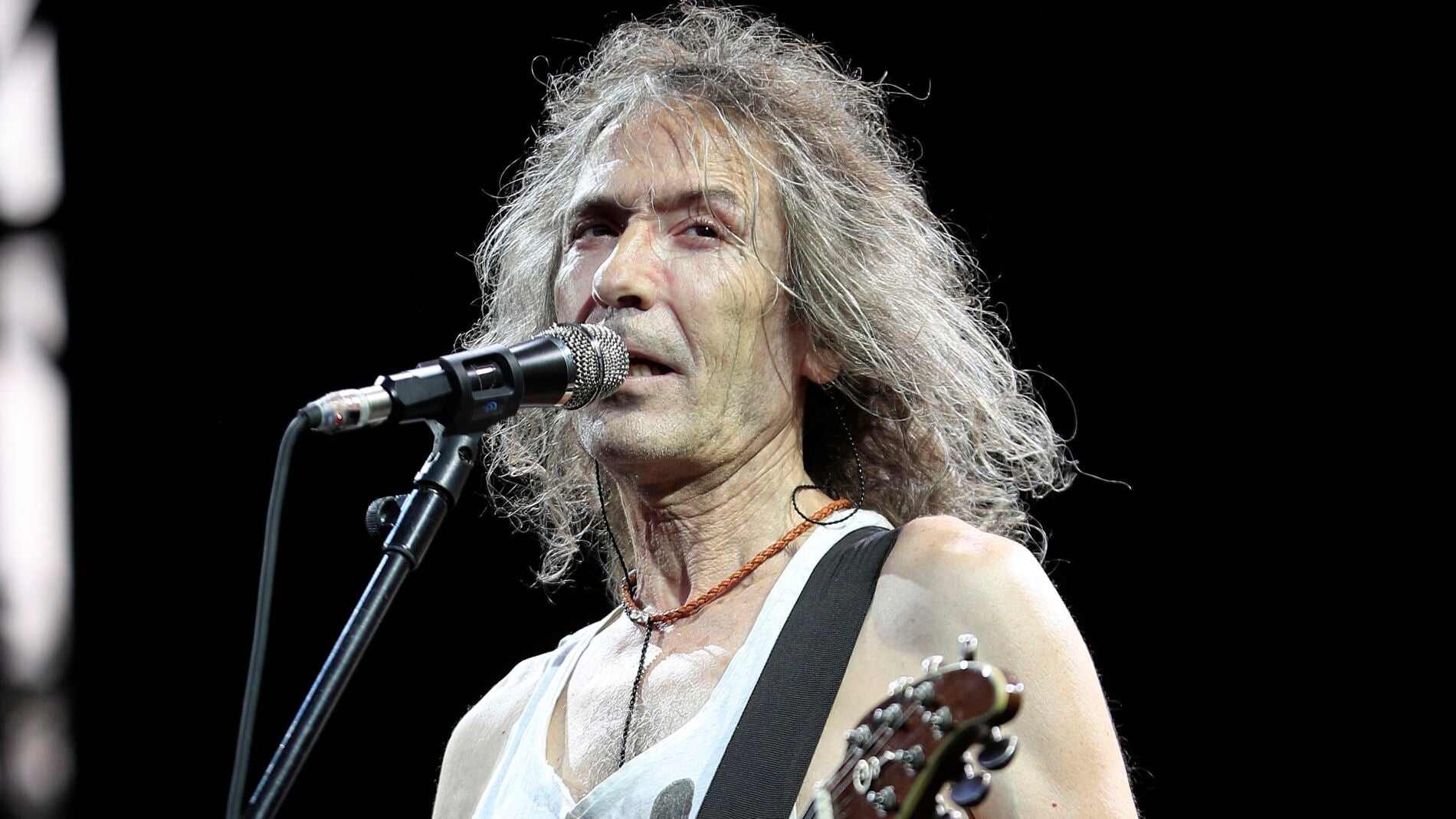
Iniesta, widely known by his stage name Robe, founded the hard rock band Extremoduro in Plasencia in 1987. The group became one of Spain's most successful and influential rock bands, known for combining poetic lyrics with heavy instrumentation, before Iniesta established a solo career.
Menéndez Flores described the singer's voice as a terrifying strike that ultimately pulls the listener in, dragging them down to a dark zone while a fabulous overhead light urges them to ascend. Through the ear and the skin, the listener witnesses a fight between Good and Evil, the author wrote.
He described a typical Extremoduro song as a strict pandemonium of guitars, drums, bass and a poem with some petals and many thorns bellowed by a sort of Satan with a lyre. These songs feature stairs lost in the sky, endless passageways and galleries, pitch black caves, pieces of forest trapping filaments of light, and primitive bridges on the verge of collapse.
Songs of love and war
Iniesta previously stated that he made songs of love and war, a definition that Menéndez Flores said perfectly describes the musician's work. The author noted that the singer brings the violence of broken bones, pierced flesh, fear and the smell of blood to his music, alongside the agitation of two bodies refusing to separate.
Menéndez Flores highlighted Iniesta's ability to transform, comparing him to the fictional characters Jekyll and Hyde. The tribute contrasted Iniesta's subtle lyrics about spring breaking out in colorful corners with fierce lines about the scent of old photographs causing physical arousal.
The legend of Extremoduro began with a collect call from Granada to Bilbao when a friend asked for help, according to the article. Menéndez Flores wrote that the band's work over thirty years leaves behind a cluster of masterpieces immune to the rust of time.
The author highlighted the partnership between Iniesta and musician Iñaki Antón. He described Iniesta as a poet who handled darkness and light at will, providing rough diamonds that Antón, equipped with the best of a mathematician and a goldsmith, crafted into a precious tiara.
Solo albums and musical legacy
Their work on the album La ley innata was singled out as a cathedral built by two men. Menéndez Flores called it a journey of unparalleled intensity, hallucination and beauty.
Following his work with the band, Iniesta released a series of solo albums. The article names Lo que aletea en nuestras cabezas, Destrozares. Canciones para el final de los tiempos, Mayéutica and Se nos lleva el aire as records that elevated Spanish popular music to another dimension.
Menéndez Flores wrote that each step Iniesta took alone revealed a sharper, less accommodating brilliance, driven by an even greater desire to capture perfection.
The tribute also praised Iniesta as a vocalist, noting that time has proven his interpretative skills. Menéndez Flores wrote that Iniesta was the most handsome singer, giving him the nickname Robe Redford, because nobody transmitted the bulk of human emotions better than he did.
Iniesta is held up as a mirror for young artists to look into. Menéndez Flores concluded that the musician never sought fame or the short term misery of immediate neon lights, but was instead solely interested in meeting beauty and taking it home.