

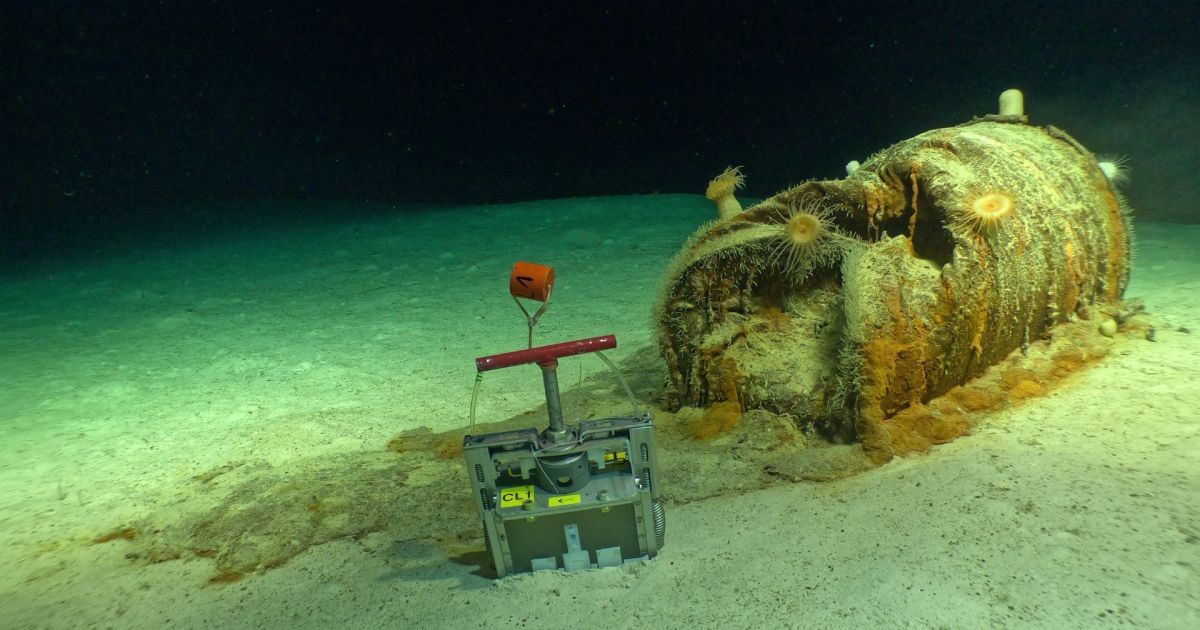
More than 200,000 barrels containing radioactive material, dumped into the Atlantic Ocean between 1950 and 1990, are now in an advanced stage of deterioration more than 4,700 metres below the surface, according to a team of scientists who mapped their location. The site lies far deeper than the average depth of the world's oceans, which is around 3,700 metres.
The researchers found that part of the radioactive material inside the barrels has already spilled directly into the sea.
Dives carried out for the study since June 2025 have confirmed the presence of radionuclides, atoms with unstable nuclei that emit radiation as they try to become stable, at activity levels higher than expected.
Survey led by French researchers
The survey was published by France's National Centre for Scientific Research, known as CNRS, one of the country's main public research institutions, working across fields from physics to biology. The scientists collected samples of water, sediment and living organisms to analyse how radioactivity is distributed and passed through the environment.
Ocean dumping of radioactive and industrial waste was a disposal method used by several countries during the mid-20th century, before international agreements, including the London Convention on the Prevention of Marine Pollution, later restricted the practice.
Low radiation, but risks remain
The research indicates that the intensity of radiation released into the environment by the barrels is low. It could still alter conditions, however, for the most vulnerable species living on the ocean floor.
Deep-sea ecosystems are generally considered especially sensitive to contamination because species there tend to grow slowly and reproduce over long timescales, limiting their ability to recover from environmental changes.
Removal proves too costly
Removing the open containers has proven more complex and expensive than expected. For now, researchers are continuing to map the barrels' locations and keep them under constant monitoring.


