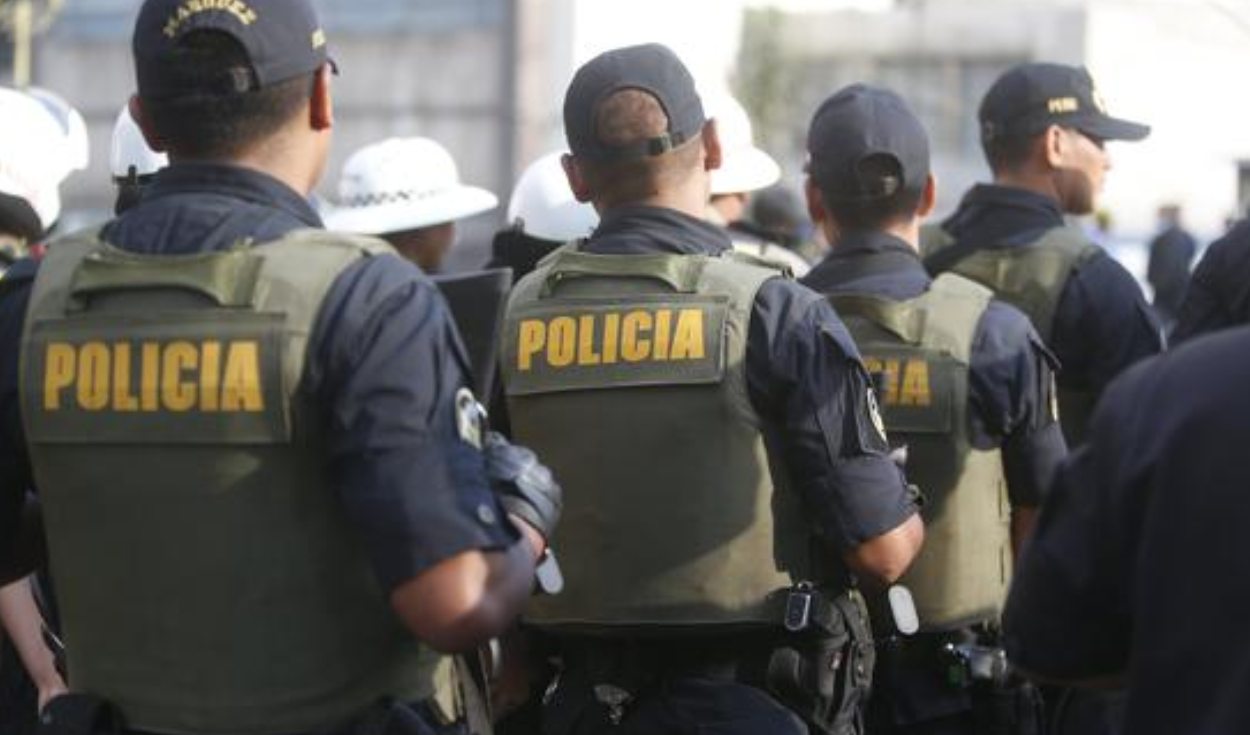
National Police of Peru officer Wilfredo Oscco Ludena, who is being prosecuted for qualified homicide over the 2023 death of protester Denilson Huaraca Vilchez in Andahuaylas, has formally requested that his case be closed in civilian court and transferred to military jurisdiction.
The request, filed on July 22 before the Tenth National Preparatory Investigation Court, marks the first precedent of a law enforcement officer invoking Peru's newly enacted Law 32735 to remove a criminal investigation from the Judicial Branch and reclassify police actions during protests as a duty crime under military justice.
In the court petition, the defense for the police non-commissioned officer argued that the events occurred while he was fulfilling orders to unblock roads during a declared state of emergency. The defense asserted that the officer's actions represented the fulfillment of duty within that emergency legal framework.
Under this legal framework, Oscco Ludena's attorney requested that the civilian judge archive the criminal investigation opened by the common Prosecutor's Office within a maximum period of 30 days. The filing also demanded the annulment of all active precautionary measures against the officer and the issuance of a formal order transferring jurisdiction to the competent military police criminal court.
The city of Andahuaylas, located in southern Peru's Apurimac region, was a focal point of nationwide anti-government demonstrations in early 2023 following political unrest. Security forces engaged in operations across several regions to clear highway blockades during emergency decrees, leading to numerous civilian casualties during clashes.
Human Rights Lawyers Warn of Impunity
Following the petition, legal experts warned of the dangers of transferring cases involving human rights violations to tribunals composed of members of the armed forces or police. Carlos Rivera, a specialist lawyer at the Institute of Legal Defense, questioned the request and argued that Law 32735 is being utilized as a tool to generate impunity in cases arising from the protests.
Rivera stated that the petition seeks to remove a human rights violation investigation from common jurisdiction to take it to a forum that does not guarantee independence. He noted that the law expanded the legal concept of a duty crime to encompass any operational intervention during a state of emergency, a change that directly harms victims' families in their search for justice.
Rivera added that the law allows for a request that is outside standard legal norms and unconstitutional, creating new mechanisms that prevent families from obtaining prompt justice. He argued that the defense is seeking a complacent forum, comparing it to military justice tribunals of past decades in cases such as the Acomarca massacre or the actions of the Grupo Colina death squad, where military courts functioned as a shield for impunity.
The Acomarca massacre occurred in 1985 when Peruvian army units killed dozens of villagers during counterinsurgency operations, while Grupo Colina was a military death squad responsible for targeted extrajudicial executions in the early 1990s. In both cases, jurisdictional disputes and military court oversight initially delayed civilian prosecutions for decades.
Evaluating the control mechanisms available to the judge, Rivera highlighted a technical lack of support in the request. He explained that the defense filed a declination of competence for the Judicial Branch to hand over the trial to military justice, but noted there is no knowledge of any active parallel proceeding in military court that would legally support such a request.
Rivera emphasized that the justice system is not meant to act as a friend to anyone. He concluded that the only recourse remaining for victims is for civilian judges to decline to apply the new law on the grounds that it is openly unconstitutional.
Constitutional and International Law Violations
Julissa Mantilla, a former commissioner of the Inter-American Commission on Human Rights, agreed with the assessment of unconstitutionality and stated that the petition was a completely predictable scenario following the approval of the legal framework. She emphasized that the statute on duty crimes should not be viewed in isolation, but rather within a broader package of pro-impunity laws designed to benefit individuals accused of human rights abuses by transferring them to military jurisdiction.
The Inter-American Commission on Human Rights is an autonomous organ of the Organization of American States tasked with monitoring human rights compliance across the Western Hemisphere. Its rulings and standards derive from the American Convention on Human Rights.
Mantilla noted that the Inter-American Court of Human Rights has repeatedly established that human rights violations against civilians can never be processed under military jurisdiction. She added that ordering the closure or transfer of criminal investigations within short timeframes violates due process guarantees and the separation of powers.
Mantilla warned that empowering the Military Jurisdiction to order civilian courts to surrender ongoing criminal cases leads to the destruction of Peru's remaining democratic remnants. She criticized Congress for passing an unconstitutional law initiated by the Fuerza Popular party while expecting judges to execute it automatically.
Mantilla explained that judges hold the authority to determine rulings and carry the duty to perform a control of conventionality by refusing to apply such unconstitutional requests. However, she pointed out that prosecutors and judges who have done the right thing by refusing to apply these laws are currently facing retaliation and political persecution through complaints filed before the National Board of Justice.
Mantilla also commended the president of the Judicial Branch, Janet Tello, who recalled in a recent speech that the administration of justice must never depend on political power or external influences.
Congressional Bill Proposed to Repeal Laws
In response to the legislative reforms, the Ahora Nacion parliamentary bench presented a bill introduced by Congressman Cesar Augusto Holguin Loaiza proposing the comprehensive repeal of the regulatory framework labeled by various sectors as pro-crime laws.
The proposed legislation seeks to restore the state's operational and investigative capacity to prosecute public corruption, illegal mining, criminal networks, and human rights abuses. If passed, the bill would reinstate the original texts of the Penal Code, the Code of Criminal Procedure, and the Law Against Organized Crime that governed before recent congressional modifications.