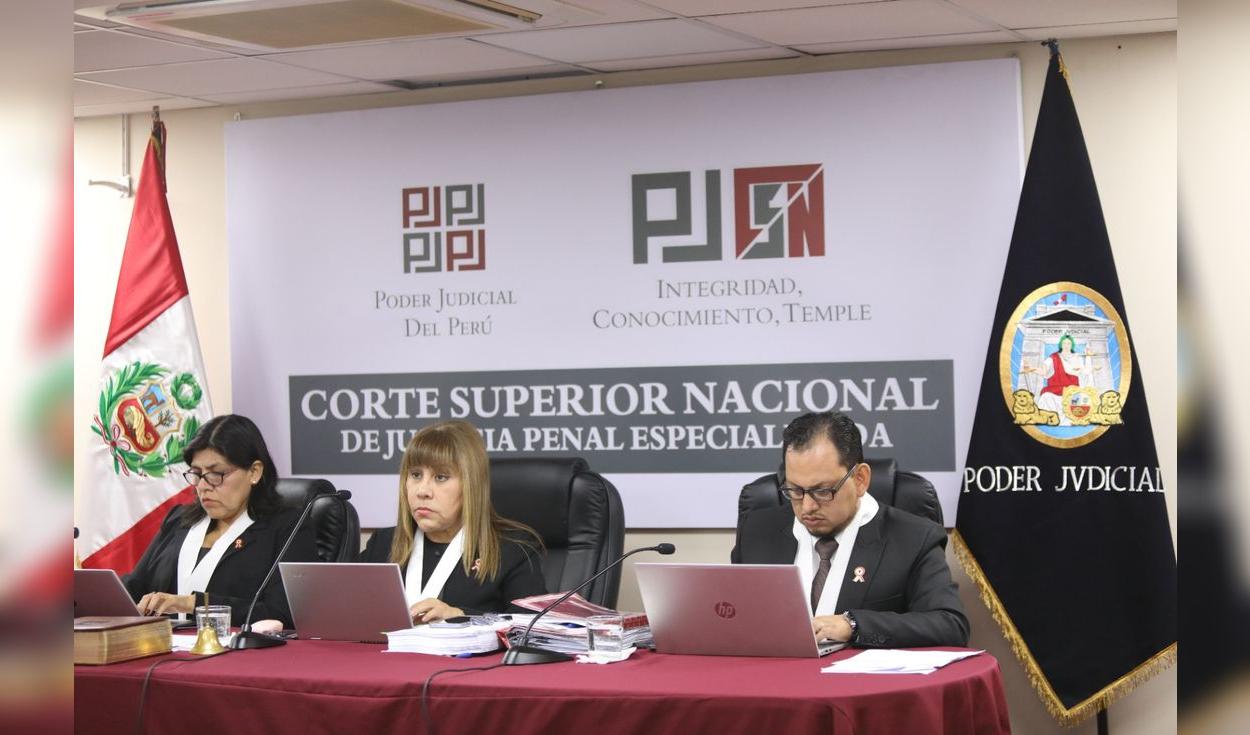
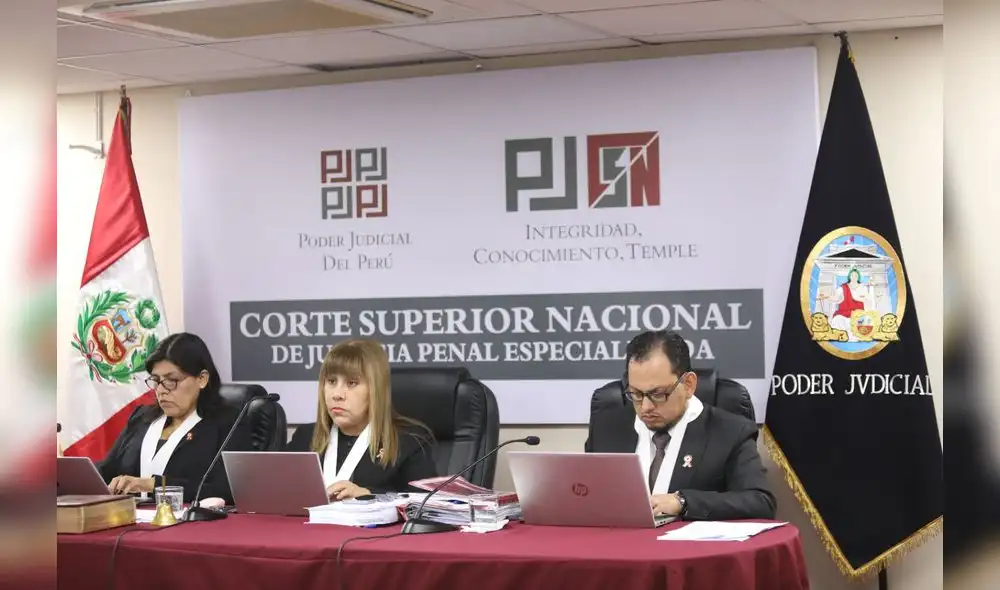
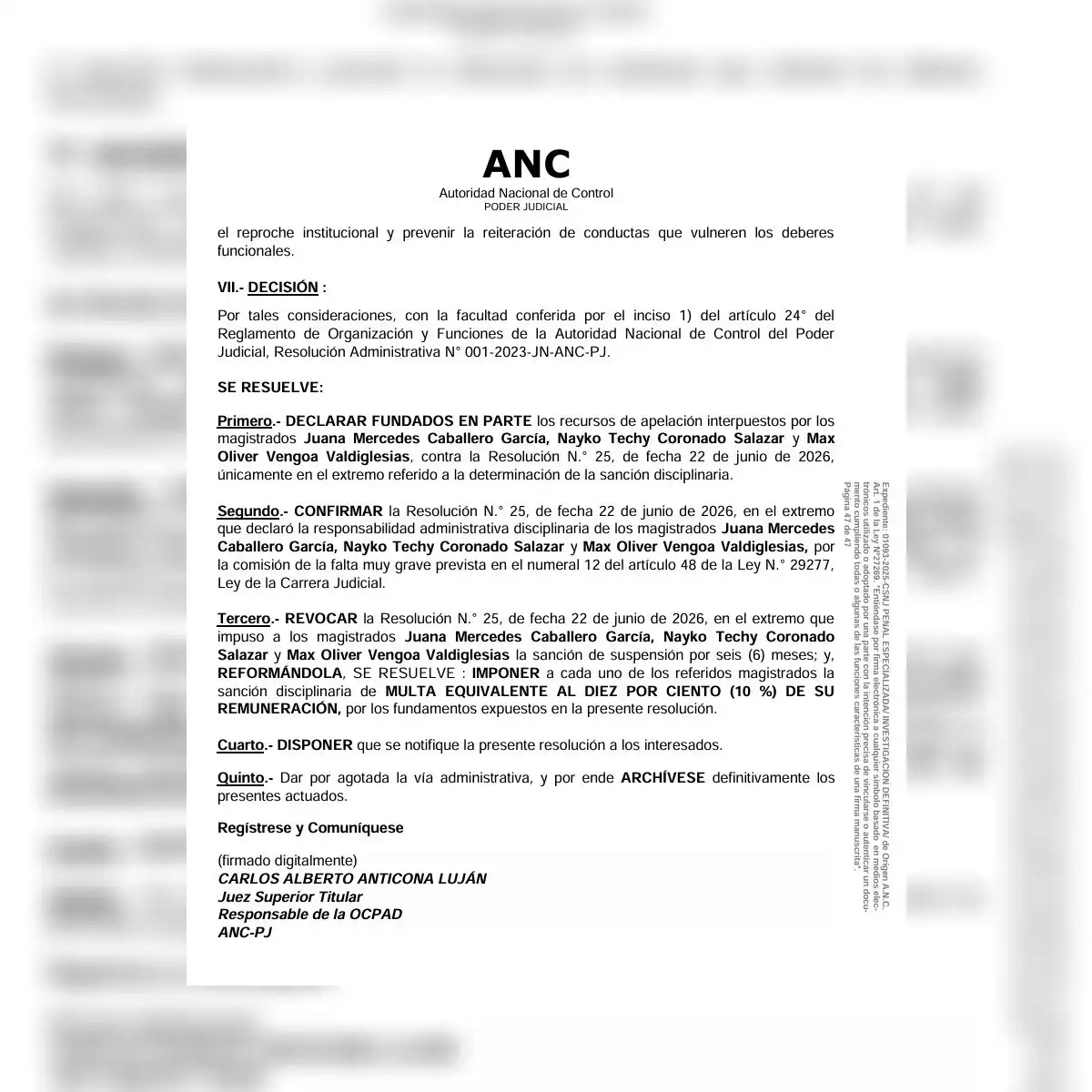
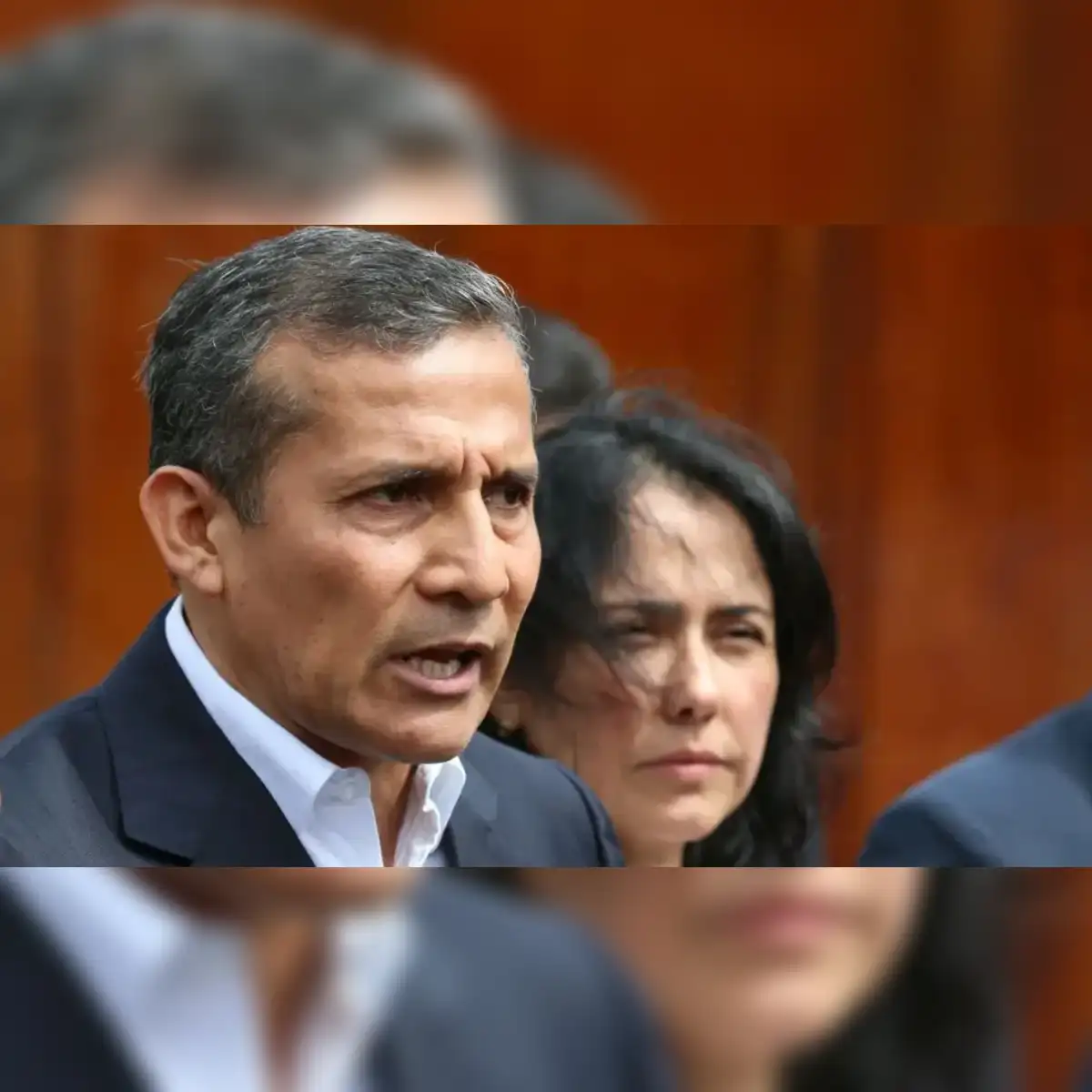
Peru's National Control Authority (Autoridad Nacional de Control), the disciplinary arm of the Judicial Power, has reduced to a 10% salary fine the punishment handed to three judges who ordered the immediate execution of the prison sentence against former president Ollanta Humala and his wife, Nadine Heredia, before a full written verdict had been issued.
The decision, dated November 23, 2026, and signed by senior control judge Carlos Alberto Anticona Luján, was only recently notified to the parties involved. It confirms that judges Juana Caballero García, Nayko Coronado Salazar and Max Oliver Vengoa Valdiglesias, members of the Third Collegiate Criminal Court, committed a very serious disciplinary fault, but replaces the six-month suspension they had initially received with a fine equal to 10% of each of their salaries.
The review body found the fine proportionate to the violation and to the circumstances of the case.
Lawyer Edinsón Huamán, who represents Humala, said the defense would continue to push for the original suspension through the administrative courts, arguing that disciplinary rules require suspension, not a fine, for a fault of this severity.
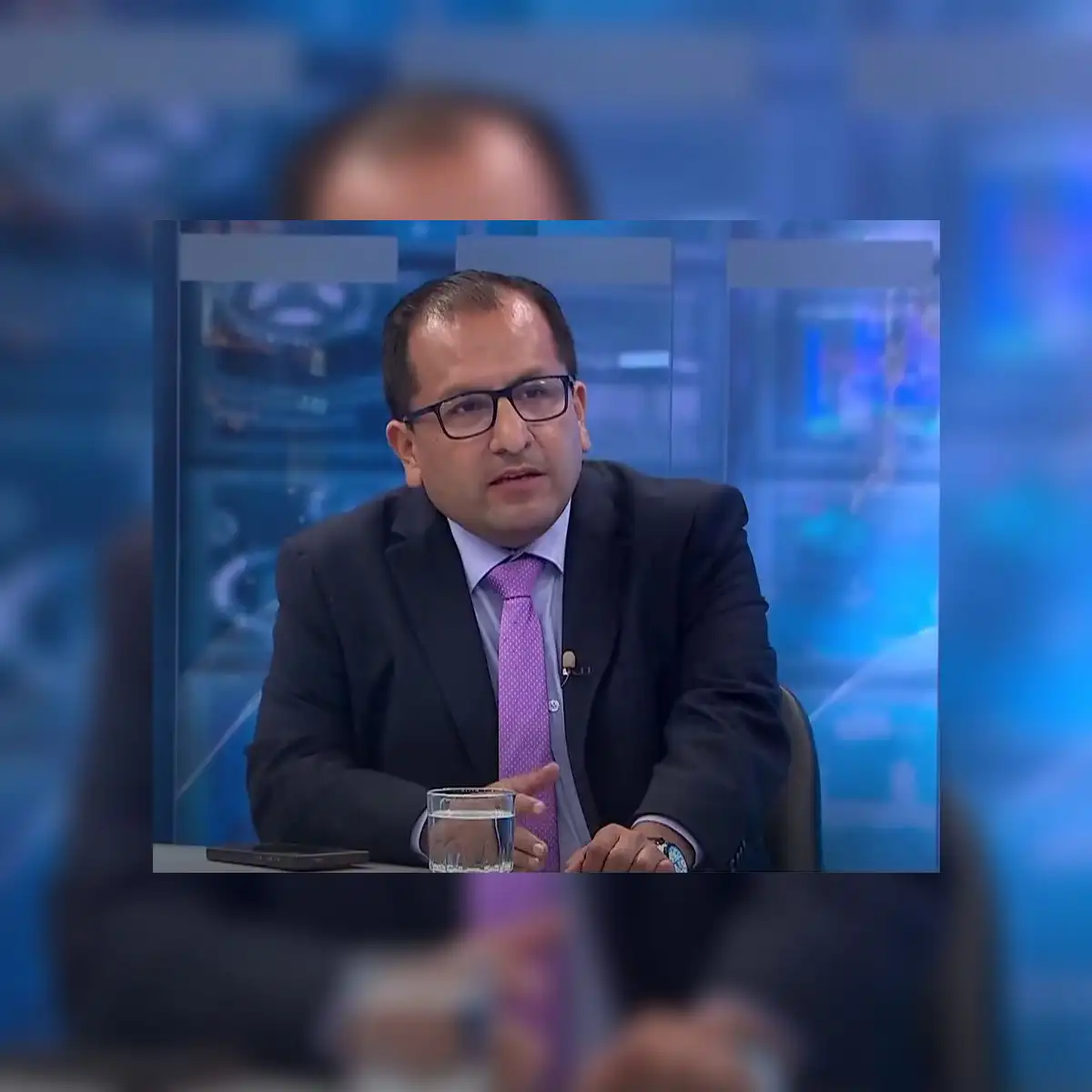
Huamán said that even with the reduced sanction, the outcome was a victory for the defense because it formally recognized abuses committed against the Constitution. He said the defense had already won a habeas corpus ruling establishing that the judges overstepped by ordering immediate execution of a sentence that had not yet been written, and that the new ruling from the control authority reinforces that finding.
He added that the sanction makes clear to the public that the judges violated the rights of the defendants, and said the defense is still waiting for a ruling on a similar complaint involving Ilan Heredia and Julio Torres Aliaga, the Nationalist Party's accountant, who he said were subjected to the same treatment.
Huamán disagreed with the authority's view that the judges had no intention of causing harm. He said that reasoning might apply to an ordinary citizen, but these were three judges who know the Constitution and should have been aware of the damage their decision would cause.
Why the judges were sanctioned
The case centers on a hearing held on April 15, 2025, when the collegiate court ordered the immediate enforcement of a 15-year prison sentence against Humala in a money laundering case. At that point, only the advance verdict had been announced orally, with the full reading scheduled for April 29.
The complete, written sentence was not signed and electronically notified until May 2, 2025. The disciplinary ruling concluded that enforcing an effective prison sentence before the parties had access to a written, reasoned decision violated the judges' functional duties and guarantees tied to personal liberty and due process.
The judges' defense
In their appeals, the three judges argued that their individual roles and specific circumstances had not been adequately weighed when the suspension was imposed. Caballero García cited her transfer back to the Superior Court of Justice of Huaura and her resulting lack of access to the National Superior Court's judicial system, while Vengoa Valdiglesias argued he had not been the rapporteur or the judge directing the proceedings.
The review body rejected those arguments, finding that responsibility stemmed from each judge's participation in the collegiate decision of April 15, not from who later drafted, registered or notified the sentence. It also noted that none of the three had shown any record of opposing or raising reservations about the provisional execution of the sentence.
Why the penalty was reduced
The authority nonetheless lowered the suspension to a fine because it found no evidence of a deliberate intent to harm Humala, even though it identified functional negligence. A review of disciplinary records also showed none of the three magistrates had prior active sanctions.
The body further weighed that, although personal liberty was affected, the defense was able to challenge the conviction and the provisional execution once it received the full sentence. It said that later opportunity did not erase the original infraction or retroactively fix the decision, but it did factor into how severely the judges were punished.
As a result, the ruling partially upheld the judges' appeals solely with respect to the penalty, while confirming the very serious fault attributed to them. It revoked the six-month suspension and imposed a fine equal to 10% of salary on each of the three magistrates.
What happens next
Humala's defense says it will continue pursuing the original suspension sanction through the administrative judicial courts.
Test yourself
What sanction did the National Control Authority ultimately impose on the three judges?
What had the judges done that led to the disciplinary case?
What does Humala's lawyer say the defense will do next?
Where it happened
Lima, Peru