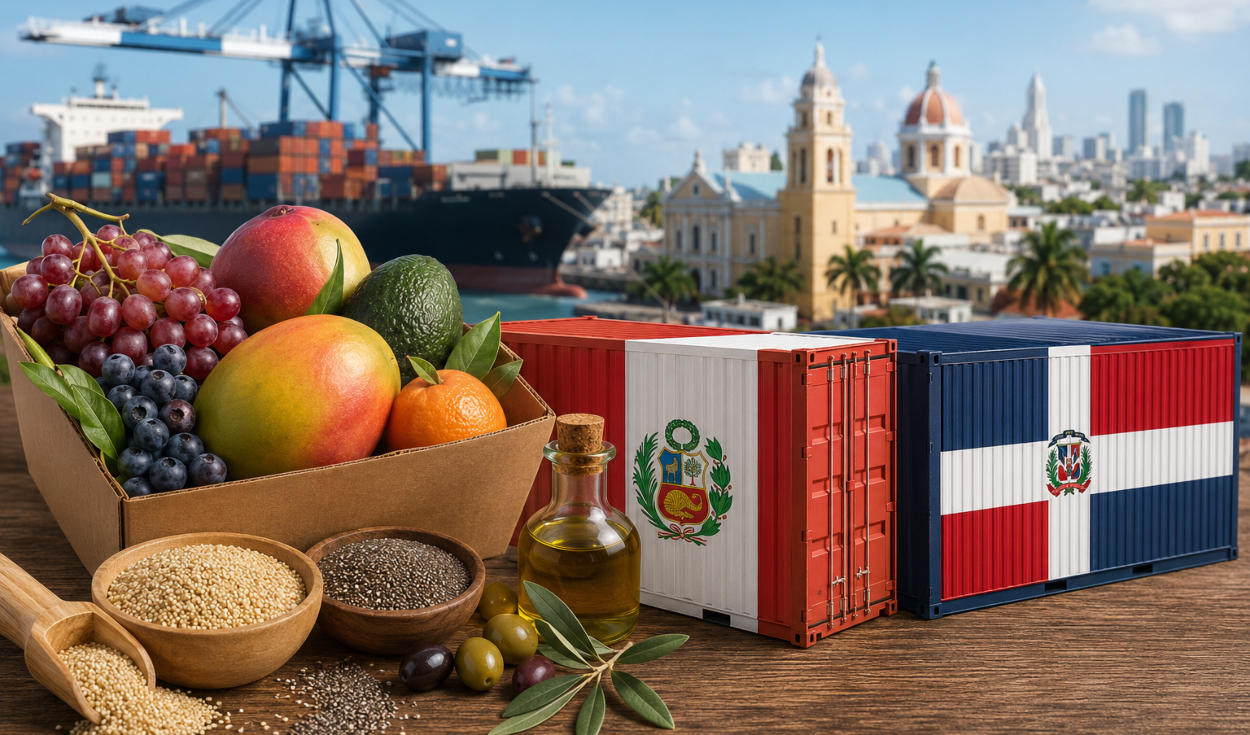
Peruvian exports to the Dominican Republic grew 3.1 percent to $76,663,000 in the first half of the year, driven by non-traditional goods.
Shipments between January and June rose from $74,349,000 recorded during the same period last year, according to figures released by the Association of Exporters (ADEX).
Non-traditional products dominated commercial sales to the Dominican market, accounting for 90.6 percent of total exports with shipments valued at $69,446,000.
Agroindustrial items led the non-traditional category with a 43.5 percent share, followed by chemical products at 13.3 percent, iron and steel goods at 8.1 percent, timber products at 6.6 percent, and metalworking at 4.8 percent.
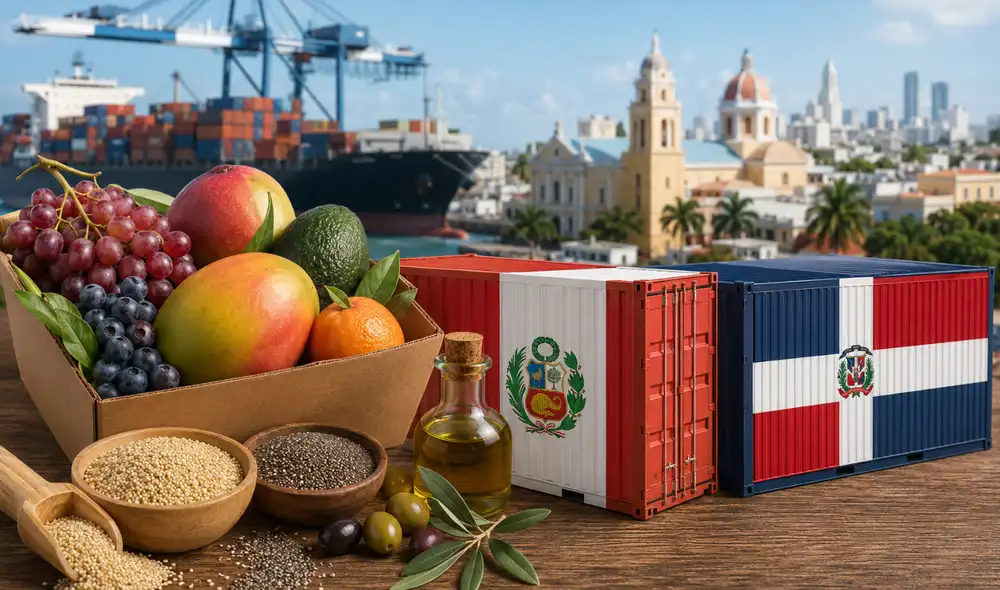
The iron and steel sector posted the largest percentage gain among export categories during the six-month period, expanding by 76.8 percent compared to the prior year. Fishing shipments advanced by 46.9 percent, while textile exports grew 34.2 percent and metalworking sales rose 13.2 percent.
Peru has developed into a major trade hub in South America, expanding beyond traditional mineral commodities to export high-value agricultural produce, textiles, and manufactured goods throughout Latin America and the Caribbean.
Trade mission to Santo Domingo
Against this backdrop, ADEX will lead a trade mission to Santo Domingo from September 2 to September 4. The initiative is organized through PymeADEX in coordination with the Ministry of Foreign Affairs and the Embassy of Peru in the Dominican Republic.
The delegation will bring together companies from the agroindustrial, food, and services sectors looking to expand their commercial presence in the Dominican market. Featured items will include quinoa, chia, and fresh fruits such as mandarins, lemons, blueberries, grapes, avocados, and pomegranates.
Exporters will also present olive oil, olives, mangoes, processed foods, healthy snacks, specialty coffees, pisco, and wines during the Santo Domingo events.
The delegation will place special focus on the Clean Label segment, an emerging commercial trend prioritizing food products manufactured with recognizable ingredients and transparent composition for consumers.
The Dominican Republic occupies the eastern portion of Hispaniola in the Greater Antilles, maintaining one of the largest market economies in the Caribbean basin with Santo Domingo serving as its central economic hub.
Drivers of Caribbean market demand
ADEX highlighted that Peruvian commercial interest aligns with the economic performance of the Dominican Republic, which the export association estimates will expand by 4.5 percent this year.
The export association noted that robust tourist movement and the modernization of local supermarket chains are key factors that can favor increased demand for differentiated food products.
Janet Retamozo Casas, the head of PymeADEX, said the primary objective of the mission is to unlock new commercial avenues and connect Peruvian businesses directly with Dominican importers, distributors, and buyers.
Retamozo Casas said the delegation's itinerary includes formal meetings with commercial counterparts and regulatory agencies, alongside business discussions with companies in the HORECA channel representing hotels, restaurants, and catering services.
Retamozo Casas said the Dominican market offers valuable commercial opportunities for companies capable of supplying high-quality and differentiated products.
The HORECA acronym represents the hotel, restaurant, and catering industry, a sector that plays a prominent role in service-oriented Caribbean nations with strong international tourism sectors.
Infrastructure visits and trade cooperation
Delegates will also conduct an on-site visit to the Port of Caucedo, one of the primary logistics centers in the Caribbean region, to evaluate its maritime infrastructure, route connections, shipping transit times, and distribution facilities.
Situated near Santo Domingo, the Port of Caucedo functions as a deepwater port terminal and transshipment hub handling major cargo routes across the Caribbean Sea and international shipping lanes.
The upcoming commercial push builds on an established bilateral foundation. ADEX signed a cooperation agreement with the Dominican Association of Exporters (ADOEXPO) in January 2023 to promote trade flows, business delegations, professional training, and joint participation in international trade fairs.
The key challenge for exporters now is converting first-half growth figures into a wider market footprint across the Dominican Republic, particularly for small and medium-sized enterprises seeking new international markets.