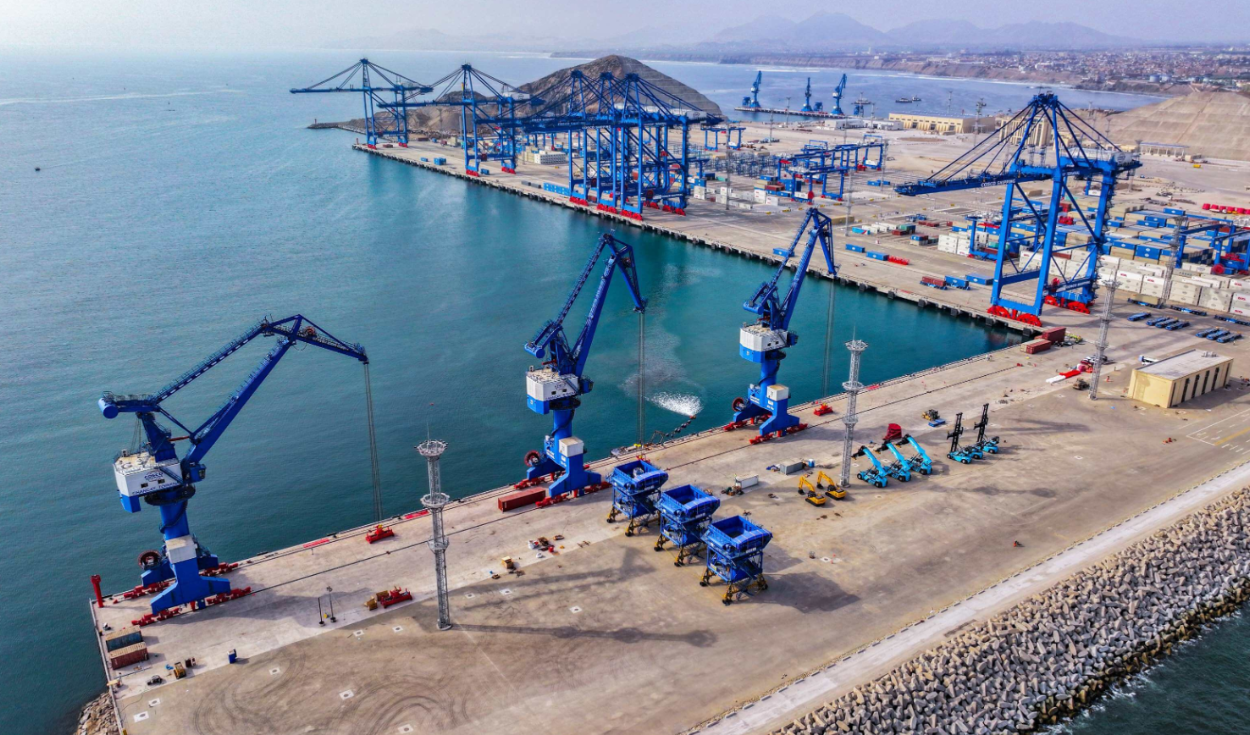
Peru's state investment agency Proinversión and the National Port Authority (APN) have disputed key findings of a government audit into the Chancay multipurpose port terminal, saying auditors made factual errors about legal representation and tunnel construction oversight.
The Comptroller General issued the compliance audit in mid-June, scrutinising the granting of permits, the signing of the original investment contract, and environmental oversight at the terminal operated by Cosco Shipping Ports Chancay Peru (CSCPC).
The signing dispute
The audit concluded that Jose Picasso Salinas and Marco Rivera Noya, who signed the 2016 investment contract on behalf of the company then known as Terminales Portuarios Chancay, did not have powers registered in Peru's public records that authorised them to do so. The contract was signed on 26 August 2016 with then-Deputy Transport Minister Fiorella Molinelli Aristondo and Proinversión executive director Carlos Herrera Perret representing the state.
The audit stated that Proinversión processed and signed the contract even though the company representatives lacked the required authorisation, and then forwarded it to the Ministry of Transport and Communications, implying the agency acted in favour of the investor.
Sources at Proinversión and CSCPC said the audit was wrong on this point. They said that on 7 June 2016, before the contract was signed, CSCPC had already sent Proinversión the powers of attorney authorising Picasso and Rivera to act as representatives. The company said its registration records showed the relevant powers listed under numeral 5.08, not numeral 3.00 where auditors looked, and that auditors were therefore mistaken when they concluded the documentation did not exist.
The tunnel route
The second main criticism in the audit was directed at APN officials, who were accused of applying a flexible interpretation of their oversight mandate and failing to act on alleged deficiencies in the terminal's construction in a way that benefited investors.
Specifically, auditors said APN approved the technical file and granted port authorisation for Phase 1 of the terminal in 2021 and approved a second modification in 2024, despite the technical file not matching the existing environmental certification regarding the tunnel route and not incorporating an environmental protection measure known as the Geotube System. Auditors also said APN took no corrective action when construction proceeded along a route different from the approved alignment.
APN sources denied that the 2021 technical file included a new tunnel route. They said it was a serious error by the auditors to claim otherwise, and that no modification to the tunnel route was requested in that file.
On the Geotube System, APN said it forms part of the modification to the detailed environmental impact study, not the technical file that APN approved. Sources said geotubos are an environmental remediation component, not port infrastructure, and therefore fell outside APN's responsibilities for analysis, control, or supervision.
Environmental certification
On the third point, auditors criticised APN for not intervening when the tunnel route was varied and for allowing work to continue without environmental certification. APN responded that the tunnel authorisation was made under an easement granted by the National Superintendency of State Assets, making that body responsible for enforcing applicable norms.
APN also said it does not carry out construction supervision and lacks the instruments to take topographic measurements of works in progress, and that the law does not allow it to halt a fully private project as opposed to public or concession works.
Sources linked to the investor said the tunnel route change did not develop across a different environment, did not alter the scale of the intervention, and did not produce new environmental impacts, so no new technical report was required. They also said the company never concealed the route taken and instead adjusted the project to comply with an updated official geodesic system while continuing to apply the environmental management measures set out in approved instruments.
The Comptroller General's audit recommended that authorities evaluate the potential liability of four officials from Proinversión and APN in connection with the findings.