


Spanish Prime Minister Pedro Sánchez is facing an escalating internal conflict within Moncloa Palace after a mass migrant crossing into Ceuta triggered accusations against ministers.
Sources from the inner circle of the Spanish government described an unbreathable atmosphere marked by deep distrust across departments following the border crisis. Cabinet members are pointing fingers at colleagues and issuing direct reproaches as political divisions deepen within the executive.
Senior officials confirmed that lines previously respected within the administration have now been crossed, with ministers questioning both the decisions and the reliability of information shared by fellow cabinet members.
Interior Minister Fernando Grande-Marlaska has emerged as the primary target of criticism within the administration. Multiple cabinet colleagues openly blame the interior minister for losing control over his department during the days preceding the mass entry on July 30.
Government sources delivered a harsh assessment of his performance, stating that Marlaska does not manage the ministry and remains unaware of critical information moving through his own departmental structures.
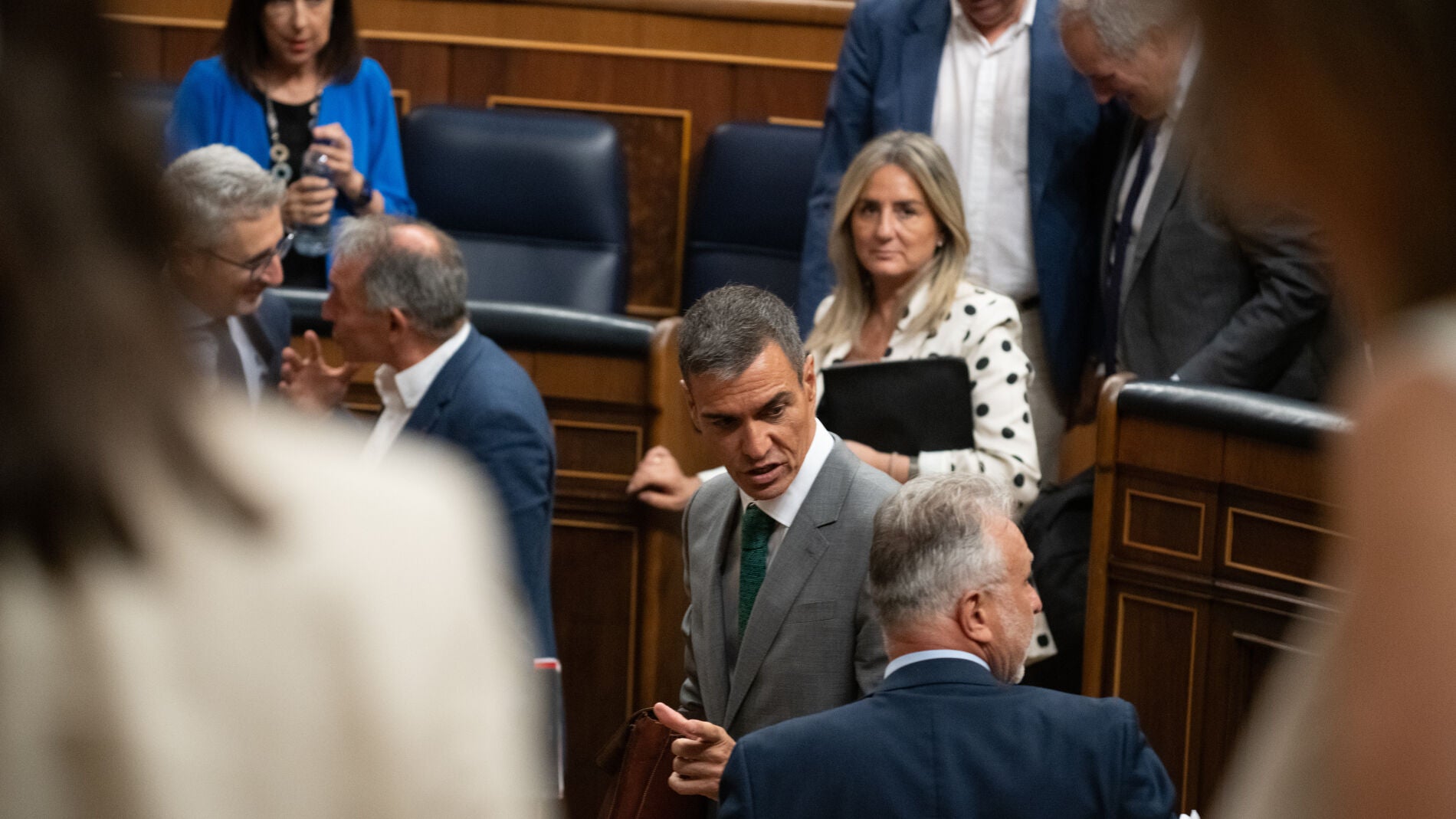
The internal conflict widened significantly after Sánchez addressed the Congress of Deputies on Thursday. Speaking from the parliamentary podium, the prime minister acknowledged that the government must determine why a vital intelligence document failed to move up the chain of command within the National Police and the Interior Ministry.
Sánchez referred to a warning document prepared on July 29 by the National Centre for Immigration and Borders, a specialized branch of the National Police. He informed lawmakers that the failure of the warning to ascend to top leadership would have to be explained by authorities.
Cabinet members interpreted the statement by Sánchez as a direct criticism of Marlaska. Although ministers suspect that elements within the state security forces may be working against the government, officials maintain that it is unacceptable for the interior minister to remain uninformed about key security alerts.
Intelligence warnings spark cabinet dispute
Ceuta, a Spanish autonomous city located on the North African coast bordering Morocco, forms one of the two land borders between the European Union and Africa. The city has experienced heightened security tension following two deaths and a recent assault on a military officer during ongoing border unrest.
The battle over who possessed intelligence prior to the July 30 entry has escalated from an operational disagreement into a fierce conflict over political responsibility. Throughout the crisis, the Interior Ministry has maintained that no intelligence report enabled officials to foresee a border surge of such magnitude.
The Ministry of Defence has defended the performance of national intelligence services during the crisis. However, the report compiled by the National Centre for Immigration and Borders added further friction by formally recording a risk alert for a mass entry issued on July 29.
Members of the executive are now demanding to know where the intelligence stalled within administrative channels and which officials were obligated to escalate the warnings to top leadership.
Accusations target defence minister
Marlaska is not the only cabinet member facing internal attacks from colleagues. A parallel conflict has focused on Defence Minister Margarita Robles, who oversees national security policy and the National Intelligence Centre.
Government sources stated that several ministers are deeply annoyed with Robles, accusing her of anticipating and utilizing sensitive information originated by other ministries. Sources described cabinet anger toward the defence minister as massive.
Sánchez placed Robles in a difficult position during his parliamentary appearance by announcing the upcoming publication of a comprehensive official dossier. The file will contain all reports, messages, and risk alerts issued prior to the mass arrival of migrants from Morocco.
The prime minister emphasized that his team reviewed every report and note submitted to Moncloa by state security forces and intelligence agencies. The announcement impacts Robles directly due to her political oversight of the intelligence service during the pre-crossing period.
Deepening distrust threatens government stability
Government departments have grown increasingly guarded regarding their internal data, with ministers expressing suspicion over actions taken by cabinet colleagues. Sensitive intelligence has effectively turned into political ammunition inside Moncloa Palace.
Ministers view early access to information as essential for defending their management, while remaining uninformed leaves officials vulnerable to political damage. The internal dispute comes during a period of political weakness for Sánchez, who stood alone in parliament defending his handling of the situation.
Moncloa officials have tried for over a month to construct a unified narrative surrounding events in Ceuta. However, competing internal accounts have repeatedly disrupted those efforts, shifting focus between early warnings, diplomatic relations with Morocco, border security responses, unified command structures, and a police report submitted to the National Court.
Each new document submitted to investigators has generated fresh questions, forcing individual ministers into defensive positions. Longstanding personal friction, including known animosity between Robles and Marlaska, has expanded into total distrust between key ministries.
While the prime minister attempts to present an orderly public account, internal fights persist over which official possessed specific documents. Government sources warned that full clarity regarding responsibilities may never emerge given the complex nature of the border crisis.
Lawmakers from the ruling Spanish Socialist Workers' Party admitted in private that the ongoing crisis could deal a fatal blow to the government. Socialist deputies conceded that Moncloa responded late and failed to manage the crisis effectively, noting that Sánchez failed to reassure even his own parliamentary group during his address.


