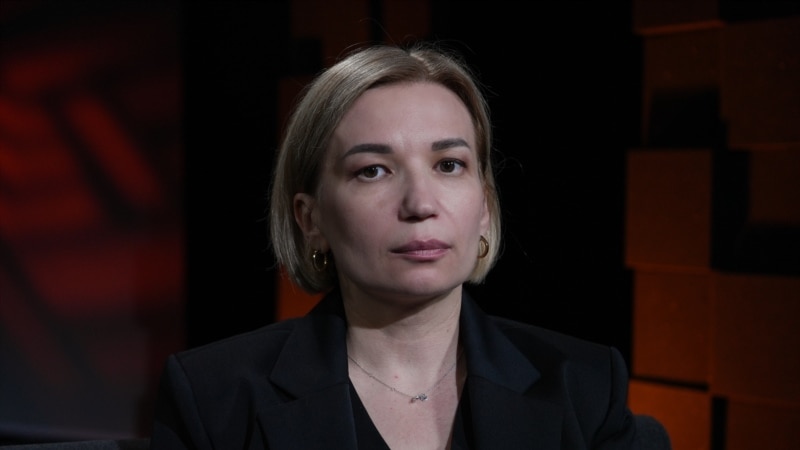
Olha Aivazovska, head of Ukrainian election watchdog Civil Network Opora, has warned that holding national elections during the war is currently impossible.
Speaking in an interview with broadcaster Radio Free Europe/Radio Liberty on the Svoboda Live program, Aivazovska explained that security guarantees are lacking not only for voting day itself but for the entire election campaign period.
She stressed that candidate safety, political parties, media outlets, and election monitoring organizations would all be placed under severe physical threat if a campaign were launched under current wartime conditions.

Aivazovska urged observers to imagine a situation in which every polling station across Ukraine becomes a target for Russian strikes during a campaign. She stated that Russian forces could deliberately attack candidates, political parties, news organizations, or monitors to destroy the electoral process while it is underway, discredit the results, or eliminate key political figures before voting even takes place.
Civil Network Opora is Ukraine's leading independent non-governmental civic organization dedicated to monitoring elections, parliamentary activities, and public policy. Radio Free Europe/Radio Liberty is a United States funded international news outlet broadcasting across Eastern Europe and Central Asia.
Ceasefire requirements and campaign timeline
Aivazovska noted that the Ukrainian state currently possesses insufficient security guarantees to conduct a full and credible electoral process. She asserted that national elections could only take place under a binding and sustained ceasefire regime.
Outlining the official electoral calendar, Aivazovska explained that a presidential election requires 90 days of campaigning followed by three weeks for a second-round run-off vote. This creates a total campaign duration of roughly four months.
She expressed strong skepticism that the Russian Federation would agree to a four-month truce without demanding severe concessions regarding Ukraine's national sovereignty or territorial integrity. Such a truce, she noted, would need to guarantee a total halt to Shahed strike drones, FPV drones, and ballistic missile bombardments across the entire territory of Ukraine.
Furthermore, Aivazovska emphasized that even a prolonged ceasefire would not eliminate all security risks. She warned that Russia could still deploy terrorist attacks, targeted physical violence, and covert pressure tactics to disrupt candidate participation and voter turnout.
Information warfare and threats of state paralysis
Beyond physical violence, Aivazovska highlighted election interference through information and cognitive operations as a critical threat to Ukrainian democracy. She cited the presidential election in Romania as an example, where a little-known candidate rapidly gained widespread voter support through intensive digital influence campaigns.
Aivazovska warned that launching an election cycle that cannot be safely completed would trigger a catastrophic crisis of state legitimacy. Under such conditions, current government authorities could lose their legal mandate while newly elected officials would not yet be established.
She recalled the case of former Ukrainian President Viktor Yushchenko, who survived a severe dioxin poisoning during his 2004 presidential campaign. Aivazovska noted that what happened to Yushchenko could happen to any candidate today, as the Russian trace in that historical case was clear and widely documented.
Viktor Yushchenko served as president of Ukraine from 2005 to 2010 after winning office following the Orange Revolution. His campaign was marked by a near-fatal poisoning that left him disfigured, which investigations linked to laboratory-grade dioxin administered during the campaign.
Aivazovska described entering an electoral cycle without guaranteed safety as trying to resolve a crisis by jumping out of a window, calling it unequivocally suicide. She cautioned that if voting day is disrupted, or if ballots contain individuals who no longer physically exist, the incumbent government would lose its legitimate authority to issue orders to defense forces, resulting in total state failure.
Debate over wartime democratic processes
Her warnings follow a video address recorded on August 18 by former Defense Minister Mykhailo Fedorov, who called on Ukraine to find ways to hold elections despite the ongoing war.
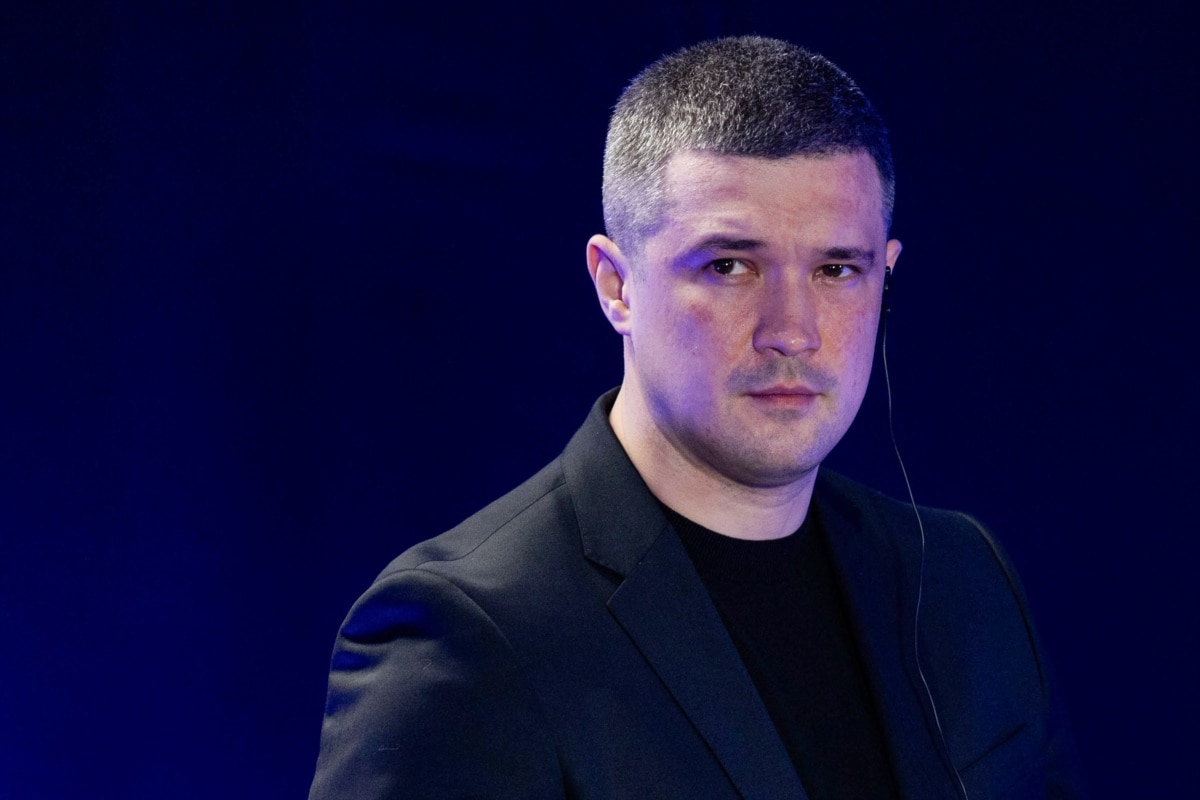
Fedorov argued in his statement that democracy must not be held hostage by Russia. He urged Ukrainian leaders to establish a legal, safe, and realistic mechanism to restore full democratic processes during a prolonged conflict.
Fedorov acknowledged the immense logistical and security challenges involved in holding elections during wartime. He emphasized the necessity of safeguarding the voting rights of military personnel serving on the front lines, millions of Ukrainian refugees residing abroad, and citizens living in frontline regions under constant bombardment.
He added that any election mechanism must guarantee the physical safety of the process, the independence of state institutions, and public trust in the final results.
Mykhailo Fedorov previously served as Ukraine's minister of defense, leading the country's military establishment during the ongoing conflict with Russian forces.
Constitutional restrictions and international pressure
The debate over holding elections comes as President Volodymyr Zelenskyy reached seven years in office in April 2026, exceeding Ukraine's standard five-year presidential term limit.
However, holding presidential or parliamentary elections is explicitly prohibited under Ukrainian law during martial law, which was declared on February 24, 2022, following Russia's full-scale invasion.
United States officials, including President Donald Trump, have repeatedly raised the issue of holding democratic elections in Ukraine. The US remains Ukraine's primary military and financial partner in countering Russian aggression.
The Ukrainian government in Kyiv maintains that security remains the essential prerequisite for holding elections, pointing out that Ukrainian cities and civilian infrastructure face near-daily Russian missile and drone bombardments.
Meanwhile, the Washington-based Institute for the Study of War (ISW) reported in February that the Kremlin frequently brings up the topic of Ukrainian elections to push false claims that the Ukrainian government is illegitimate. ISW analysts noted that Moscow seeks mechanisms to control Ukrainian politics and has signaled it will reject any election result that does not produce a pro-Russian government in Kyiv.