Brazil Federal Supreme Court President Edson Fachin has archived the country's controversial fake news inquiry after seven years, ruling that the investigation cannot continue indefinitely.
The determination carries immediate effect and does not invalidate or overturn any previous rulings delivered during the seven-year probe.
Fachin acted hours after Prosecutor General Paulo Gonet formally recommended shelving the investigation. Gonet, who leads the Federal Public Ministry as Brazil's top public prosecutor, supported closing the matter, prompting Fachin to conclude that while the inquiry began constitutionally, the law does not authorize an investigation to continue indefinitely.
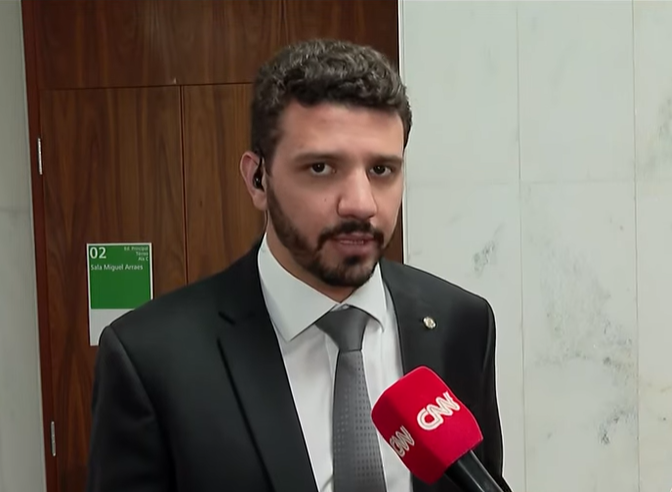
The closure sparked immediate dispute on Monday night between commentators Vinicius Poit and Jose Eduardo Cardozo on the CNN Brasil program O Grande Debate. The program, which airs from Monday to Friday at 11 p.m., examined whether the long-running probe had outlived its mandate.
Inquiry duration divides opinion
Cardozo argued that the inquiry had lasted the time necessary to examine an extensive series of interconnected facts. He stated that it had evidently run for the duration needed to investigate the evidence, while noting that investigators had not yet completed work on every matter within the case.
Cardozo maintained that there is no illegality in an investigation extending over time, provided authorities proceed diligently. He noted that Fachin's decision to close the master file and open new procedures represented an investigative technique, possibly intended to prevent further speculation around the case.
Poit took the opposite view, asserting that the inquiry had lasted far longer than it should have. He declared that in his opinion the end of the inquiry was long overdue, pointing out that critics informally called it the end of the world inquiry due to the sheer breadth of matters under review.
Controversial orders and court precedents
Poit also recalled the controversial origins of the investigation, noting that former court president Dias Toffoli opened it ex officio on his own authority rather than at the formal request of prosecutors. Justice Alexandre de Moraes was then assigned as rapporteur without the customary computerized lottery used to distribute cases among justices, a process Poit said fueled ongoing doubts regarding potential political motivations.
Among the most contested episodes of the inquiry, Poit cited censorship imposed on the investigative magazine Cruzoe and the news website O Antagonista, alongside a fine of 100,000 Brazilian reais, a decision that the court subsequently overturned.
Poit also pointed to past efforts to include Justice Andre Mendonca in the inquiry, which Fachin similarly rejected. Mendonca had previously served as federal attorney general and justice minister before joining the bench. Poit described the closure as extremely necessary, congratulating Fachin and remarking that it was better late than never.
Defense of democracy and judicial conduct
Cardozo acknowledged that critics could dispute certain decisions taken over the course of the inquiry, but insisted that the investigation played a fundamentally important role in defending Brazilian democracy.
He warned against efforts to politicize and discredit the Federal Supreme Court, arguing that individual missteps by court members should not be confused with the institution as a whole. Cardozo added that anyone at the Supreme Court who committed an unlawful act must be investigated and, if proven guilty, punished.
The Federal Supreme Court, based in the capital city of Brasilia, serves as Brazil's constitutional tribunal of last resort. Cardozo previously served the country as justice minister and attorney general, while Poit is an entrepreneur and former federal deputy for Sao Paulo.
Under Fachin's order, unresolved matters stemming from the sprawling 2019 file will now transition into separate investigative procedures rather than continuing under a single open-ended case.