

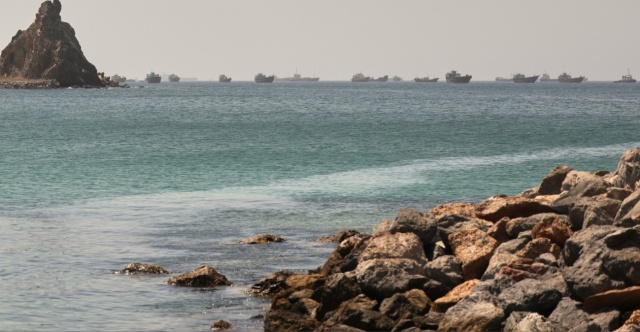
Iranian Foreign Minister Abbas Araghchi met US Special Envoy Steve Witkoff at the United Nations to outline terms for reopening the Strait of Hormuz.
The diplomatic meeting took place at the request of Witkoff, according to Iranian state television IRIB. Iranian officials emphasized that lifting current restrictions remains a strict prerequisite for any progress in negotiations.
Tehran's demands focus on three core conditions reported by Iranian media: an immediate end to the naval blockade imposed by the United States, the prompt release of all frozen Iranian financial assets, and a complete cessation of military hostilities across all regional fronts, including Lebanon.
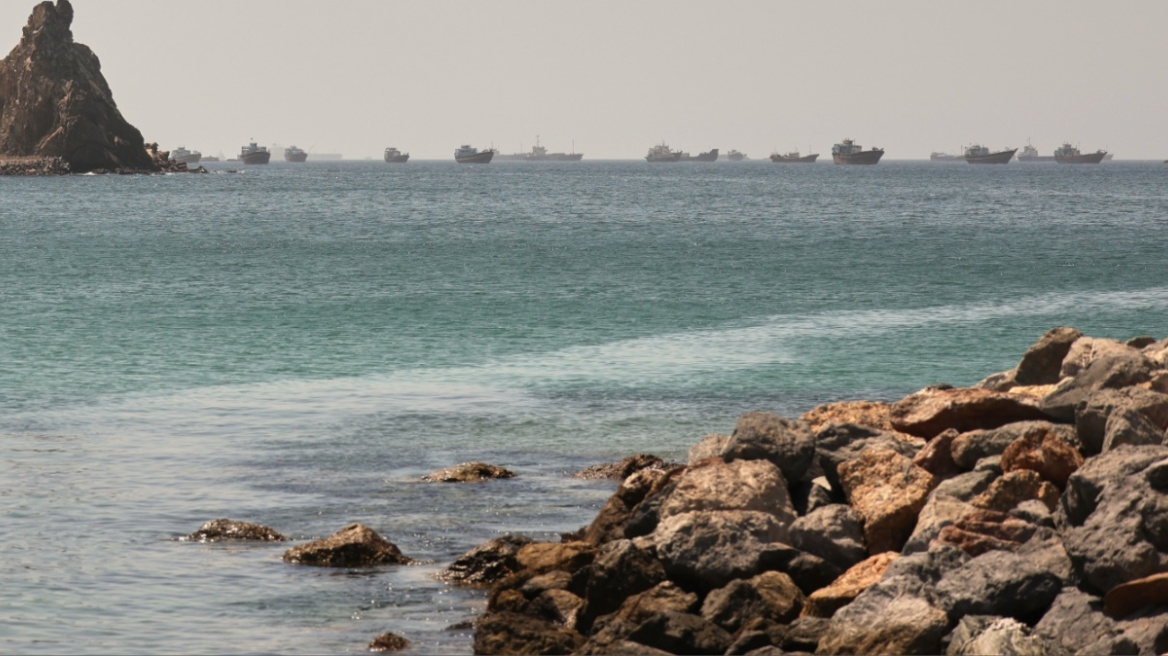
The Strait of Hormuz is a vital maritime passage connecting the Persian Gulf with the Gulf of Oman and the Arabian Sea. As one of the most critical sea routes in the world for global energy transportation, any disruption to navigation through the strait carries severe implications for international petroleum markets.
American Delegation Reports Positive Discussions
Following the bilateral talks, US President Donald Trump confirmed that American officials had engaged in a three-hour session with the Iranian delegation. Speaking during a meeting with Ukrainian President Volodymyr Zelenskyy, Trump described the session as very good and noted that discussions had wrapped up one hour prior. He added that additional contacts between the two sides were expected in the very near future.
Trump expressed further optimism regarding diplomatic prospects after a separate meeting with British Prime Minister Andy Burnham. The US president stated that he believed a settlement between Washington and Tehran would ultimately be achieved, asserting that Iranian representatives wanted to hold talks with the US and that communication remained active.
However, Trump maintained a firm line on nuclear capabilities, reiterating that the United States would not permit Iran to acquire nuclear weapons under any circumstances.
UN Address Outlines Options and Pressure Strategy
Earlier in the day, Trump delivered an address to the United Nations General Assembly, calling on international leaders to remain united in applying pressure against Tehran. In his speech, the US president stated that he faced a fundamental decision between wiping out Iran or reaching a diplomatic agreement. He suggested that a formal deal was more likely to materialize following the US midterm elections in November.
Trump described the Iranian regime as weak and desperate, remarking that significant political and strategic changes could take place rapidly. He also referenced a meeting with leaders from the Gulf Cooperation Council and other Arab nations, stating that the US had succeeded in economically isolating Iran and that a limited window of opportunity remained for Tehran to alter its policy.
The United Nations General Assembly brings together representatives from member states for high-level annual diplomatic sessions in New York. The Gulf Cooperation Council is a regional political and economic union comprising Arab states bordering the Persian Gulf.
Tehran Rejects Threats as Strategic Impasse
Military authorities in Tehran responded forcefully to Trump's address at the United Nations. The Iranian armed forces and the Islamic Revolutionary Guard Corps dismissed the US president's statements regarding the potential obliteration of the Islamic Republic, labeling his remarks as internal propaganda.
In a joint statement broadcast by Iranian state broadcaster IRIB, the General Staff of the Iranian Armed Forces and the Khatam al-Anbiya Central Headquarters stated that Trump's comments reflected a strategic impasse facing the United States in its aggression toward the Iranian nation.
During his public statements, Trump also detailed the scale of American military operations against Iranian infrastructure. He claimed that the Iranian navy had been neutralized, asserting that US forces had destroyed all 159 vessels belonging to Iran's naval fleet.
Furthermore, Trump stated that US strikes had damaged more than 90 percent of Iranian aircraft, alongside 430 weapons storage facilities and 800 drone warehouses. He asserted that American forces had eliminated Iranian air defense systems, fully decimated terrorist leadership, and crippled the country's economy.


