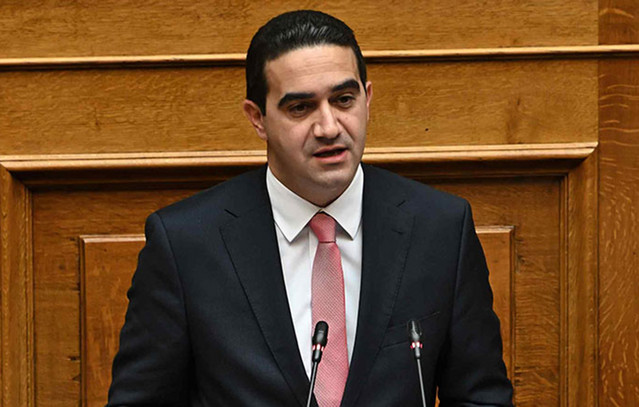
Michalis Katrinis of opposition party PASOK has strongly criticized government plans to review Greece's strategy toward Turkey, saying officials ignored Turkish provocations since 2019. Speaking on state television channel ERT News, the PASOK national defence spokesman accused the ruling administration of seeking a late course correction after years of underestimating regional tensions without seeking European Union sanctions.
Katrinis, who serves as a member of parliament for Elis in western Greece, leads national defence policy for the center-left Panhellenic Socialist Movement (PASOK). He recalled that the Greek government originally presented the 2023 Athens Declaration as the definitive solution to disputes between the two Aegean neighbors. However, he argued that Turkey used the bilateral pact to improve its political standing with NATO allies and European partners while maintaining its regional ambitions.
Defence cooperation and regional tensions
Katrinis pointed out that Turkey expanded its defence cooperation with the United States during the same period, while Turkish defence companies completed a series of arms agreements with European firms. Although Greek officials highlighted Turkey's exclusion from the EU Security and Defence initiative known as SAFE, Turkish drone manufacturer Baykar and other defence companies established joint partnerships with enterprises in France, Italy, Spain, Estonia, Britain, and Germany.
The lawmaker linked the government's current position to a pattern of earlier choices and omissions regarding national security. He highlighted several unresolved disputes, including the illegal Turkish-Libyan maritime memorandum, Turkey's obstruction of subsea cable laying near the Greek island of Kasos, and the escalation driven by Ankara's Blue Homeland maritime doctrine. The government failed to demand European Union sanctions in response to any of those developments, Katrinis said.
Katrinis also questioned military deployments in the Aegean Sea, specifically asking why a Patriot missile battery was moved from the island of Karpathos to Souda Bay on Crete. He noted that the relocation occurred while Turkish provocations were actively escalating across the region.
Demands for EU economic sanctions
Katrinis argued that Prime Minister Kyriakos Mitsotakis must raise regional security issues directly at European Union Summit meetings and demand economic sanctions against Turkey. He said Greece should not limit its response to diplomatic demarches and press statements released after events on the ground have already taken place.
He added that action had already been taken at the European level through initiatives by PASOK members of the European Parliament. The European Parliament previously condemned Turkish plans to formally vote on the Blue Homeland doctrine in the Grand National Assembly in Ankara.
Economic proposals and coalition stance
Turning to domestic economic policy, Katrinis accused the government of building state budget surpluses by levying high indirect taxes on consumers. He said ministers then redistributed a portion of those funds through piecemeal financial handouts timed for electoral gain.
He emphasized the burden of private debt, non-performing red loans, and the lack of legal protection for primary residences facing foreclosure. Katrinis announced that PASOK will unveil a comprehensive governance platform for Greek households and businesses at the upcoming Thessaloniki International Fair, an annual economic and political forum held in northern Greece.
Katrinis concluded that PASOK aims to achieve political change by defeating conservative ruling party New Democracy at the polls and forming a government. He reminded viewers that a unanimous conference decision by PASOK strictly rules out any future governing coalition with New Democracy.