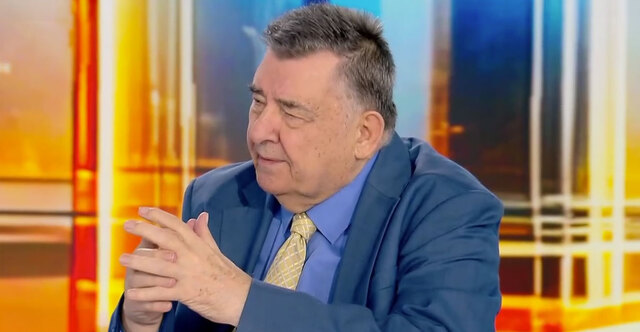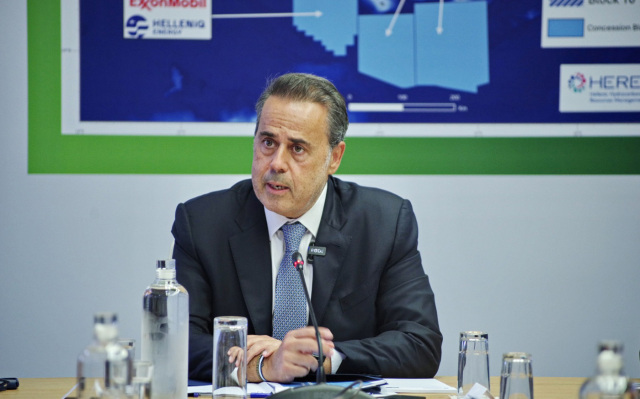
Greek Environment and Energy Minister Stavros Papastavrou announced new spatial framework rules for renewable energy development across the country on Tuesday.
Speaking in an interview with Greek broadcaster Mega, Papastavrou said the regulations introduce strict exclusion zones for wind turbines and solar farms to protect local environments and communities.
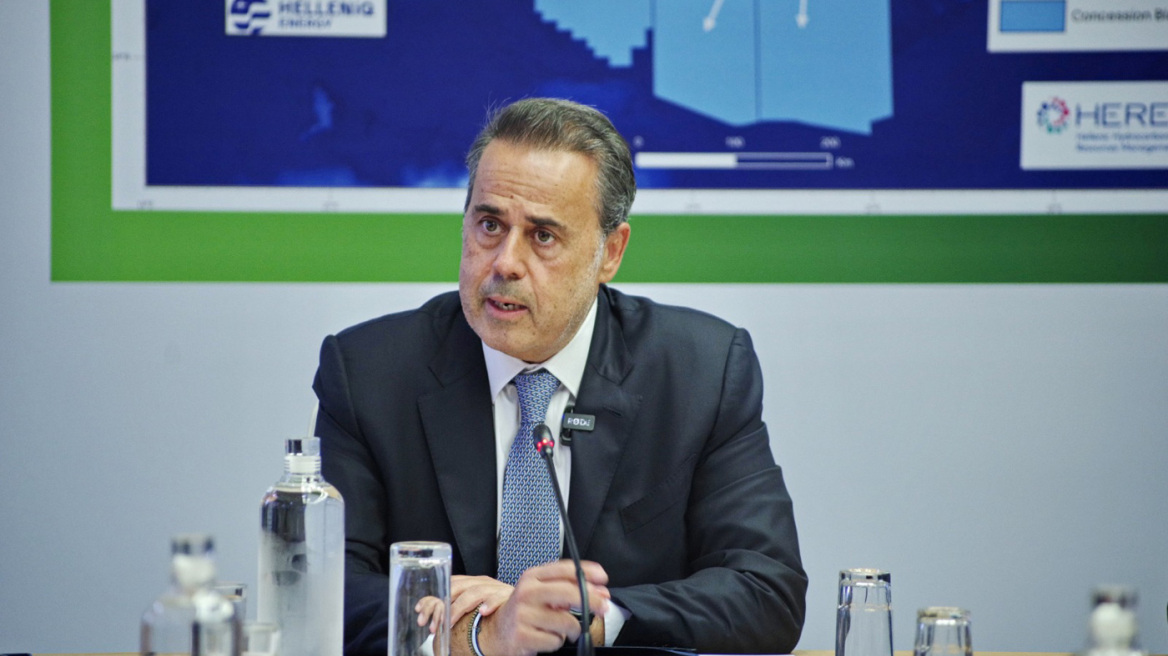
The Special Spatial Frameworks for tourism and renewable energy sources were presented to the cabinet on Monday. Papastavrou said solar and wind power are key parts of Greece's energy mix, supplying over 55 to 60 percent of the nation's electricity on many days and lowering costs for households and businesses.
However, Papastavrou warned that green energy companies will not receive a blank cheque. He emphasized that all operators must comply with environmental legislation and safety rules or face legal consequences.
Mega is one of the primary commercial television networks operating across Greece.
Exclusion zones for green energy
Papastavrou described the new framework as development with rules. He noted that tourism is a major comparative advantage for Greece that requires protection and expansion, adding that he worked on the tourism plan during the summer alongside Tourism Minister Olga Kefalogianni.
Under the renewable energy framework, the government established specific geographic exclusion zones to restrict green energy installations:
- No wind turbines in the capital region of Attica.
- No wind turbines in the metropolitan area of Thessaloniki.
- No wind turbines above 1,200 metres on mountain peaks.
- Restrictions on designated smaller islands.
- No solar panels in Natura protected areas, forests, or forested land.
Attica is the administrative region surrounding Athens, while Thessaloniki is the main urban hub in northern Greece. Natura 2000 is an ecological network of protected nature sites established across European Union member states.
Energy wholesale prices and market buffers
Addressing energy costs, Papastavrou noted that European wholesale prices surged since February because of the war in the Middle East. He said Greece remained among the ten cheapest countries in the European Union for wholesale electricity prices until yesterday.
Although current price levels are not satisfactory, Papastavrou explained that expanding renewable energy serves as a buffer to protect Greek consumers from steeper price increases seen elsewhere in Europe.
Maritime territorial rights and Turkish disputes
Responding to Turkish opposition to the spatial plan and domestic political criticism, Papastavrou stated that Greece defends its sovereign rights in practice rather than through rhetoric. He said Greece maintains open dialogue while refusing to compromise on territorial rights.
Greece has advanced Maritime Spatial Planning and established two marine parks, located in the Ionian Sea and in the South Aegean covering the Southern Cyclades. The country is also conducting seismic surveys south of Crete and preparing for its first offshore exploratory drilling in the Ionian Sea in nearly half a century.
Papastavrou said these actions strictly comply with International Law and the Law of the Sea. He added that marine parks recently announced by Turkey produce no legal effect because they claim areas outside Turkish jurisdiction, comparing the move to the controversial Turkey-Libya maritime memorandum.
National water and urban planning reforms
Papastavrou outlined two major institutional reforms planned by the Ministry of Environment and Energy for the coming months. The first priority is implementing water management reform legislation passed at the end of July to safeguard water as a strategic national resource.
He noted that falling river levels across Europe during the summer caused severe droughts even in countries unaccustomed to water shortages. Greece currently operates 735 separate water management entities, which Papastavrou criticized as inefficient and in need of consolidation.
The second priority is creating a centralized digital platform, titled gov.gr for urban planning offices, to modernize planning permission procedures. gov.gr is Greece's official public services portal used to digitize state administration.
Billion euro energy escape clause
Papastavrou confirmed that Prime Minister Kyriakos Mitsotakis will detail the implementation of a 1 billion euro energy escape clause through 2028 during the upcoming Thessaloniki International Fair.
Greece activated the financial clause following an announcement by Finance Minister Pierrakakis, who also serves as President of the Eurogroup. The Eurogroup is the council of finance ministers representing member countries within the eurozone.
The Thessaloniki International Fair is an annual commercial and political forum where Greek government leaders traditionally outline economic policy and national objectives.