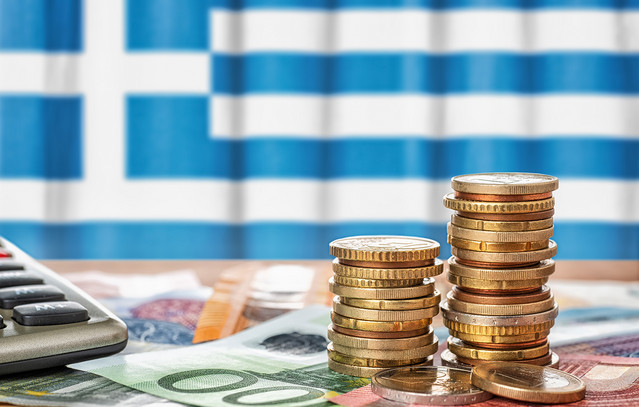
Greece's Recovery and Resilience Fund is entering its final phase, with all projects, investments, milestones and reforms required to be completed by August 31, 2026. The government must submit its last payment request to the European Commission by September 30, 2026, aiming to collect a total of €11.3 billion by the end of the year to complete the €36 billion package and close the fund's cycle for good.
Since 2021, €24.7 billion has already flowed into the Greek economy, almost €13 billion of it in subsidies and €11.7 billion in loans. The final two installments are expected to add another €5.3 billion in subsidies and €6 billion in loans, closing out a financing cycle that gave a strong boost to investment and left its mark chiefly on the green transition, energy, infrastructure and digitization.
With the ninth and final request, due by the end of September, the government will claim the remaining amount, with disbursement expected by the end of December. In the time remaining, the priority is completing the last milestones and commitments tied to the disbursements so the final available funds reach the Greek treasury.
Where the money went
According to European Commission data, the largest share of the funds Greece has received has gone to the pillar of sustainable growth and social cohesion. More than €10 billion of the funds already disbursed relate to this area, including about €3.9 billion in subsidies and €6.1 billion in loans.
The green transition holds a significant place, with €5.4 billion disbursed, followed by digital transition and health, each receiving more than €3.2 billion. Digitization has received €1.2 billion in subsidies and €2 billion in loans, while health has been allocated €3.15 billion in subsidies and about €100 million in loans.
Energy is one of the sectors where the fund's contribution is most visible. The share of electricity produced from renewable energy sources now consistently exceeds 50% of total output, a performance higher than the European Union average.
It is no coincidence that grid operator ADMIE, distribution operator DEDDIE, power utility DEI and gas operator DESFA are among the top ten companies to have received the most funding from the Recovery and Resilience Fund. The Ministry of Environment and Energy has received more than €2 billion, making it the second-largest recipient of funds after the Ministry of Infrastructure and Transport.
Pending issues and productivity gap
Some issues remain unresolved. Energy sector projects have been dropped from the fund, including significant interventions for storing energy generated from renewable sources. Storage remains a critical link in the green transition, since without adequate infrastructure part of the green energy produced goes effectively unused.
In contrast to the strong investment performance, productivity has lagged. Despite the billions mobilized and the rise in investment, productivity per hour worked in Greece stood at just 54.6% of the European Union average in 2025, leaving the country last in the relevant ranking. This may be the biggest challenge ahead: turning the investment boost delivered by the Recovery and Resilience Fund into a lasting increase in productivity and competitiveness, rather than one that fades once the final disbursements are made.
What comes next
The completion of the Recovery and Resilience Fund does not mean the end of European financing flows into Greece. The baton passes to the remaining funds of the 2021-2027 National Strategic Reference Framework (ESPA), and then to the new Multiannual Financial Framework for 2028-2034, from which Greece is estimated to receive more than €49 billion. The financing mix will also include the Modernization Fund and the Social Climate Fund, while the National Development Program 2026-2030 is planning investments of around €23 billion.