The Greek government is preparing a package of fuel subsidies, tax cuts, and supermarket price reductions to shield households from rising energy costs linked to the war in Iran, with announcements expected in the first week of September at the Thessaloniki International Fair (TIF).
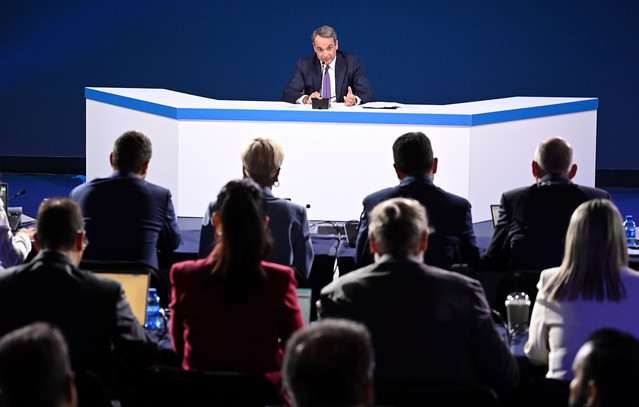
Prime Minister Kyriakos Mitsotakis has already announced a new subsidy of ten cents per litre on diesel for August. The government describes its broader response as two lines of defence: emergency interventions to hold down prices, and tax relief for the majority of compliant taxpayers.
Decisions on the tax relief package are expected to be finalised in the second half of August during meetings between the economic team and Mitsotakis, ahead of the TIF announcement. According to scenarios under discussion, the package would include tax reductions for the middle class, with particular emphasis on self-employed professionals, as well as support for workers, businesses, and property owners. Vulnerable groups, including low-income pensioners and recipients of guaranteed minimum income, would also be covered.
In recent statements, Mitsotakis signalled tax cuts for the middle class, with specific reference to freelancers. The package is also expected to include new minimum wage targets to be rolled out over a four-year timeline from 2027 to 2030.
On supermarket prices, manufacturers have begun submitting product codes with price reductions of between 5 percent and more than 20 percent to the Independent Market Supervision and Consumer Protection Authority. The process is expected to run until the end of August, with price cuts visible on shelves from early September.
Government ministers have stated that additional fuel subsidies will follow if needed. The government is also said to be monitoring the situation at the European level, ready to push for emergency EU support measures should the Middle East conflict escalate further.