

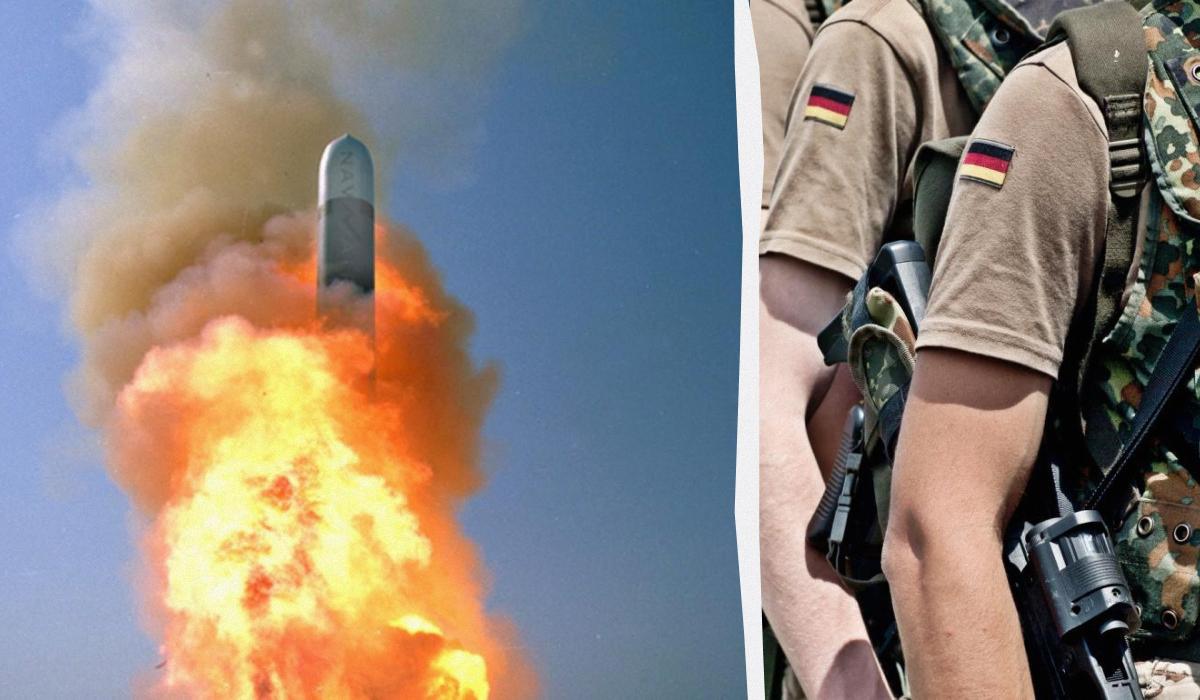
Germany is planning to spend nearly €12 billion on building a new long-range missile arsenal to boost its ability to deter potential aggression from Russia.
Internal documents from the German Ministry of Defense, reported by Politico, detail plans for a multi-tiered strike system ranging from low-cost mass-produced weapons to American Tomahawk cruise missiles and hypersonic gliders.
The new weaponry is intended to allow German armed forces to strike military targets hundreds and even thousands of kilometers deep inside enemy territory. Defense officials identified potential targets as command centers, airfields, missile launchers, and logistics hubs.
Developing long-range strike capabilities is listed as a top priority for Germany and the North Atlantic Treaty Organization (NATO). German defense officials said the objective is to gain the capability to strike deep into an opponent's rear area using conventional weapons without crossing the nuclear threshold.
Low-cost cruise missile acquisition plans
The first stage of the program focuses on deploying a low-cost cruise missile starting in 2027. Internal ministry documents name three potential candidates: the Anthem missile from US-Israeli startup Covenant Industries, the BARS missile from an unnamed Ukrainian company, and the Flamingo missile developed by Ukrainian firm Fire Point.
Berlin is currently conducting contract negotiations with two potential suppliers and aims to secure missiles for testing and qualification next year. Following qualification, the defense ministry intends to sign framework agreements to enable mass manufacturing.
German defense officials regard these cheap missiles as a cost-effective option that can be deployed in large quantities alongside more expensive precision systems. The approach reflects tactical lessons drawn from Russia's war in Ukraine, where long-range drones and cruise missiles have been repeatedly used to strike military infrastructure, industrial plants, and oil refineries.
American Tomahawk deployment and British joint projects
The second phase of the expansion involves acquiring American Tomahawk cruise missiles. Chancellor Friedrich Merz told the German parliament, the Bundestag, in early July that Germany had reached an agreement with the United States to purchase Tomahawks and deploy them on German territory.
According to the internal defense documents, Berlin aims to establish initial operational capability with land-based American Typhon launchers firing Tomahawk missiles by the end of this decade. This procurement will give Germany a proven long-range strike option while development of domestic European systems continues.
Germany is also partnering with Great Britain on two additional high-end components of the program: a high-performance cruise missile and a hypersonic glide weapon. Both projects fall under the Trinity House defense agreement signed between the two nations last year.
These prospective joint systems are expected to hit targets at ranges exceeding 2,000 kilometers, with initial development scheduled for completion by the mid-2030s.
Financial breakdown and parliamentary authorization
The joint British-German projects form the most expensive portion of the plan, with internal documents allocating nearly €9 billion for development and procurement, alongside €182 million for operational costs. A separate allocation of about €1.8 billion is designated for developing and buying cruise missiles, with €97 million set aside for ongoing maintenance.
While individual line items in the planning documents sum to around €11 billion, overall internal discussions and summary documents reference a total commitment of nearly €12 billion. The defense ministry emphasized that these funds have not yet been approved and will require formal authorization from the Bundestag.
The military plan comes as German defense leaders warn that Russia could pose an escalating military threat to NATO nations by the end of the decade. Meanwhile, Chechen leader Ramzan Kadyrov recently called on Moscow to expand its war efforts and launch strikes against NATO members providing Ukraine with weapons, intelligence, and logistical support.


