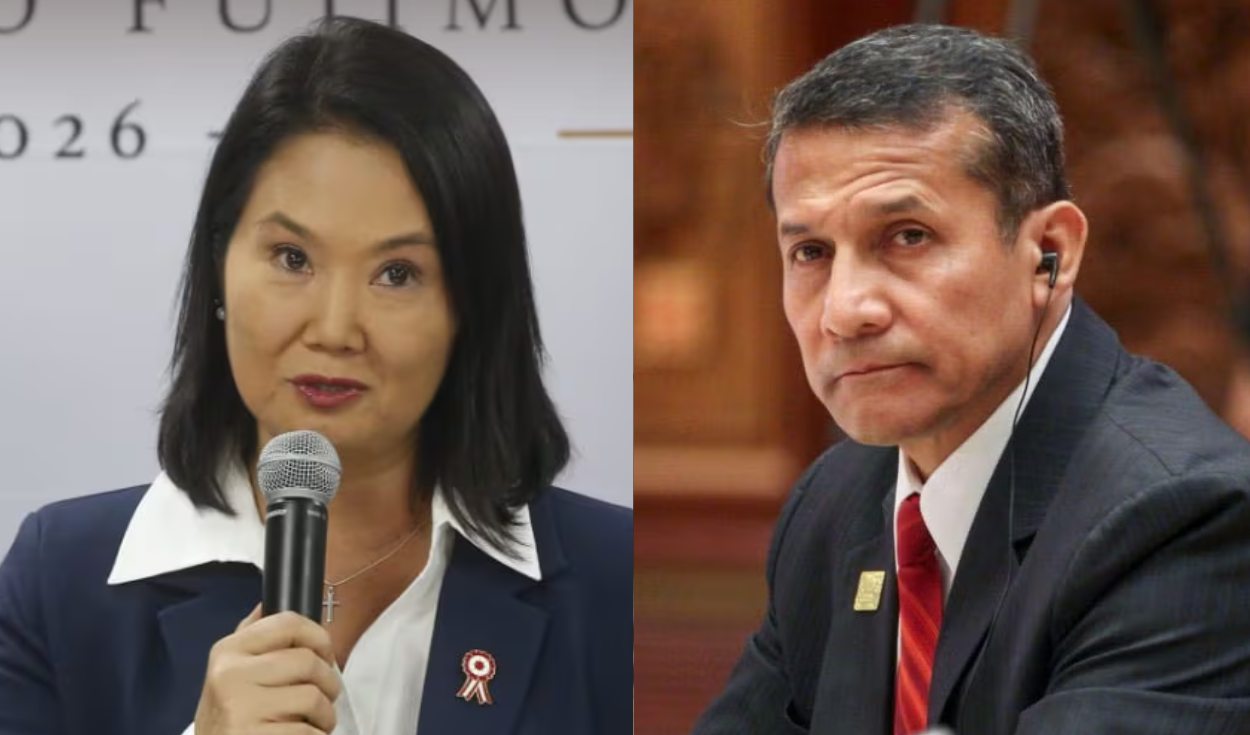
Peruvian President Keiko Fujimori said she would respect the Constitutional Tribunal's decision to annul the 15-year prison sentence against former president Ollanta Humala, even if she disagrees with it.
The tribunal granted a habeas corpus petition and ordered the permanent closure of the money laundering case tied to campaign contributions Humala received in 2006 and 2011. Humala left the Barbadillo prison following the ruling.
Speaking via Exitosa radio, Fujimori said that living in a state of law means respecting rulings whether one likes them or not. She drew on her own experience, noting that roughly eight years ago she was jailed on money laundering and criminal organisation charges related to her Fuerza Popular party, a decision she considered painful but which her legal team later reversed.
She added that although she may personally disagree with the tribunal's decision on Humala, it is her obligation to respect it.
Fujimori also questioned the performance of the Public Ministry in the case, saying that the tribunal's move suggested prosecutors had not done a good job.
Why the tribunal annulled the conviction
The Constitutional Tribunal struck down Humala's conviction on the grounds that the legal provision used to prosecute him for receiving illicit campaign funds did not exist at the time of the 2006 and 2011 elections. According to the tribunal, the specific money laundering category applied to his conduct was only created in November 2016, making its retroactive application unconstitutional.
Dissenting justices
The decision was not unanimous. Justices Luz Pacheco Zerga and Manuel Monteagudo Valdez argued the petition should have been declared inadmissible.
Monteagudo held that Humala's defence had already filed an appeal before the Second National Criminal Appeals Chamber that was still pending, and that this was the proper channel for his claims. He also argued the Constitutional Tribunal should not intervene in decisions belonging to judges or prosecutors during criminal proceedings.
Pacheco argued that rulings on procedural inadmissibility exceptions do not directly affect personal liberty, and that Humala's imprisonment stems from a subsequent conviction, not from the procedural step in question. She warned that the majority decision could undermine the habeas corpus process and encourage defendants to bypass ordinary legal mechanisms by approaching the tribunal prematurely.