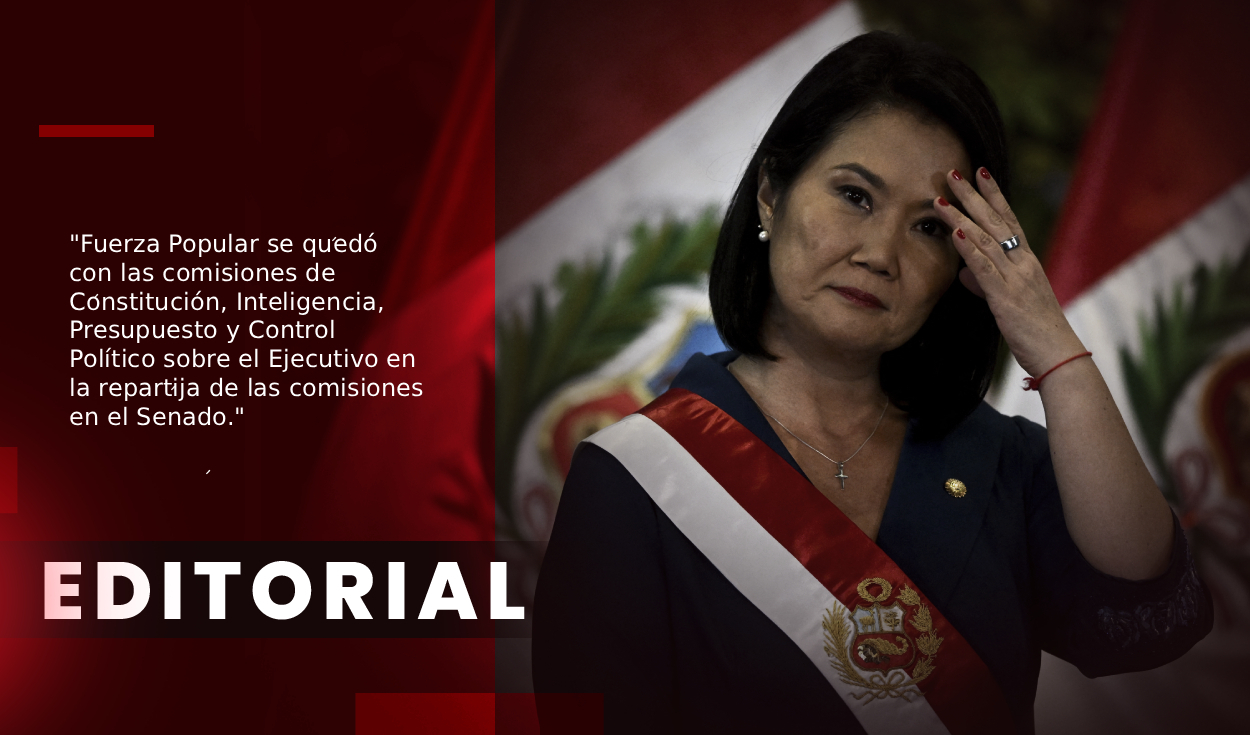
Fuerza Popular has secured four committee chairmanships in Peru's newly established Senate, including key panels governing constitutional reform, national intelligence, the bicameral budget, and executive oversight.
The party, led by Keiko Fujimori, will chair the Political Control over Executive Normative Acts Committee. The assignment creates a structural conflict of interest because the panel designed to audit executive branch decisions will be led by the same political party currently governing the executive.
Parliamentary committees form the core of legislative work in Peru. They serve as the venues where bills are debated prior to full floor votes, where government ministers are summoned to render accounts, and where the broader political agenda is set. In Peru's newly instituted bicameral legislature, Senate committees hold the specific function of reviewing and revising measures passed by the Chamber of Deputies, with committee chairs determining which issues are discussed, when, and with what urgency.
Executive oversight and constitutional reform
Fuerza Popular also assumed leadership of the Constitution, Rules and Foreign Relations Committee, which oversees all proposed constitutional amendments. During its final actions presiding over the outgoing Congress, the caucus enacted a law on military jurisdiction and filed a complaint with the National Board of Justice against a specialized human rights prosecutor.
In addition to the constitutional and executive oversight panels, Fujimorism secured the leadership of the Intelligence Committee and the Bicameral Budget Committee. The concentration of oversight authority in the governing party has drawn close scrutiny from political observers as President Keiko Fujimori begins her administration.
Citizens expect the ruling party to manage the executive control committee with transparency and institutional responsibility. While such self-regulation would mark a departure from prior practice, analysts note it represents an urgent institutional demand for national stability and governability.
Justice panel and opposition roles
Renovación Popular, the conservative party led by Rafael López Aliaga, was assigned the chairmanship of the Justice and Human Rights Committee. During the recent national election campaign, the party threatened to abolish the National Elections Jury, Peru's electoral authority, and supported controversial criminal justice legislation. Commentators noted that placing the justice panel under party leadership presents a political paradox for Congress to explain.
Despite the ruling bloc's major appointments, opposition parties captured several critical oversight panels. Juntos por el Perú will lead the State Management and Comptroller, Parliamentary Ethics, and Special Procedures committees. Meanwhile, Buen Gobierno will chair the Health, Education and Culture Committee, and Ahora Nación will head the Economy, Environment and Consumer Defense Committee.
These opposition-led panels retain substantial oversight capabilities. Operating within the Consensus for Democracy coalition, opposition lawmakers have a concrete opportunity to demonstrate that the new legislative session will operate differently from its predecessor by prioritizing governability and public representation.