

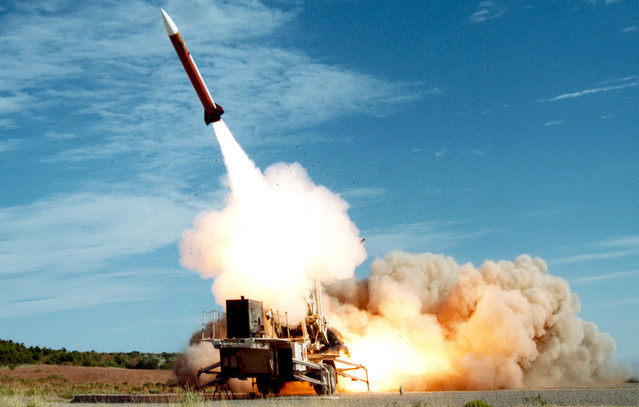
Ten European countries launched a new missile defense alliance called Freyja in Paris on July 13, aiming to build a more resilient European ecosystem for intercepting ballistic missiles rather than replace the American Patriot system.
That same night, Russia launched eight ballistic missiles against Ukraine. Patriot systems intercepted five of them, the first successful Ukrainian takedown of Russian ballistic missiles in nearly two weeks.
Interceptor shortages expose Patriot's limits
The intercepts also exposed a serious shortfall in interceptors. Ukraine has faced severe shortages because of the heavy use of Patriot systems in the US war with Iran and limited global production capacity.
According to the figures cited, Russia launched 114 ballistic missiles plus 24 Zircon and Oniks missiles against Kyiv in just five weeks, between June 2 and July 6. Global production of the advanced PAC-3 MSE interceptor runs at roughly 50 missiles a month, meaning Kyiv's defense alone can burn through more than two months of total global output in a matter of weeks.
Ukraine's production model
Ukraine's defense industry did not develop along the traditional lines of the US or European military-industrial complexes. Facing an existential threat, the country moved quickly, abandoning long development cycles, closed platforms and dependence on a single supplier.
Ukrainian drones rely on cheap airframes, widely available components, guidance systems not solely dependent on satellite signals, and near-daily adaptation.
From drones to ballistic interceptors
The founder of FirePoint, the company that builds Ukraine's long-range drones, said the next step is producing ballistic interceptor missiles as well as a Ukrainian ballistic missile. FirePoint's drones reportedly struck the oil refinery at Salavat, the last major Russian refinery that had not previously been hit by a Ukrainian strike.
Why one Patriot factory isn't enough
Five countries, including the United States, recently signed an agreement to create a European maintenance center for Patriot missiles, a move seen as positive given the system's operational value. But a single European factory for producing or maintaining American missiles is not enough, since ballistic missile production is outpacing interceptor production and widening the gap between the threat and the ability to defend against it.
Defense as an ecosystem
Freyja's core argument is that the defense industry should function more like the internet, with no single hub and no critical point whose failure could bring down the whole system. War rewards speed and reliability rather than perfection.
Central to Freyja's design is a proposed intellectual property framework in which technical documentation would be filed so that, under predetermined conditions, production could transfer to another participant in the program, ensuring continuity, protecting the technology owner's rights and preserving royalty payments. Software and technical systems are meant to avoid hidden dependencies on a single company or state and remain open to independent audits.
The lesson for democracies
The central lesson from Ukraine is that even the best weapon, in insufficient numbers, can be defeated by a sufficient number of good weapons. Ukraine paid a heavy price to learn that lesson, and other democracies are being urged to apply it without paying the same cost. Freyja is described as a first positive sign that Europe is beginning to understand that its security cannot simply be imported ready-made.


