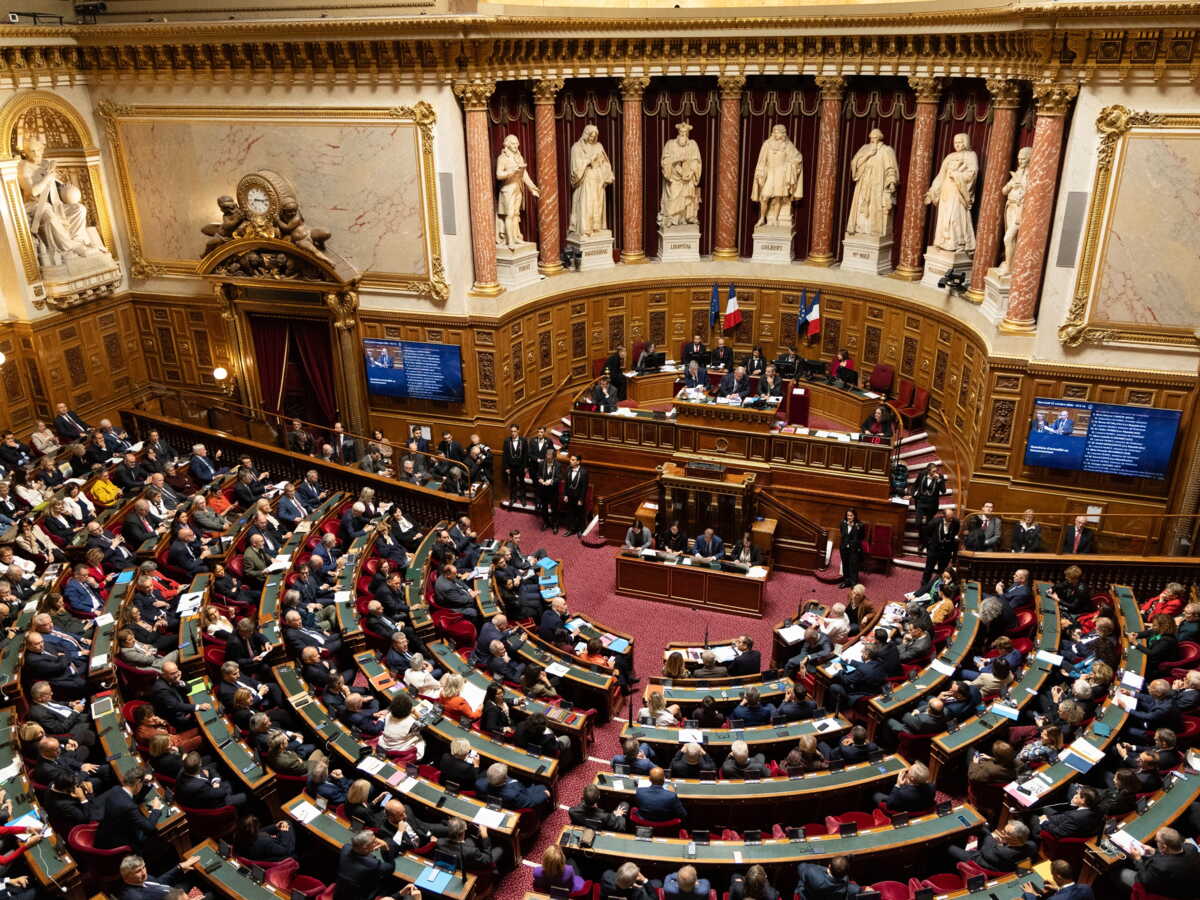
The French Senate began debating the articles of the 2027 budget bill, known as the PLF, on Monday, November 23, 2026, working from the government's original text after the National Assembly rejected the bill's revenue section. Of the 58 amendments filed on Article 7, which covers two major property investment measures, 18 call for scrapping a planned cap on tax depreciation for non-professional furnished rentals, known in France as LMNP.

Article 7 would cap depreciation under the real taxation regime at 2.5% of a property's price per year, and at 7,000 euros per household per year. For tourist furnished rentals, the caps would be 1.5% and 5,000 euros. From 2027, any depreciation that could not be deducted in a given year would no longer be carried forward to future years. Depreciation represents the annual loss in value of a rented property, which owners can currently deduct from their rental income.
The article also creates a new zero-interest loan, the PTZ parentalité, also called the PTZ natalité, to help parents of a child under three, or parents expecting a child, finance a home purchase, including those who have already used a zero-interest loan before.
Calls to protect existing landlords
In a statement, the Senate said the finance committee's rapporteure générale, Christine Lavarde of Les Républicains, argued that France's economic growth is being hurt by constant changes to the tax and regulatory framework, and proposed measures to the finance committee aimed at not destabilizing economic actors.
Lavarde's amendment, filed on behalf of the committee, would exempt LMNP rentals that began on or before October 1, 2026, from both the depreciation cap and the ban on carrying it forward. She argued that applying the article to the existing stock of rentals would upend the accounting plans of LMNP investors, who number 1.2 million in France according to explanatory notes attached to several Senate amendments, in a way that could prove penalizing for them.
An amendment from the RDPI group echoed this, specifying that rentals which began by October 1, 2026 would stay under the old rules as long as ownership does not change; selling the property after that date would put the buyer under the new regime. Emmanuel Capus of Les Indépendants, from Maine-et-Loire, filed an amendment with the same date. Manon Bouquin, of Hérault and the Union nationale pour les territoires group, proposed instead that the new rules apply only to rentals starting January 1, 2027.
Push for full repeal
Many other senators from across the political spectrum want to delete what has been dubbed the "anti-LMNP" measure outright. Sylviane Noël, LR senator for Haute-Savoie, said the changes would hit investments whose economic balance depends on duration, particularly in tourist and mountain areas.
Jean-Jacques Michau, of the RDSE group representing Ariège, noted that the LMNP regime was already tightened in 2025, when deducted depreciation was reintegrated into the taxable capital gain calculation on resale. He said changing the rules again less than two years later would only increase tax instability and reduce the visibility investors need to commit over several years.
Similar arguments appear in 16 other repeal amendments. In total, 18 of the 58 amendments on Article 7 propose deleting the reform, filed by senators from six groups: Les Républicains, Union centriste et indépendants, Socialiste écologiste et républicain, RDSE, Les Indépendants - République et Territoires, and Union nationale pour les territoires.
Fallback and compromise proposals
Some senators also filed fallback amendments in case the repeal attempts fail. Noël proposed excluding tourist furnished rentals from the cap and carryforward restrictions, arguing that in tourist and mountain areas these rentals support visitor accommodation and many small local businesses, and that keeping them running requires regular renovation and energy-efficiency work that needs tax visibility compatible with long-term investment.
Another fallback amendment from Noël would exclude from the reform furnished rentals used as a primary residence, and those housing students, trainees, young workers and employees relocating for their jobs, even if occasionally rented to tourists. She said this would prevent sales and the withdrawal of homes from the private rental market, which would run counter to the article's aim of encouraging long-term rentals. Similar amendments were filed by Sophie Primas (LR, Yvelines), Jean Pierre Vogel (LR, Sarthe), Marie-Pierre Callet (Union nationale pour les territoires, Bouches-du-Rhône), Amel Gacquerre (Union centriste et indépendants, Pas-de-Calais), Martine Berthet (LR, Savoie) and Nathalie Delattre (RDSE, Gironde).
Other senators sought a middle ground. Fabien Bravi, of Union nationale pour les territoires in Bouches-du-Rhône, proposed a 3% depreciation rate, equal to roughly 33 years of depreciation, which he said stays consistent with a property's useful life, unlike the 40 years implied by the government's 2.5% rate. His amendment would also remove the 7,000 euro annual cap.
Dominique Théophile, RDSE senator for Guadeloupe, proposed raising the cap to 8,000 euros while lowering the rate from 2.5% to 2.3%. He said he shares the goal of redirecting public support toward long-term housing, but argued the 7,000 euro cap does not sufficiently account for the sharp rise in construction, materials and renovation costs seen in recent years.
An amendment from the Écologiste, Solidarité et Territoires group went the other direction, seeking to remove all depreciation deductions for tourist furnished rentals in order to meet what it called Article 7's goal of redirecting public support toward long-term housing.
Changes sought to the new parental loan
On the PTZ parentalité, Lavarde's committee amendment would make the loan available for each new birth, rather than just once per household as Article 7 currently allows. She argued that a second child creates the same housing access difficulties as a first, and that since the measure's goal is to boost the birth rate, it makes sense to let families grow more easily.
Similar amendments were filed by Nathalie Delattre, Stéphane Fouassin of the RDPI group in La Réunion, and Sylvie Josserand of the Union nationale pour les territoires in Gard. Marie-Pierre Callet proposed extending the PTZ parentalité to households with a child under six.
Viviane Artigalas, filing on behalf of the Socialiste, écologiste et républicain group, proposed extending the lifting of the first-time-buyer condition, which Article 7 already grants to young parents, to private and public sector workers forced to change their primary residence because of a professional relocation.
What happens next
The Senate continues examining amendments to Article 7 as part of its review of the 2027 budget bill's articles.
Test yourself
How many of the 58 amendments on Article 7 propose eliminating the LMNP depreciation cap entirely?
What cap does Article 7 set on LMNP depreciation under the real tax regime?
What new financial product does Article 7 create for parents?
Have your say
Should France cap tax depreciation for non-professional furnished rentals (LMNP)?
Where it happened
Paris, France