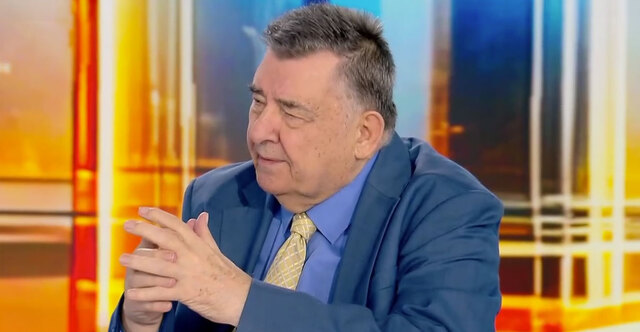
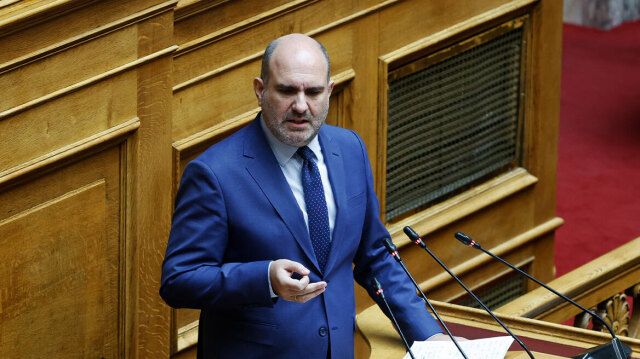
Greek Deputy Finance Minister Dimitris Markopoulos has described former prime minister Alexis Tsipras attending the Thessaloniki International Fair before the prime minister as politically unfair.
Speaking on the ERTnews television program Weekend from 5, Markopoulos said visiting the fair prior to Prime Minister Kyriakos Mitsotakis was typical of the former leader's past behavior. He added that the combination of Thessaloniki and Tsipras does not bring good memories to Greek citizens.
Criticism of Past Governance
Markopoulos targeted recent statements made by Tsipras concerning living with dignity, linking them to Tsipras's period leading the government. He recalled that the last time Tsipras spoke about dignity was in the summer of 2015, when Greek banks were forced to close.
In summer 2015, Greece imposed capital controls and restricted bank withdrawals during tense negotiations between the Syriza led government and international creditors over Greece's financial bailout. The Thessaloniki International Fair, held every September in northern Greece, traditionally serves as the primary stage where Greek prime ministers outline government economic policy for the upcoming year, followed by presentations from opposition leaders.
Government Economic Priorities
Turning to the government's economic agenda for the upcoming fair, Markopoulos said official announcements will focus on raising incomes and lowering taxes to strengthen taxpayers. He noted that interventions have already been planned for freelancers, self-employed workers, and the national minimum wage.
Markopoulos confirmed that further support for the middle class remains on the government radar. Prime Minister Kyriakos Mitsotakis is scheduled to present the complete economic plan during his keynote address at the event.
Wage Strategy and Inflation Pressures
Regarding proposals to raise the minimum wage beyond 950 euros prior to the 2027 general election, Markopoulos explained that increasing compensation forms part of a long-term strategy. He remarked that a nation does not become a Western European economy through words alone, but by approaching Western European salary levels, emphasizing that Greece is on a path of permanent income growth.
The deputy minister acknowledged the financial pressures caused by inflation and rising household costs, stating he would not understate the daily struggles facing Greek families. He noted that he understands the difficulty of shopping at the supermarket and outlined previous government relief measures introduced for energy, fuel, farmers, and the broader economy.
Clash Over Opposition Proposals
Markopoulos launched a sharp attack against the opposition Panhellenic Socialist Movement, known as PASOK, over its economic proposals for tax cuts and the restoration of a 13th pension and 13th public sector salary. He asserted that PASOK was describing four separate fairs worth of promises that cannot be implemented without breaching fiscal rules, directly accusing the opposition party of lying about whether the funding exists.
Additional annual payments, traditionally known in Greece as the 13th and 14th salaries or pensions, were trimmed or abolished during international bailout agreements following the 2010 debt crisis to maintain public finances within European fiscal targets.
Costed Commitments and Fiscal Rules
Refusing to state a specific total monetary figure for the upcoming package, Markopoulos promised that all upcoming policy announcements will be fully costed. He stated that the government will not present essays of ideas or general statements, stressing that officials deliver on what they promise so citizens see the benefits in their pockets.
He concluded that future economic interventions will remain strictly bound by the capacity of the Greek economy and European fiscal rules rather than uncosted political promises.