


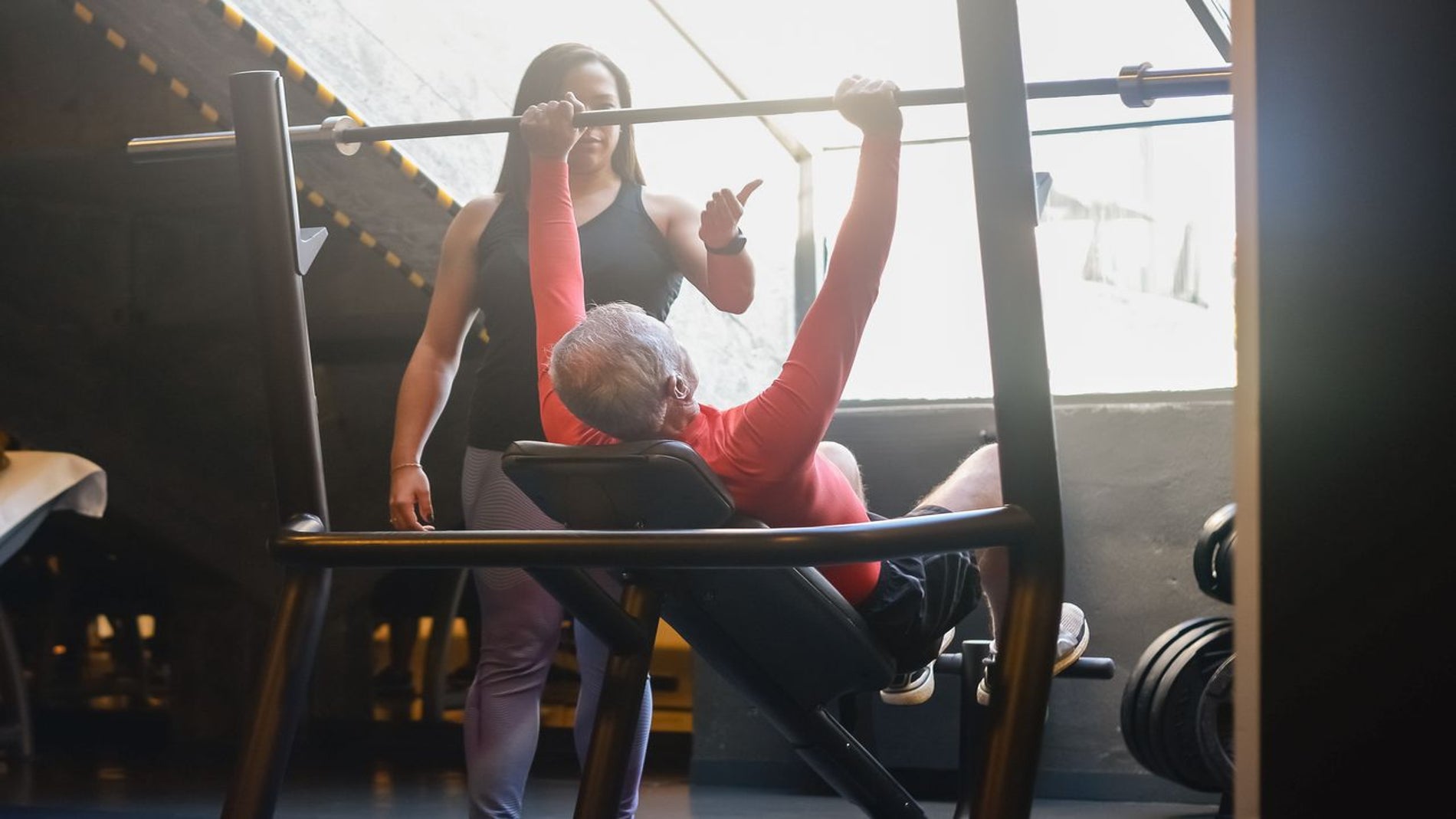
Cardiologist Diego Iván Alarcón has advised adults aged 50 and over to begin lifting weights to make their daily lives significantly easier. In a video released on May 30, 2026, the medical practitioner and science communicator highlighted the vital role of strength training in gaining power and preserving physical independence as people age.
Alarcón stated that completing two or three training sessions per week serves as an accessible starting point to begin noticing benefits and to build a habit that can be maintained. He emphasized that long-term consistency matters far more than pursuing an extreme workout routine or attempting to lift loads typical of professional athletes.
Recommended workout frequency and routine design
The primary goal outlined by Alarcón is aging with greater physical capacity rather than attempting to reshape the body within a few weeks. He urged individuals not to rely on bathroom scales as the sole measurement of health progress, focusing instead on functional strength for daily activities.
In his video advice, Alarcón remarked that training two or three times per week is more than enough to start seeing positive changes. Spacing two well-planned workouts across seven days provides adequate recovery time while allowing individuals to target all major muscle groups, including the legs, hips, back, chest, shoulders, and arms, without compressing everything into a single day.
For individuals starting from scratch, a short workout featuring a small selection of exercises and a manageable resistance level is generally the most sustainable approach. Selecting a weight that allows proper execution and good technique helps prevent severe muscle soreness and reduces the likelihood of abandoning the program.
The medical advice originally delivered by Alarcón in Rioplatense Spanish included local verb forms, which were adapted into standard Peninsular Spanish phrasing for wider distribution without altering the underlying content or the recommended workout frequency. Alarcón stressed that regularity counts far more than exercising to total exhaustion.
Alignment with World Health Organization guidelines
The doctor's recommendations broadly align with global physical activity guidelines issued by the World Health Organization (WHO). For adults and older adults alike, the health agency advises performing muscle-strengthening activities that involve all major muscle groups on two or more days each week.
Public health experts view the WHO recommendations as a baseline standard for population health rather than a rigid prescription. The appropriate intensity, choice of exercises, and necessary recovery time vary depending on an individual's past fitness experience, existing medical conditions, and previous injuries.
Strength training, also known as resistance exercise, involves forcing muscles to work against an applied force or weight. Medical research indicates that maintaining muscle tissue in midlife helps preserve joint stability, metabolic health, and movement confidence during later years.
Role of fitness trackers and digital health tools
Tracking training progress can be accomplished using simple methods, such as a traditional paper notebook or dedicated mobile applications. The Google Health platform, for example, helps users organize daily physical activity and rest metrics, while modern smartwatches automatically log specific exercise sessions.
Wearable technology, ranging from screenless fitness bands to advanced smartwatches such as the Samsung Galaxy Watch8 Series and the Galaxy Watch Ultra, can provide helpful trend data on body composition and energy levels. Additionally, specialized applications like OpenFit for Fitbit expand the volume of performance metrics available to users.
However, Alarcón's guidance notes that digital devices function primarily as personal record keepers. A smartwatch or fitness band cannot determine whether a weightlifting repetition was executed with proper form, nor can it evaluate whether physical discomfort requires a person to stop exercising. Digital tools offer valuable memory support, but they do not replace an in-person personal trainer or medical evaluation.
Functional health benefits and safety precautions
Engaging in regular strength training helps preserve and increase muscle capacity, making everyday tasks noticeably easier for older adults. Routine movements such as carrying heavy grocery bags, climbing flights of stairs, or rising easily from the floor benefit directly from improved muscular power.
For older individuals, combining resistance work with balance exercises forms a key component of clinical recommendations designed to preserve functional independence and prevent mobility decline. However, physical adaptations require several weeks of continuous training, as no single workout can overcome months of physical inactivity.
Alarcón pointed out that the most meaningful improvements occur outside of digital device displays. Real-world progress is reflected when daily burdens feel lighter, when climbing stairs requires fewer rest pauses, and when the body moves with greater stability and control.
Before increasing workout intensity, individuals with underlying health issues should consult a healthcare professional. Specific conditions requiring prior medical clearance include heart disease, poorly controlled high blood pressure, recent surgical procedures, osteoporosis, or persistent musculoskeletal pain.
A qualified practitioner can help tailor exercise selection, breathing patterns, and range of movement to individual needs. Alarcón noted that starting with light weights or small efforts is not poor training, but rather a prudent strategy that leaves sufficient energy and recovery margin to repeat the workout the following week.
Ultimately, Alarcón's message centers on establishing two or three manageable weekly strength appointments. Lasting success does not depend on downloading an intricate workout routine from the internet, but on choosing accessible exercises, making gradual progress, and maintaining the habit over time.


