The Spanish Confederation of Business Organisations warned on Wednesday that a nationwide general strike called over housing will cost many millions of euros.
The business body, known as CEOE, reported that the stoppage had achieved only limited participation across most of the economy, although demonstrators caused friction in city centers, industrial estates, and transport networks.
Data released by the National Federation of Associations of Self-Employed Workers, known as ATA, showed that 90 percent of self-employed professionals were working completely normally on Wednesday morning. The organisation stated that the remaining 10 percent were not working, either by personal choice or because they had faced intimidation from union pickets.
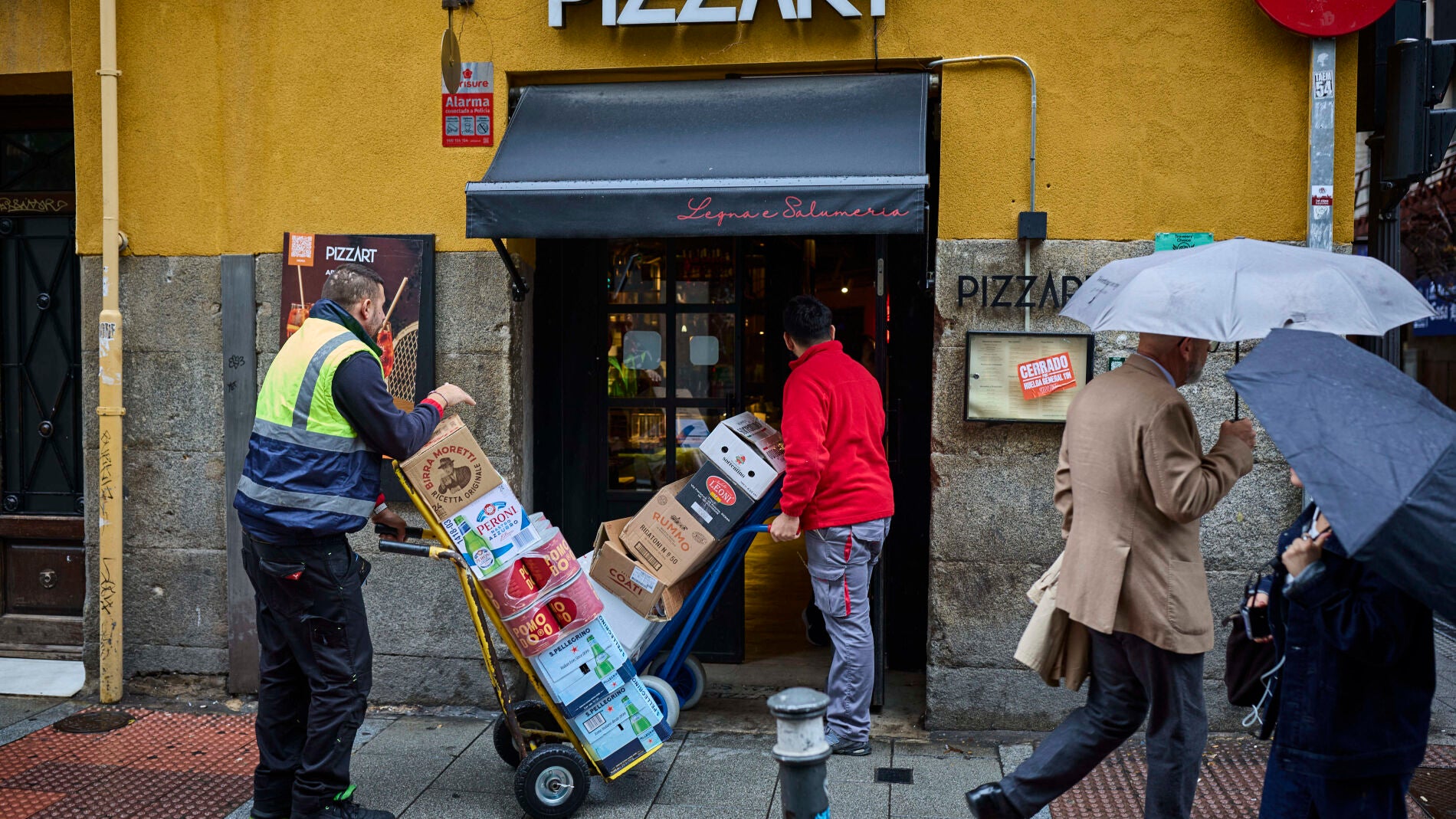
The first evaluation from ATA, compiled from reports gathered up to ten o'clock in the morning, pointed to disruptions in selected commercial centers. In contrast, regular economic activity prevailed across residential neighborhoods, suburban districts, and smaller towns across Spain.
Picket tactics and lock vandalism
Lorenzo Amor, the president of ATA, condemned the tactics of what he termed a silicone squad of pickets who blocked shop locks with adhesive sealant to prevent businesses from opening. Amor explained that some owners were physically unable to trade because their locks had been jammed with silicone, while others were pressured into shutting down.
The self-employed federation condemned the incidents as direct attacks against independent workers and private property. ATA announced that it would conduct a second assessment of business activity after midday to evaluate how the day developed.
In Spain, independent contractors and small shopkeepers, known as autónomos, represent a significant portion of retail and service commerce. Unlike salaried employees, they bear direct personal losses when their businesses are prevented from opening during industrial action.
Industrial impact and electricity demand
Early assessments by CEOE and the Spanish Confederation of Small and Medium Enterprises, known as Cepyme, indicated that worker participation was considerably lower than in previous nationwide strikes. Business leaders closely monitored national power consumption, an indicator traditionally used by Spanish economic groups as a benchmark for industrial and commercial activity during walkouts.
Electricity demand dropped by approximately 10 percent shortly after eight o'clock in the morning, compared with declines exceeding 14 percent recorded during past general strikes. By the middle of the morning, power demand was down by only 6 percent, which represented half the drop recorded during the 2012 general strikes.
Employer groups noted that electricity figures alone cannot establish the exact number of striking workers, but stressed that the measure serves as a reliable comparative reference. CEOE gathered reports from territorial organisations, business sectors, and affiliated companies, identifying an uneven turnout that was somewhat higher in regions and industries with heavy union membership.
Disruptions across logistics networks
Employer groups confirmed that legally mandated minimum public services were operating successfully during the early morning. In Spain, the government establishes minimum staffing requirements for public transport, healthcare, and emergency utilities during strikes to ensure essential public functions continue without interruption.
Despite compliance with minimum services, business groups reported significant difficulties accessing industrial parks and major cities, including Barcelona, Valencia, and Seville, where union pickets blocked key roadways. Pickets also disrupted access roads leading to the Port of Algeciras, a strategic shipping hub in southern Spain that handles substantial international freight traffic across the Mediterranean and Atlantic.
CEOE and Cepyme also highlighted acts of vandalism carried out in previous days against real estate agencies, alongside the occupation of corporate offices by non-union protest groups. The business confederations stated that authorities must defend the constitutional right to strike while equally protecting the right to work for citizens who choose to continue their daily employment.
Economic damage and political criticism
Antonio Garamendi, the president of CEOE, stepped up his criticism during an interview on the television channel Telecinco, warning that the financial toll of the stoppage would reach many millions of euros. Garamendi stated that the economic impact is not confined to enterprises that shut down, but encompasses interrupted manufacturing cycles, damaged business confidence, potential fallout for the tourism sector, and lost revenue from consumers who stayed indoors out of concern over street confrontations.
The business leader described the strike call as anomalous and incomprehensible, pointing out that it arrived shortly before a general election on November 29. Garamendi questioned the underlying motives of the protest, arguing that figures within the national government had actively encouraged the public to join the stoppage.
Garamendi also questioned the formal justification for the strike. He stated that although protest groups originally organised the stoppage around the housing crisis, major labor unions subsequently added workplace demands to provide legal cover for an action that had little connection to traditional employment issues.
Under Spanish labor law, general strikes must address workplace conditions to receive legal standing. Garamendi emphasized that collective bargaining between employers and union representatives continues normally despite public statements, while condemning violence and road blockades by pickets that went far beyond providing information to workers.
Housing shortage and construction bottlenecks
Ángela de Miguel, the president of Cepyme, addressed the underlying housing complaints during an interview on the Canal 24 Horas news channel. De Miguel stated that a general strike is not the solution to Spain's residential crisis, arguing that housing access requires a serious, complex, and sustained policy over the long term.
The Cepyme president highlighted a severe shortage of residential supply, pointing to industry estimates that designated stressed areas in Spain lack approximately 700,000 homes. To resolve the deficit, De Miguel called for accelerated residential construction and an immediate reduction in administrative delays that hold up new building projects.
Under Spanish housing legislation, municipalities where rental and purchase costs have risen significantly above local incomes can be declared stressed zones, opening the way for rent controls and regulatory measures. De Miguel warned that administrative bureaucracy currently delays construction projects, with up to ten years passing between the initial planning permits and the delivery of completed homes.
De Miguel also pointed to fiscal burdens on home buyers, noting that taxes account for almost 40 percent of the final cost of a new home. She concluded that persistent inflation, rising materials costs, and elevated building expenses, particularly construction labor costs, explain the steep increase in property prices across Spain.