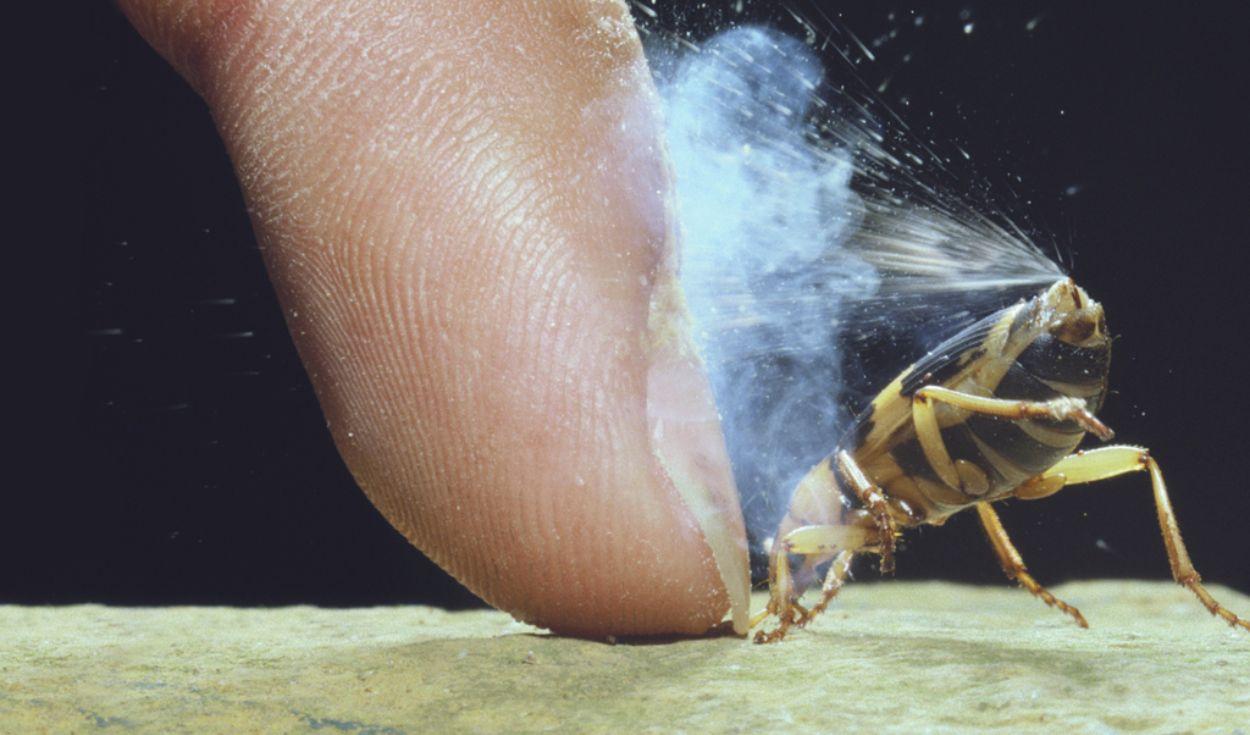
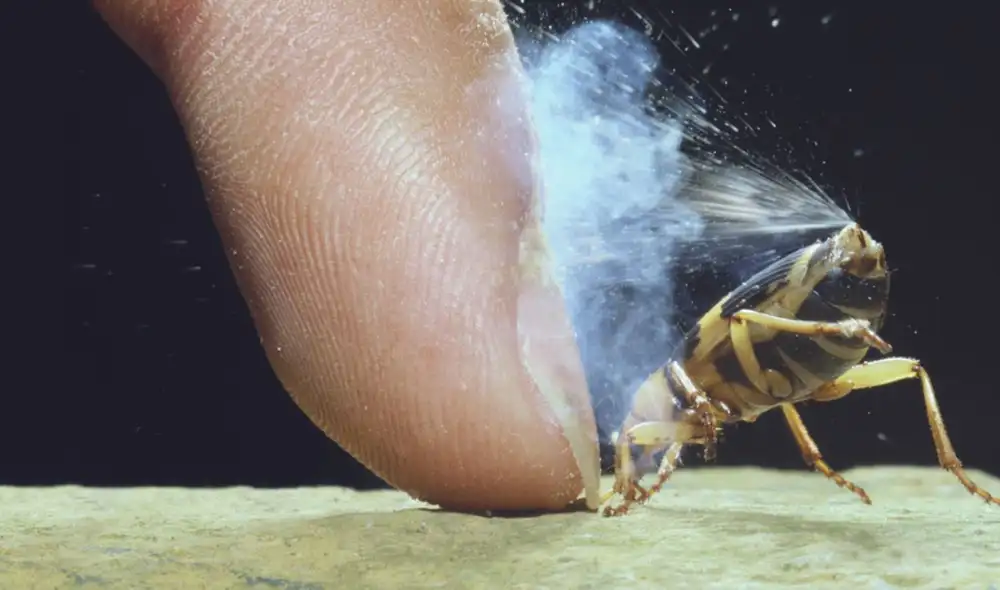
The bombardier beetle, a small insect known for one of the most dramatic defense mechanisms in the animal kingdom, can fire a jet of chemicals that reaches temperatures close to 100°C when it senses a threat.
The beetle's defense does not rely on strong jaws or physical strength. Instead, it depends on a chemical reaction that takes place inside its own abdomen, combining hydrogen peroxide and hydroquinones to generate both heat and pressure.
How the Beetle Builds Up the Heat
The beetle stores the two compounds separately in structures inside its abdomen. When it detects a threat, it allows the hydrogen peroxide and hydroquinones to flow into a reaction chamber, where they come into contact with enzymes that speed up the chemical process.
That combination triggers an exothermic reaction, meaning it releases a large amount of energy in the form of heat. The result is a mixture that reaches temperatures close to 100°C, along with gases that build up pressure and force the liquid out through an opening in the beetle's body.
A Member of the Ground Beetle Family
Bombardier beetles belong to Carabidae, the ground beetle family, a group found across the world. The family includes thousands of species, most of which lack this particular chemical defense, which makes the bombardier beetle an unusual case even among its closest relatives.
Hydrogen peroxide and hydroquinones are both common compounds found elsewhere in nature and in industry. What makes the beetle's defense unusual is the way it controls the reaction between them inside a confined space in its own body.
Aiming Chemical Pulses at Predators
One of the most striking features of the beetle's defense is that it does not release the hot liquid in an uncontrolled burst. Its abdominal structure allows it to aim the discharge directly at a threat and fire it in rapid pulses, increasing the chances of hitting an attacker and forcing it to retreat.
This system works as an effective defense against a range of predators, including ants, spiders and other animals. The beetle is able to withstand the chemical reaction taking place inside its own body thanks to the features of its combustion chamber, which controls the release of heat and pressure without damaging its own tissue.
Why the Mechanism Draws Scientific Interest
Many insects rely on size, speed or venom to survive encounters with predators, but the bombardier beetle's defense is almost entirely chemical. Its ability to trigger and contain an explosive reaction without harming itself has made it a frequently cited example of natural engineering, drawing attention from researchers interested in how such a small body can safely manage heat and pressure of that scale.
Test yourself
What two compounds combine inside the bombardier beetle's abdomen to produce its defense?
Roughly how hot is the chemical spray the beetle expels?
How does the beetle release its chemical defense?