


Social media user watagjt has uncovered a sophisticated counterfeit Kingston Fury Beast DDR5-5600 memory module that contained older DDR4 chips on its circuit board.
The 32 GB module was sold as unopened and sealed in its original packaging. Externally, the heatsink, product stickers, and label markings all appeared completely standard, with the unit identified as model number KF556C40BB-32 operating at DDR5-5600 speed with CL40 latency.
Problems arose when the owner attempted to install the memory stick into a computer system, but it failed to boot. After removing the metal heat spreader, the buyer found visible traces of flux and empty contact pads across the board, revealing that microchips had been manually resoldered.
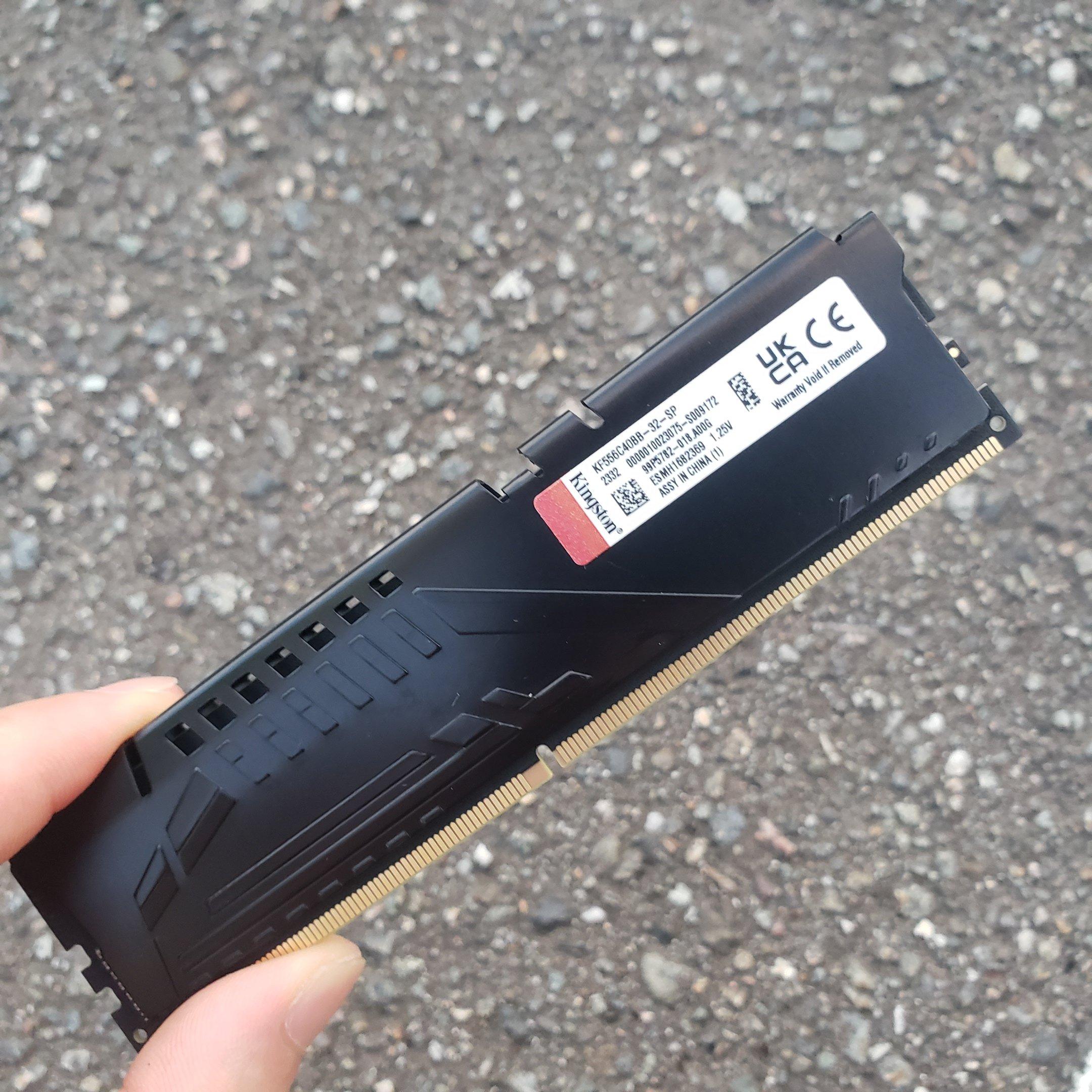
The counterfeiters disguised the hardware using memory chips stamped with Micron 2UG45 D8DDZ markings. The D8DDZ code corresponds to genuine DDR5-5600 microchips produced by semiconductor manufacturer Micron, which made the module virtually indistinguishable from authentic hardware prior to disassembly.
Physical pinout differences
The physical construction of the components made the swap possible. Certain Micron DDR4 chips share identical 9 by 11 mm surface-mount package dimensions with DDR5 memory chips, allowing them to fit onto a DDR5 printed circuit board.
However, the pin layout differs between the two memory generations. DDR4 memory chips use 78 connection pins in a ball grid array layout, whereas DDR5 chips require 82 pins. Because of the missing connections, several solder pads on the circuit board were left empty, making the module electrically incompatible with DDR5 motherboards and preventing it from functioning.
DDR5 represents the current standard for high-performance desktop memory, delivering faster speeds and higher bandwidth than legacy DDR4 modules. Kingston Technology and Micron are major global manufacturers of computer memory, with Kingston assembling consumer modules using silicon chips fabricated by suppliers such as Micron. Metal heatsinks are routinely fitted to high-speed modules to dissipate heat, but they also conceal the underlying circuit board from buyer inspection.
Warnings for component buyers
The owner noted that the differences in ball grid array pinouts ultimately exposed the fraud. He explained that as long as the protective heatsink remains attached, detecting resoldered chips or leftover flux is almost impossible.
The buyer warned consumers to remain cautious when considering suspiciously cheap deals on second-hand or supposedly factory-sealed computer parts, recommending that RAM should only be acquired from verified sellers. Reports of the counterfeit module were first detailed on social platform X by watagjt and subsequently highlighted by hardware outlet Videocardz.


