

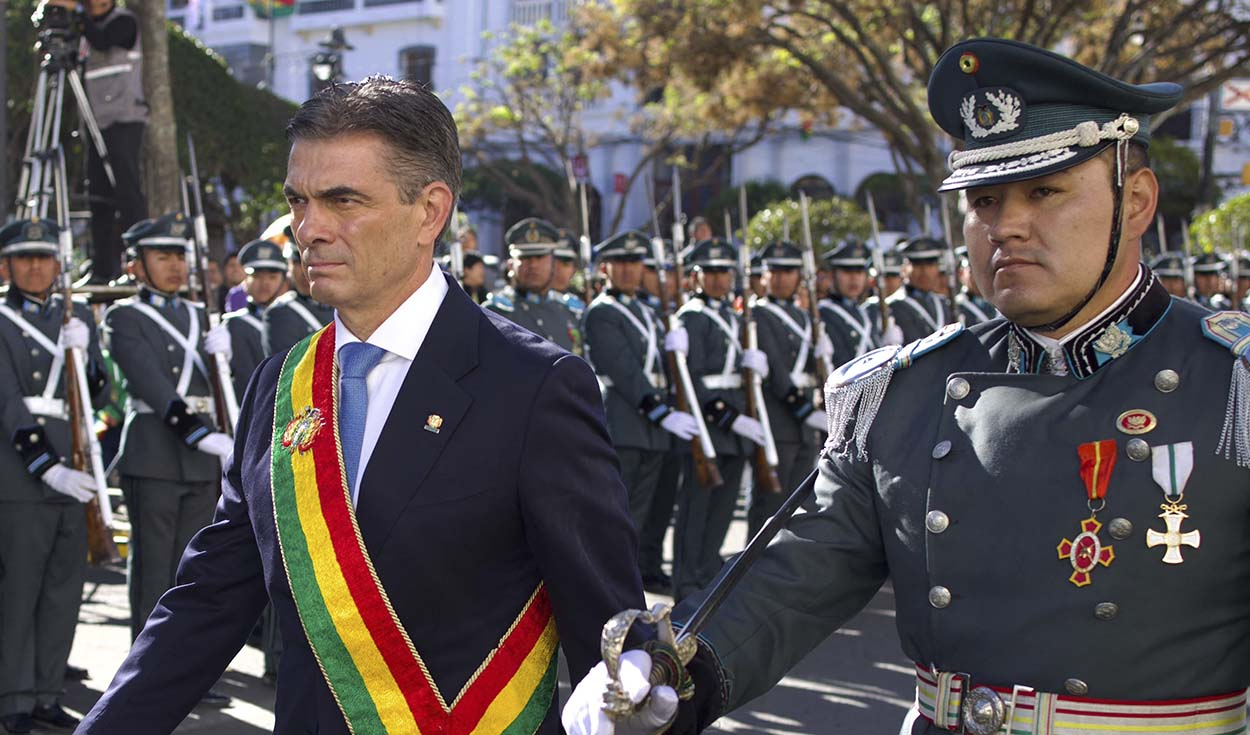
President Rodrigo Paz announced on Thursday that Bolivia has begun emerging from its worst economic crisis in 40 years during an address in Sucre. Speaking during his first message to the nation for the 201st anniversary of independence, the centrist leader defended measures adopted since taking office nine months ago on November 8, 2025. He stated that the government took difficult and unpopular decisions that brought costs to families, but were necessary to stop the crisis from damaging the economy and sacrificing the country's future.
Paz said previous left-wing administrations under Evo Morales and Luis Arce left behind a ravaged and dying homeland that could barely breathe. He noted that between May and June, his government overcame 53 days of road blockades that caused shortages of food, fuel, and medicine across several cities. The executive blames Morales for orchestrating the protests, and the former president is currently wanted under an arrest warrant. Paz said the government defeated resistance from the past that refused to accept the birth of a new Bolivia.
Public Spending Cuts and Budget Reform
Detailing his economic adjustment plan, Paz said the government reduced the number of ministries from 21 to 12, marking the largest cut in the history of the state administration. The measure aims to make the administration more agile while redirecting saved resources toward regional projects and care. The government also partially removed fuel subsidies, which officials considered unsustainable for public finances.
According to Paz, the reformulated State General Budget reduced the fiscal deficit by more than 23.5 billion bolivianos and lowered ministry current expenditures by over 30 percent. Despite these cuts, the administration increased allocations by 1.62 billion bolivianos for mayoral offices and 574 million bolivianos for governorships. Additionally, Paz reported the creation of more than 2,300 new positions in healthcare and over 3,000 in education, describing the figures as a record during a deep crisis.
Cabinet Reshuffle and New Legislation
The president also carried out cabinet changes following the end of an alliance with National Unity, the party led by Samuel Doria Medina. Jose Luis Lupo left the Ministry of the Presidency to be proposed as ambassador to the Organization of American States. Former Foreign Minister Fernando Aramayo took over the Ministry of the Presidency, while Hector Huanca was appointed as Minister of Foreign Affairs.
Looking ahead, Paz announced he will send an investment bill to the Plurinational Legislative Assembly on August 11 following discussions with various sectors. In the coming months, the government will submit legislation agreed upon during a May 9 meeting in Cochabamba, including bills on hydrocarbons, mining, and public-private partnerships.
Paz stated that Bolivia will establish a new governance model for the energy and hydrocarbon sector before the end of 2026, developed with help from international cooperation and national experts. He added that the administration has more than 8,900 public works ready to deliver or begin this year. In closing, Paz apologized on behalf of the government for potential mistakes, called for a national agreement, and said the country must choose between the death of illicit activity or the development of national production.


