The Region of Attica is stepping up support for local businesses seeking a more stable and organised presence in international markets, after a study found that 66% of the region's companies already operate outside Greek borders, mainly in commercial exports.
The findings were presented by the Observatory of Competitiveness and Entrepreneurship during an online seminar titled "Extroversion of Attica Businesses: From Exports to International Presence."
Participants, including business representatives, organisations and market experts, discussed a study carried out by the "Athens Forward" observatory of the Region of Attica in cooperation with Grant Thornton, which surveyed 244 companies in the Attica basin on their degree of internationalisation, their activity, the benefits they gain and the obstacles they face.
Study Findings on Exports and Obstacles
The discussion focused on the need for better information on international markets, access to suitable financing tools, stronger export skills and more stable channels of cooperation between businesses and support organisations.
According to the study, businesses mainly choose direct exports (50%), imports of raw materials and components (45%), and partnerships through agents. Forms of international presence that require greater investment, organisational preparation and long-term capital commitment remain limited.
The main driver pushing companies abroad is the search for growth opportunities. Businesses recognise that an international presence helps increase turnover, expand their customer base and strengthen resilience, since spreading activity across more markets reduces exposure to fluctuations in the domestic economy.
The study found that only a limited number of businesses have a complete international growth strategy. In many cases, activity abroad develops piecemeal, without a clear choice of markets, an organised entry plan, specific goals or a stable mechanism for evaluating results.
Obstacles to internationalisation were described as multi-layered, including high energy and operating costs, bureaucracy, difficulties accessing financing, a lack of information on foreign markets, and limited organisational capacity, problems that are more acute for small and very small businesses. The study also noted that public support is seen as difficult to access or insufficiently effective.
Governor Hardalias on Regional Support
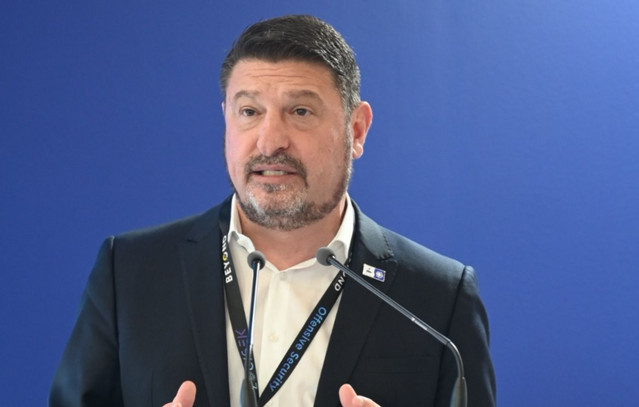
Nikos Hardalias, governor of the Region of Attica, said the region was stepping in to fill gaps and better organise the path businesses take toward international markets.
He said Attica has businesses with the quality, know-how and credentials to compete confidently in international markets, and that the Observatory's research confirms a significant share of them have already expanded activity outside Greece and are seeking new growth opportunities. At the same time, he said, the research shows that this international activity remains mainly commercial and export-based, and in several cases is not yet supported by comprehensive, long-term planning.
He said international expansion needs to become an organised development choice, with clear goals, proper preparation, knowledge of international markets and stable partnerships. He added that businesses, especially small and very small ones, need not only financing but also access to reliable information, guidance on choosing the right markets, skills development and real connections with economic diplomacy bodies, chambers of commerce, the academic community and specialised organisations.
Hardalias said the region can act in a complementary, coordinating and connecting role in this effort, stressing that it does not aim to replace national bodies or create a parallel system, but to fill gaps, better organise the route businesses take to international markets, and bring closer together all those who can contribute to their success.
Attiki On Funding Programme
Hardalias said the region backs entrepreneurship with concrete resources. Through the "Attiki On" programme, 1,044 investment plans have been funded with a total of 95.5 million euros, drawn from the Region of Attica's European funds.
He said the goal is to create an environment in which more businesses can move from the domestic market to exports, and from exports to a stable and competitive international presence, adding that with planning, knowledge and cooperation, the region is strengthening Attica's productive forces and creating more growth opportunities for its economy and citizens.
"Attiki On" is an ESPA-funded scheme (drawing on European Union structural and investment funds) to support small and very small businesses in the Region of Attica. It is described as one of the largest targeted interventions to boost small-scale entrepreneurship in the Attica basin, funding investments in digital and technological transformation, energy upgrades, productivity gains, competitiveness improvements, and job creation or retention.
A Regional Ecosystem for International Growth
The study's central recommendation is the creation of a coherent regional ecosystem to support businesses at every stage of international growth, helping them move from isolated export activity to a more organised and stable international presence. This requires strengthening export readiness, improving access to international markets, developing business capabilities and building stable partnerships.
Without replacing public bodies, the Region of Attica can act at a complementary level, stepping in where national tools are not specialised enough or fail to fully address the needs of Attica basin businesses and sectors.
At a coordinating level, it can shape a clear path to internationalisation, starting with an assessment of each business's readiness and moving on to the choice of suitable markets, entry methods and necessary partnerships. At a connecting level, the region can bring businesses closer to chambers of commerce and professional associations, economic diplomacy bodies, universities and research institutions, market consultants, and organisations that design or carry out international growth initiatives.
Next Study on Crisis Preparedness
The "Athens Forward" observatory is now moving on to its next thematic study, titled "Addressing Crises, Operational Risks and Adaptation to Change," focusing on an issue of growing importance for the sustainability and continued operation of businesses.
The fourth thematic study will assess the readiness of Attica businesses to face natural disasters, economic shocks, technological change, cyber threats and other operational risks. It will also examine the strategies businesses use to manage crises, ensure business continuity and adapt to a constantly changing environment. The data gathered will form the basis for designing policies and actions to strengthen the resilience, competitiveness and sustainable growth of Attica's business ecosystem.