

Microsoft Corporation veterans have revealed the true origins of the Windows taskbar, stating that the ubiquitous user interface feature was created entirely through internal development rather than copied from competing software.
While the taskbar debuted publicly in Windows 95, its development began years earlier. Microsoft stated that the interface was based on Project Cairo, an internal operating system initiative started in 1991. The Cairo prototype featured permanently visible fields at the bottom of the screen designed to give users quick access to essential system tools and files.
When designing Windows 95, Microsoft engineers combined the Cairo screen-field concept with the window minimizing feature from Windows 3.1, which was released in 1992. The resulting taskbar allowed users to view open applications simultaneously and switch between active programs with a single click, quickly becoming one of the most recognizable elements of desktop computing.
Addressing the NeXTSTEP Rumors
For decades, technology industry observers had linked the Windows taskbar to NeXTSTEP, an operating system released in 1988 by NeXT Computer. However, former Microsoft executive Brad Silverberg dismissed the borrowing theory. Silverberg said he discussed the origin of the layout directly with Danny Oran, an interface designer on the Windows 95 development team. According to Silverberg, Oran developed the taskbar independently without borrowing design concepts from NeXTSTEP.
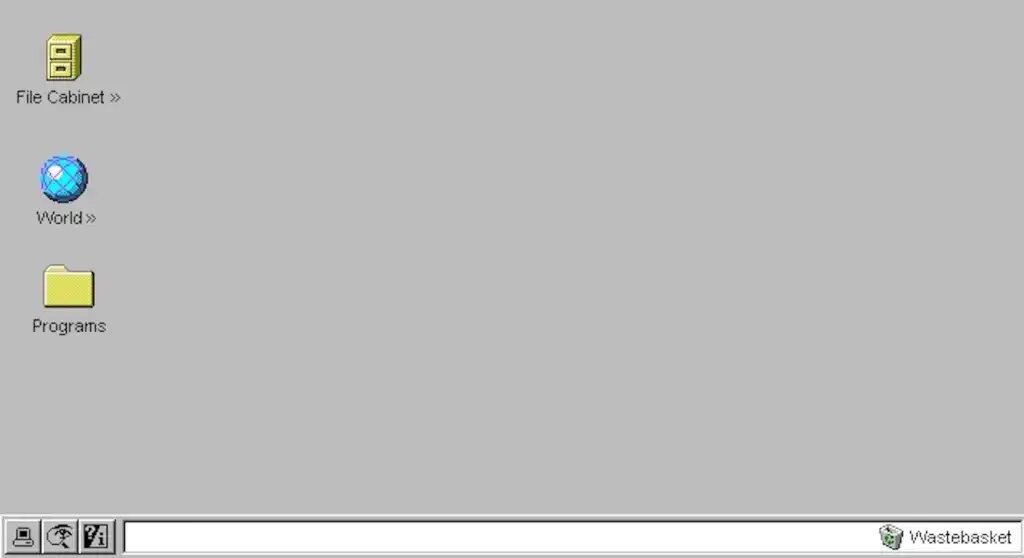
NeXT Computer was founded by Steve Jobs in 1985 after his departure from Apple. Its NeXTSTEP operating system featured an application dock along the screen edge, leading tech historians to draw parallels between the two interface designs. Meanwhile, Windows 95 went on to become a major commercial milestone for Microsoft, establishing standard user interface conventions such as the Start menu that defined personal computing for generations.
Taskbar Evolution and Recent Changes
In the decades following its introduction, the taskbar underwent several visual and functional revisions across successive releases of the operating system. One of the most controversial updates arrived with Windows 11, which placed taskbar icons in the center by default and significantly reduced customization settings for desktop users.
Following feedback from users who criticized the restricted interface layout, Microsoft subsequently began restoring several familiar taskbar customization options to the operating system.


