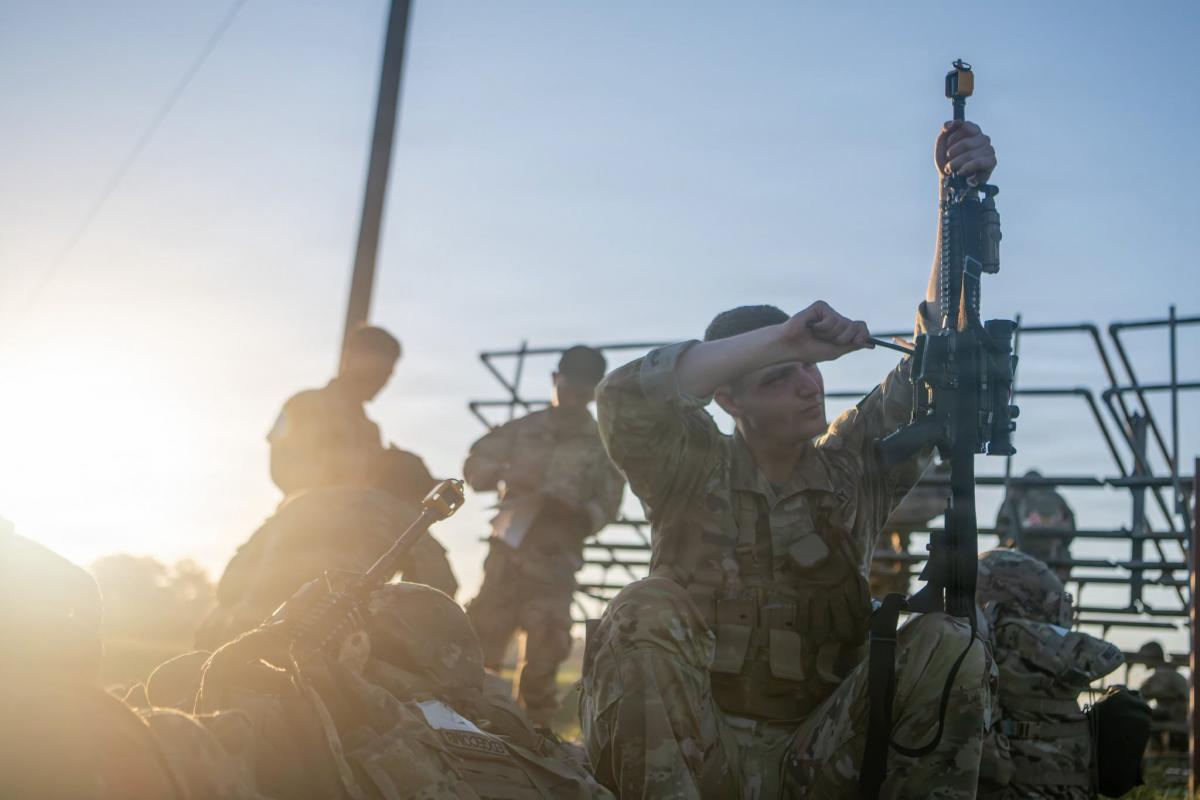
The United States is set to cut far fewer troops from Europe than allies had feared, Bloomberg reported, citing unnamed sources. About 80,000 American troops are currently stationed on the continent.
European allies had previously assumed Washington could reduce its military presence in Europe by as many as 25,000 troops. Bloomberg's sources said that scale of withdrawal is now considered less likely, partly because NATO countries have increased their defense spending.
According to the sources, Pentagon leadership has come to recognize how important American forces based in Europe are for US military operations in the Middle East, where the war with Iran has dragged on. One source said allies now expect the overall US contingent in Europe to shrink by around 5,000 troops.
Bloomberg noted that the final decision rests with President Donald Trump, who has repeatedly and sharply criticized European allies for failing to support the United States and Israel in the war against Iran.
Matt Whitaker, the US ambassador to NATO, addressed the possible troop reduction earlier this month. He said the US has quite a lot of assets positioned exactly where they are needed, and that he does not expect anything dramatic.
Bloomberg said most of the reductions in American troop numbers would fall on Germany, which hosts the largest US military contingent in Europe. At the same time, the US plans to reinforce NATO's eastern flank, and countries bordering Russia have offered to cover part of the costs.
Why the Pentagon is reviewing its forces in Europe
In September, General Alexus Grynkewich, NATO's Supreme Allied Commander Europe and head of US European Command, presented several possible scenarios to the team of Elbridge Colby, the undersecretary of defense for policy. Defense Secretary Pete Hegseth is expected to present final recommendations to Trump on December 1.
Bloomberg said allies understand the motives behind the Pentagon's review. The United States has for years been unhappy that European countries' contribution to the continent's security does not match its own.
Hegseth told NATO allies earlier this year, when he announced the review, that America cannot care about Europe's defense more than its allies do, or spend more on it than they do. He said Europe can and should take on the main responsibility for its own conventional defense.
Britain weighs in on the US role in Europe
UK Defence Secretary Wes Streeting said the American military presence in Europe primarily serves the interests of the United States itself. Speaking during a visit to Washington in mid-October, he said that, frankly, the US views the issue solely through the lens of its own interests. He added that while it can sometimes seem as though the US is in Europe to benefit Europe, the harsh reality is that the US is there because it benefits the United States.
Europe remains central to US military operations
Bloomberg recalled that during the military campaign against Iran, the United States relied heavily on access to European military bases and the airspace of allied countries. At the same time, the Trump administration has pressed European partners to raise defense spending and provide logistical support for American operations. Sharp criticism of allies from the president and his aides has, however, led some European countries to question whether the US is still committed to defending Europe.
The Pentagon's ability to cut its military presence on the continent is also limited by law. Last year, Congress set a floor barring any reduction of the US contingent in Europe below 76,000 troops, and barred the withdrawal of major military equipment or the abandonment of bases without prior consultation with allies and a detailed risk assessment.
The current Pentagon review takes into account a risk assessment prepared by General Grynkewich, along with the positions of NATO allies, which Bloomberg said could help the Trump administration show its plans comply with legal requirements.
Bloomberg also noted that an expected shift of control of Congress to the Democrats following the midterm elections on November 3 could further limit Trump's ability to carry out a large-scale reduction of the US presence in Europe. If Democrats win a majority, they would have greater influence over decisions on government spending.
Earlier reports of a bigger withdrawal
NBC News had previously reported that the United States could withdraw a third of its contingent from Europe. According to that report, the Pentagon had considered several scenarios for scaling back the American military presence on the continent, including cuts of 25,000 or even around 40,000 troops.
If carried out, a reduction of that size would have been the largest cut to the US military contingent in Europe since the end of the Cold War. The prospect caused concern both among lawmakers from both US parties and in European capitals.