


The United States Army 1st Cavalry Division has tested an M2A4 Bradley armored vehicle modified to launch autonomous robot swarms during military exercises.
During the Pegasus Charge 3 military maneuvers, soldiers evaluated a combat configuration that converts traditional infantry fighting vehicles into launch platforms for uncrewed ground units.
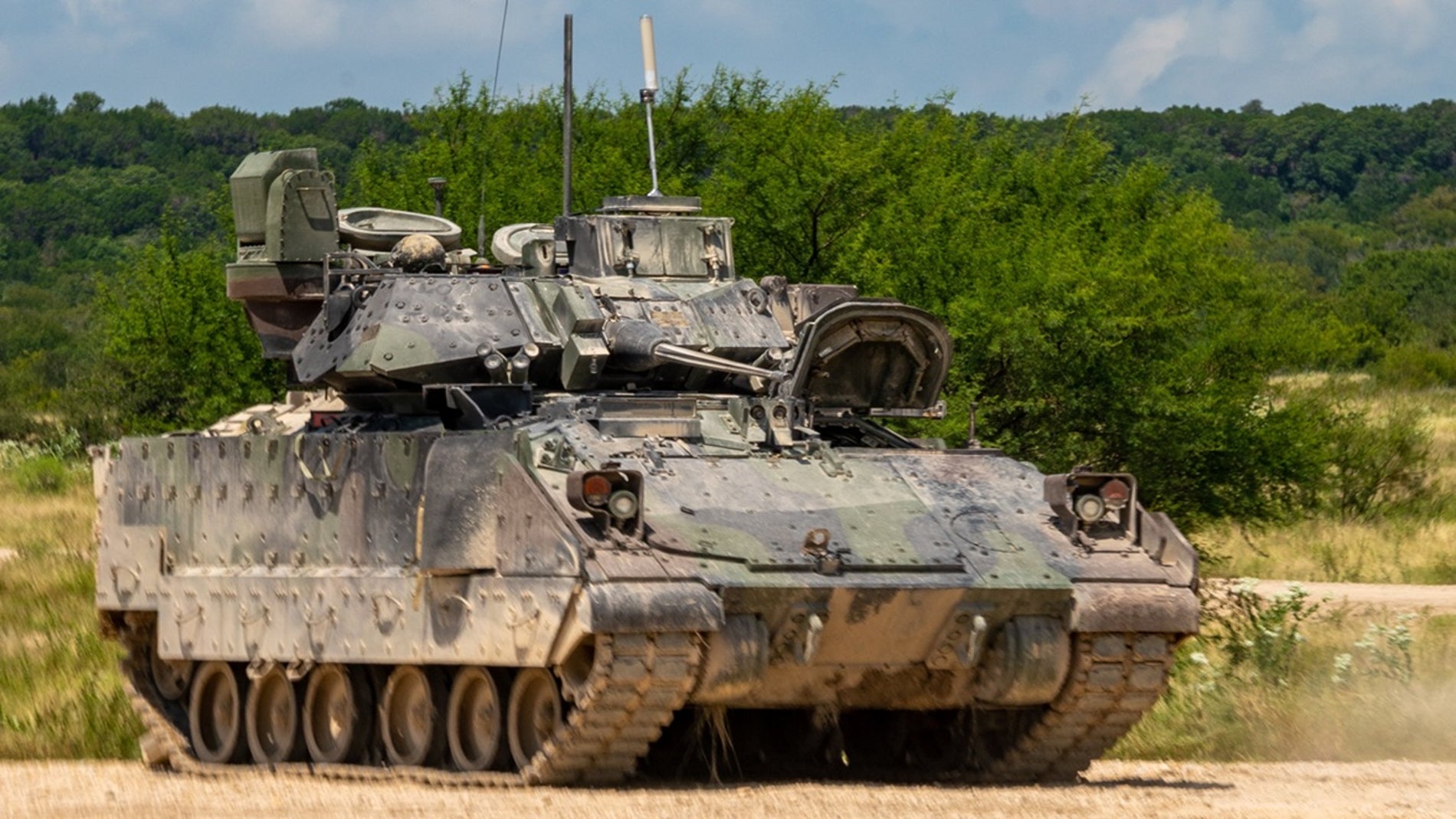
Images released from the trial show an M2A4 Bradley equipped with five uncrewed ground vehicles mounted directly onto its side racks.
Specialized defense portal Interesting Engineering reported that the trial represents a major shift in armored warfare strategy. Rather than operating as a solitary combat vehicle, the Bradley acts as a central command node capable of releasing expendable robotic units ahead of human soldiers.
The M2 Bradley tracked vehicle has served as a standard infantry fighting platform for the US military since the 1980s, providing armored transport and support to infantry units. The M2A4 variant includes modernized engine power, digital networking, and enhanced survivability systems.
The field test was conducted under the Transformation in Contact modernization program. The Pentagon initiative tests the physical integration of emerging autonomous technologies into existing combat equipment, allowing the military to adopt new capabilities without designing entirely new carrier vehicles from scratch.
Robotic FireAnt ground swarms
The ground robots deployed during the exercise are small vehicles named FireAnt. Developed by defense technology company Swarmbotics AI, each FireAnt robot weighs approximately 27 kilograms.
The FireAnt systems feature modular construction and use artificial intelligence algorithms to coordinate movement across rough terrain. Commanders can configure the units for multiple mission types, including intelligence gathering, surveillance, and electronic warfare operations.
Because the robots have low production costs, forces can also use them as one-way attack weapons. In combat, the units can act as ground kamikazes targeting enemy armor or fortified defensive positions.
Using an armored vehicle as a mothership allows commanders to send robotic swarms into high-risk zones to locate ambushes or strike critical targets without exposing human crews to direct enemy fire.
Tactical vulnerabilities and operational questions
Despite the offensive potential of the system, mounting the robots on the outside of the vehicle creates tactical vulnerabilities. The vertical placement of the five FireAnt units on the external side racks leaves them exposed to enemy drone strikes.
A single direct strike from an enemy drone could disable the entire five-robot squadron before soldiers can deploy them into action.
Military officials did not clarify whether the system allows crew members to release the drones automatically from inside the vehicle or if infantry soldiers must disembark under enemy fire to unhook the units manually.
The test highlights ongoing efforts by Washington to combine crewed combat vehicles with autonomous robotic swarms to maintain technological advantages in future military operations.


