

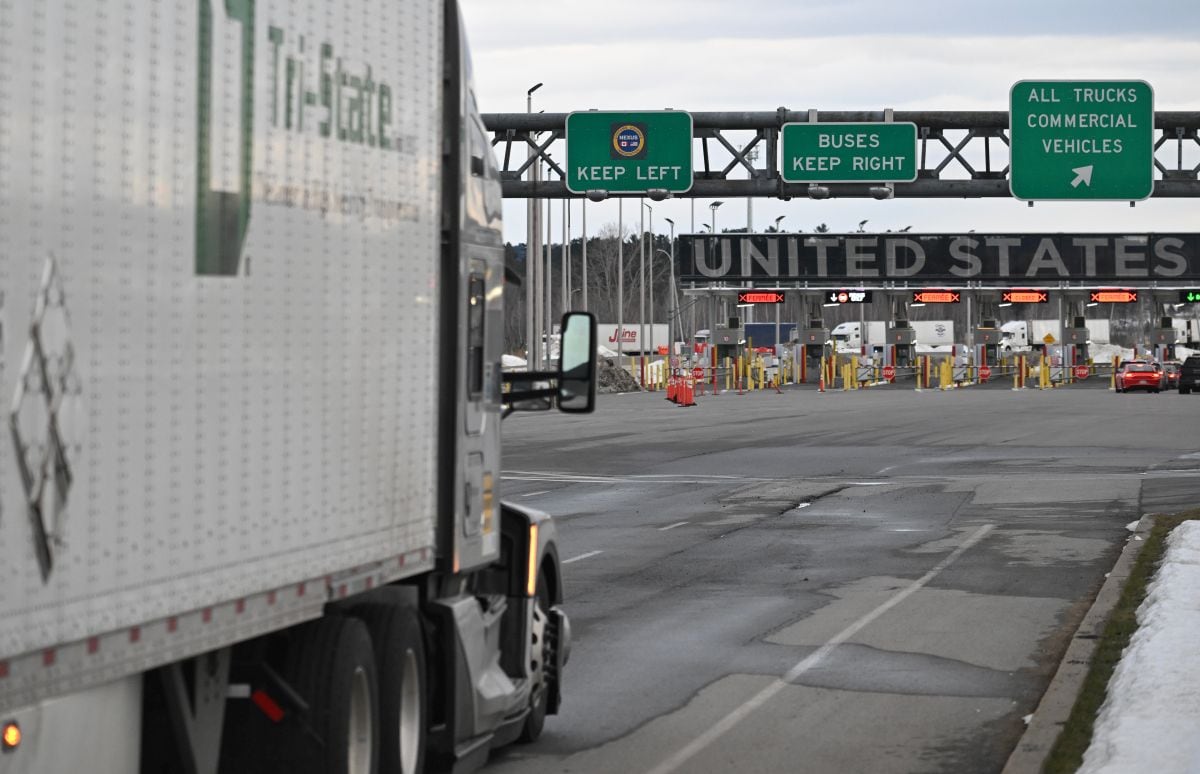
Canada and the United States moved closer on Wednesday to finalizing a trade agreement that would avert the 50% tariffs Washington threatened. A senior Canadian official called the emerging terms a very good deal for Canada, though cautioned that negotiations were not concluded.
US President Donald Trump said the deal was very fair to both sides and predicted US farmers and manufacturers would benefit. Tariffs on roughly $20 billion worth of Canadian imports have been postponed until 12:01 a.m. Saturday.
The senior Canadian official indicated the emerging deal would provide greater certainty, protect Canada's dairy sector and jobs threatened by the new tariffs, and preserve what Ottawa considers favorable trading conditions with the United States.
The official spoke on condition of anonymity because they are not authorized to speak publicly about the negotiations before an agreement is reached.
Dominic LeBlanc, the minister responsible for trade between Canada and the United States, returned to Ottawa on Wednesday to meet with Canadian Prime Minister Mark Carney. Carney was also scheduled to chair a cabinet meeting and a virtual meeting with provincial and territorial leaders.
Tariff threat on Canadian exports
Last month, Trump invoked never before used legal authority dating back to the Great Depression to announce the US would impose 50% tariffs on $20 billion, or roughly 5%, of Canadian exports to the US, ranging from hockey sticks to tongue depressors.
Trump claimed Canada discriminates against US exports of cars, alcohol and cheese. The US president is also angry that Canada and China were the only countries to respond with their own retaliatory tariffs when he imposed levies on their products.
Washington and Ottawa have clashed for decades over trade, poking each other in sensitive spots like Canadian softwood lumber imports and US access to Canada's protected dairy market.
US access to Canada dairy market
Although details of the deal emerging Wednesday remain vague, Trump indicated Canada had agreed to end tariffs on US agricultural products. Trump said there would be no tariffs for US farmers and that the tremendous tariffs they were paying to Canada would be totally eviscerated down to zero.
Canada currently allows a set amount of dairy imports at low tariffs. Once imports exceed that limit, much higher tariffs apply. The US says Canada's supply management system makes it difficult for US dairy producers to gain full access to the Canadian market.
Speaking to reporters in Washington, LeBlanc said the agricultural sector would be well protected and that Canada had maintained its hard line.
The senior Canadian official was more explicit, saying supply management was not on the table and that Canada's dairy system would remain protected.
That leaves a key question unresolved over how Canada can preserve supply management while giving US farmers the additional access Trump says they will get.
Canadian tariff relief details
Canada has not publicly detailed what tariff relief Washington has offered.
But the senior Canadian official said the emerging deal would protect a significant number of jobs and preserve Canada's favorable access to the US market.
The official also indicated the agreement would allow Ottawa to focus more on its domestic economic agenda, including infrastructure projects, attracting foreign investment, and diversifying exports beyond the United States.
Potential revival of Keystone XL pipeline
In a Truth Social post announcing the three day tariff pause, Trump declared the long canceled Keystone XL pipeline could be resurrected from the grave. He posted an illustration of himself wrestling with a pipeline, but did not say whether reviving Keystone XL was part of the agreement.
The White House did not respond to a request for more details on the Keystone question. Earlier in the year, Trump granted key approval for a major new pipeline from Canada to the US, dubbed Keystone Light. It would transport up to 550,000 barrels, or 87,400 cubic meters, of oil a day from Canada through Montana and Wyoming, where it would connect with another pipeline.
Keystone XL was designed to carry up to 830,000 barrels of crude a day from Canada's oil sands to Nebraska and on to US Gulf Coast refineries. The project led to a broad political and environmental dispute. President Barack Obama rejected it in 2015, Trump revived it in his first term, and President Joe Biden canceled its permit in 2021. The Canadian company behind the project subsequently abandoned it.
Carney had already raised reviving Keystone XL with Trump at the White House in October 2025, and Trump was receptive, according to a Canadian government official familiar with the conversation. Its revival would align with a longstanding Canadian goal, rather than amounting to a new US concession.
Carney did not mention the pipeline in his latest statement, nor did he detail what Canada had agreed to in the broader trade talks.
Restrictions on US alcohol imports
Eight of Canada's 10 provinces restrict or ban US alcohol, measures imposed in retaliation for Trump's previous tariffs on various Canadian goods last year, and amid anger over his repeated allusions to making Canada the 51st US state. The Distilled Spirits Council, a US trade association for the sector, says US liquor exports to Canada have fallen more than 70%.
Ontario, Canada's most populous province, is especially important. Its government run Liquor Control Board of Ontario, one of the world's largest alcohol buyers, sold nearly 1 billion Canadian dollars, or $723 million, in US products annually before removing them from shelves.
The White House says the emerging deal includes a Canadian commitment to address the restrictions. Carney cannot order the provinces to restore sales, and provincial leaders could resist if the broader deal falls short of their priorities. For example, Quebec is focused on dairy supply management, Ontario on protecting its auto industry, and British Columbia on softwood lumber.
Canada's reaction to the tariffs goes beyond liquor stores, as Canadian travel to the US has fallen sharply. Even if US alcohol returns, sales could take time to recover.
Negotiations for broader trade pact
The US is renegotiating a North American trade pact, the United States Mexico Canada Agreement, which Trump forced his neighbors to accept in his first term. Washington has begun formal negotiations on the agreement with Mexico, but not with Canada.
The senior Canadian official noted that resolving the immediate tariff dispute would offer a path toward broader USMCA negotiations.
Wendy Cutler, a former US trade negotiator and now senior vice president of the Asia Pacific focused research group Asia Society Policy Institute, said that if the 50% tariff threat is removed, it should help pave the way for formal negotiations between the United States and Canada.
Both countries had incentives to keep trade tensions from worsening.
Nearly 72% of Canadian goods exports last year went to the United States. The Trump administration might be reluctant to impose a major new tariff, which would be paid by US importers trying to pass the cost on to consumers through higher prices, ahead of the November midterm congressional elections. US voters are already frustrated by the high cost of living.


