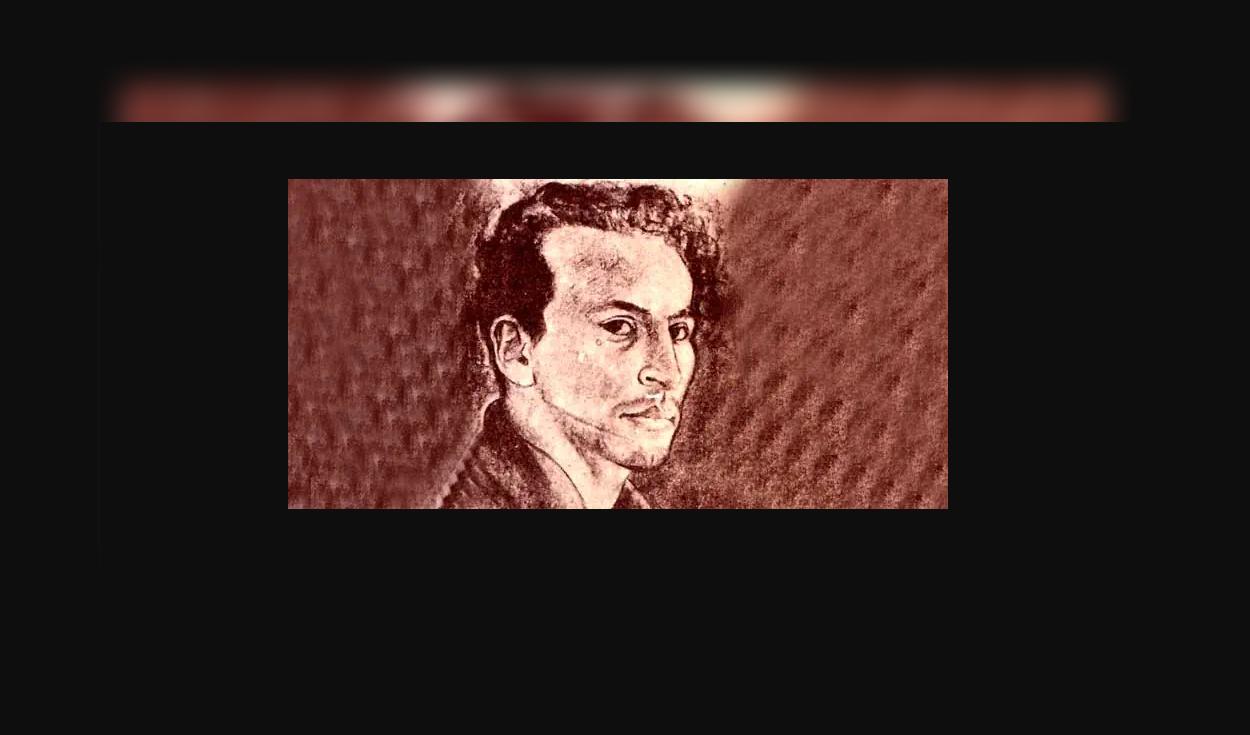
Peruvian painter and sculptor Sérvulo Gutiérrez, who won a national bantamweight boxing title before dedicating himself fully to art, is remembered for fusing the physical force of the ring with an expressionist style that made him one of Peru's most distinctive 20th century artists.
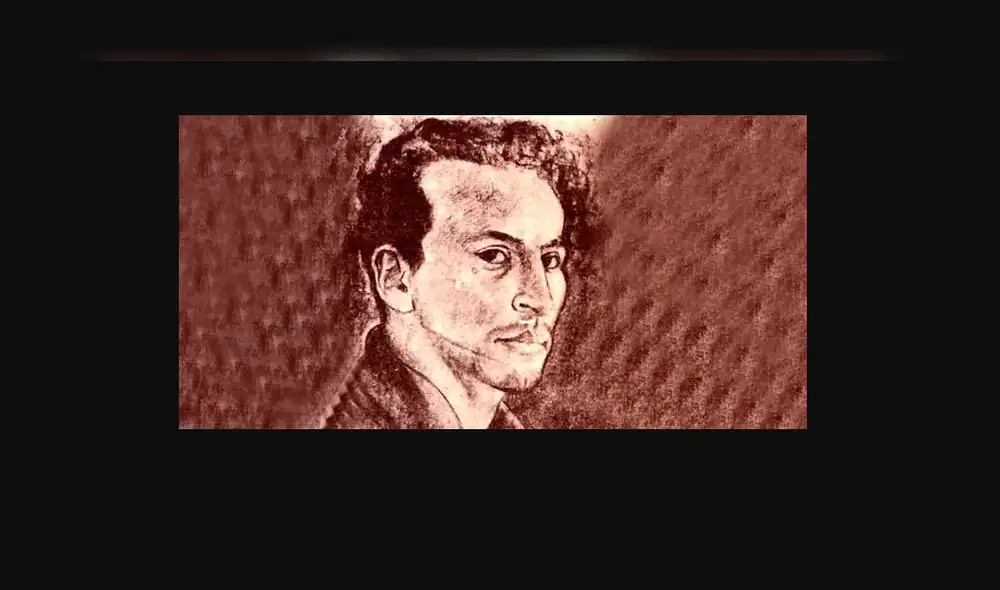
Gutiérrez was born on February 20, 1914, in Ica, months before the start of the First World War. From childhood he studied the dunes, desert, palm trees and lagoons of his home region, a landscape that became his lasting source of inspiration. He was one of 16 children born to artisan parents from Huancavelica. His mother died when he was nine, and his father remarried and moved the family to Lima.
From the boxing ring to the art world
Need and restlessness pushed the young Gutiérrez into work as a waiter, a construction laborer on the Pisco-Castrovirreyna road, a forger of pre-Columbian huaco pottery, and a boxer. He became Peru's national bantamweight champion and traveled with the Peruvian team to the South American boxing championship in Córdoba, Argentina, in 1935, finishing runner-up in his weight category. While in Buenos Aires he was drawn into the art world and married Zulema Palomieri, with whom he had a daughter.
Paris, Vallejo and the war years
In 1938 he moved to Paris, where he mixed with fellow Peruvians Juan Ríos and Apurímac and with the celebrated poet César Vallejo. He was repatriated to Buenos Aires when the Second World War broke out, and there he met Claudine Fitté, who became his partner and the subject of several paintings during what is considered his formative period.
Settling in Lima's Rímac district
Gutiérrez and Fitté returned to Peru in 1940 and settled in Lima's Rímac district, where he opened a workshop on Jirón Callao and turned fully to painting and sculpture. There he modeled his famous "Head of Claudine" in 1941. He also won first place at an Amazonian exhibition with two sculptures of female archers, now held at the Museum of Natural History of the National University of San Marcos, Peru's oldest university.
"Los Andes" and the Andean landscape
A 1943 journey through Arequipa, Cuzco and Puno inspired what may be one of his most important works, "Los Andes," a colossal female nude created largely to convey the raw essence of the Andean landscape. The mountains are given humanity in the piece: a woman stands half-emerged from the hills in a pose of contained strength, perhaps representing Pachamama, the Andean earth goddess. She reads less as a woman than as a spirit shared with the geography around her, her face covered in a gesture that could belong to anyone, her body rendered in colorful brushstrokes that merge with the landscape itself.
A turn toward figurative composition
Gutiérrez then returned to Argentina and worked in the studios of Emilio Pettoruti, insisting on figurative subjects such as the rooftops of Lima and Buenos Aires, rendered in clean, harmonious colors and carefully planned compositions. It marked a shift in his work, as he came to grasp the importance of composition itself, applying calculated geometry and restrained color in place of spontaneity.
Expressionism and the return to Peru
He separated from Fitté in 1945 and returned to Peru, where he turned toward an intense, free-flowing expressionism. He remained figurative but worked with fast, thick, gestural brushstrokes that let his contours lose precision, building his figures through sheer material and energy suggested by the violent force of his color, as though working in a boxing ring. His painting grew freer without tipping into abstraction, keeping something of the figure while drawing out an intrinsic poetry through color and form.
Painting the Ica landscape
Gutiérrez treated the observation of landscape as a lived experience, returning often to paint Ica, the city of his childhood, along with its deserts, palm trees, transformed mountains, lagoons and vegetation. He captured their spirit and atmosphere with striking visual force, using intense color to reshape perception, producing works that read as subjective experiences rather than illustrations. By 1945 his palette had loosened further into pure colors and nearly imperceptible marks, though he never crossed into abstraction.
Lima's bohemian scene
Gutiérrez became a central figure in Lima's bohemian circles, mixing with journalists, politicians and fellow artists. He was a regular at the Mauri and the Bolívar alongside Doris Gibson, founder of the magazine Caretas, whom he painted as his new muse from 1946 and with whom he scandalized Lima society. The pair frequented the Karamanduka, a peña, or traditional music venue, where he crossed paths with songwriter Augusto Polo Campos and singers Chabuca Granda and Lucha Reyes, often paying his way with improvised performances. By the mid-1950s he was a fixture at the Dominó, where he ran up credit or paid with paintings, and there he met Luis D'Onofrio, who became his great patron.
Final years and death
Gutiérrez slept little, ate little and liked to drink. He painted on handkerchiefs, tablecloths and napkins, sometimes using rouge or eyebrow pencil in place of paint. Toward the end of the 1950s his palette darkened, moving from red to black as his work took on expressions of anguish and religious feeling. The intense creative wellspring that might have placed him among the great Latin American artists of the 20th century began to run dry. He died of a liver ailment at the age of 47, on July 21, 1961. Money never mattered to him despite his considerable success; he sought instead to stand by friends in need and to enjoy himself.
Test yourself
What sport did Sérvulo Gutiérrez compete in before turning fully to art?
In which city was Gutiérrez born?
What is the title of the colossal female nude inspired by his 1943 trip through Arequipa, Cuzco and Puno?
Where it happened
Lima, Peru