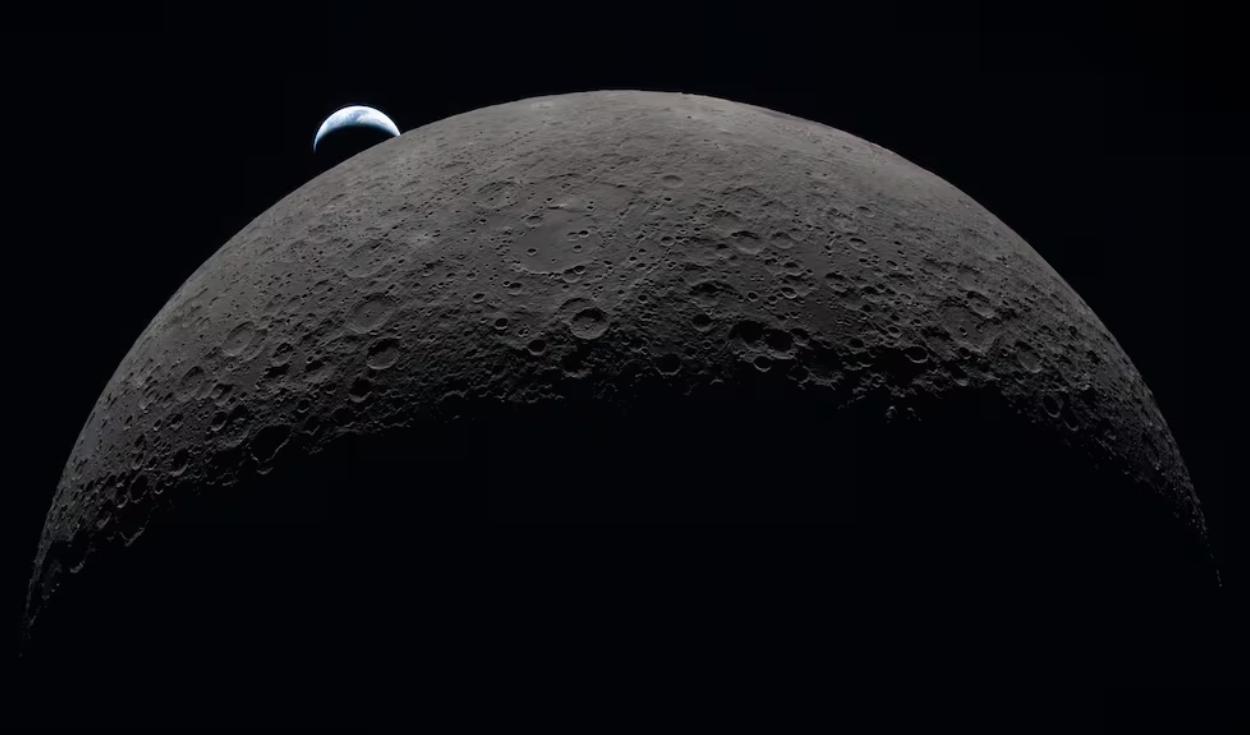
Scientists analyzing lunar soil samples collected by China's Chang'e-6 mission have identified a metallic form of iron never before confirmed in natural materials from the Moon. The material is gamma-iron, or gamma-Fe, a crystalline structure that normally needs high temperatures to remain stable and typically changes form as it cools.
The research, led by Professor Haifeng Du of the High Magnetic Field Laboratory at the Hefei Institutes of Physical Science in China, also found that the nanoparticles carry particular magnetic properties. The team found that some of the particles retain stable magnetic configurations, a trait that could help reconstruct the history of the Moon's magnetism. The study was published in the journal Proceedings of the National Academy of Sciences.
How an unusual form of iron survived on the Moon
Gamma-iron has a face-centered cubic structure and, under normal conditions, stays stable only at high temperatures. When the material cools, it usually transforms into alpha-iron, a phase with a different crystal structure. That is why finding it in lunar samples surprised the researchers.
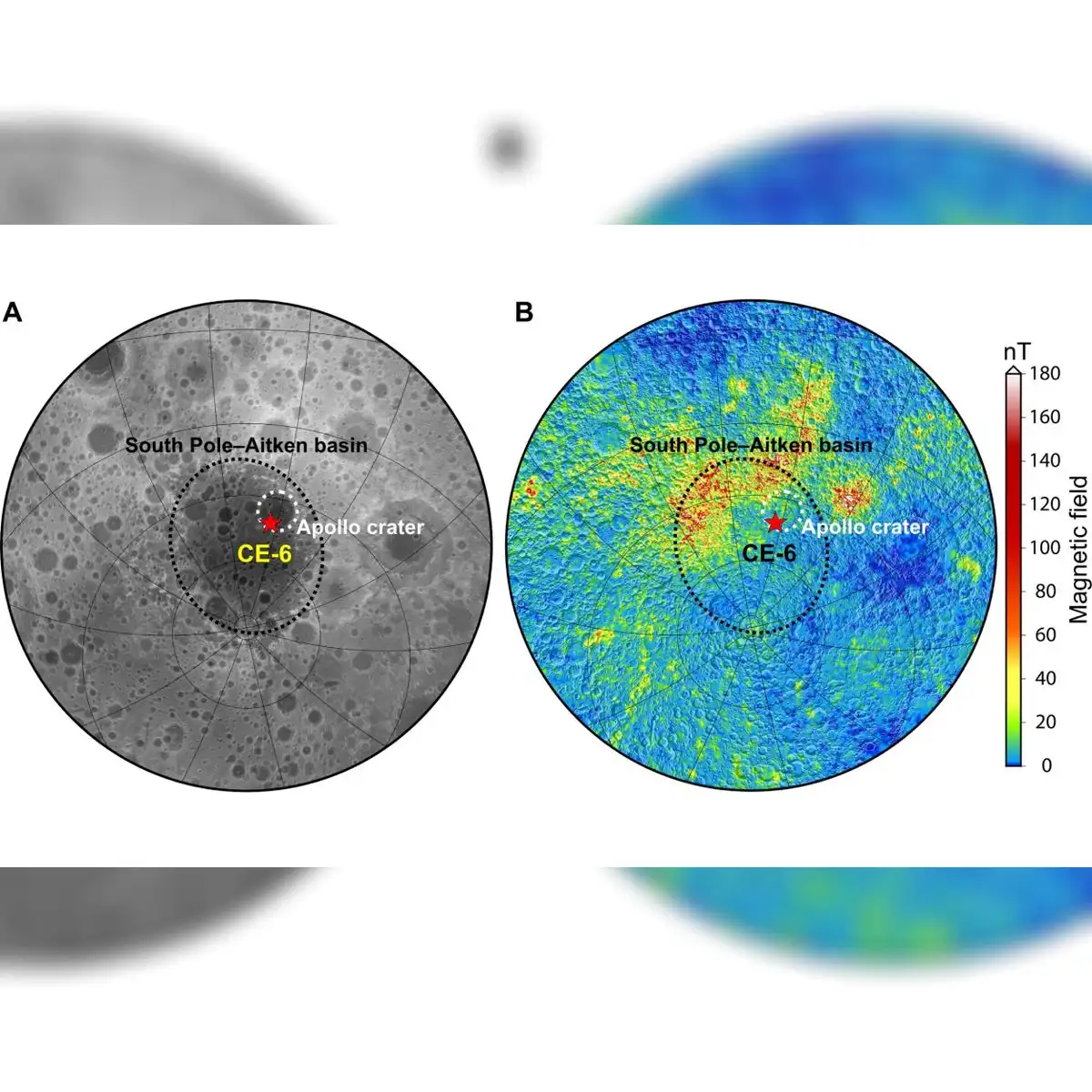
The team examined two samples of impact glass containing numerous metallic particles of nanometer scale. Using focused ion beam preparation, transmission electron microscopy and chemical analysis, the researchers confirmed that gamma-Fe was the dominant iron phase in both materials.
The scientists proposed that lunar impacts may have created conditions capable of preserving this structure. Rapid cooling of molten material, small amounts of carbon and other elements, and the glassy matrix surrounding the particles likely helped stop the iron from transforming into its more common form.
Microscopic iron particles may record ancient magnetism
The study also examined whether the nanoparticles could preserve magnetic information. To do so, the researchers used off-axis electron holography, a technique that allows magnetic fields to be studied at extremely small scales.
The results showed that the relatively large gamma-Fe particles displayed a stable, vortex-type magnetic state, with the magnetization arranged in a circular pattern. The particles also kept a stable magnetic response when exposed to an external field.
Long Li, a member of the HFIPS research team, said this small magnetic fossil could help scientists better understand the Moon's ancient magnetic history.
New clues hidden in lunar impact glass
The Moon no longer has a global magnetic field, but its rocks and soils still hold minerals capable of recording ancient magnetic conditions. The identification of gamma-iron adds to the range of materials available for studying that past.
Because gamma-Fe and alpha-Fe have different magnetic properties and form under different physical conditions, they could preserve information from several different stages of lunar impacts.
The researchers said they still need to determine to what extent these particles preserve ancient magnetic signals, and what specific information they can offer about the evolution of lunar magnetism.